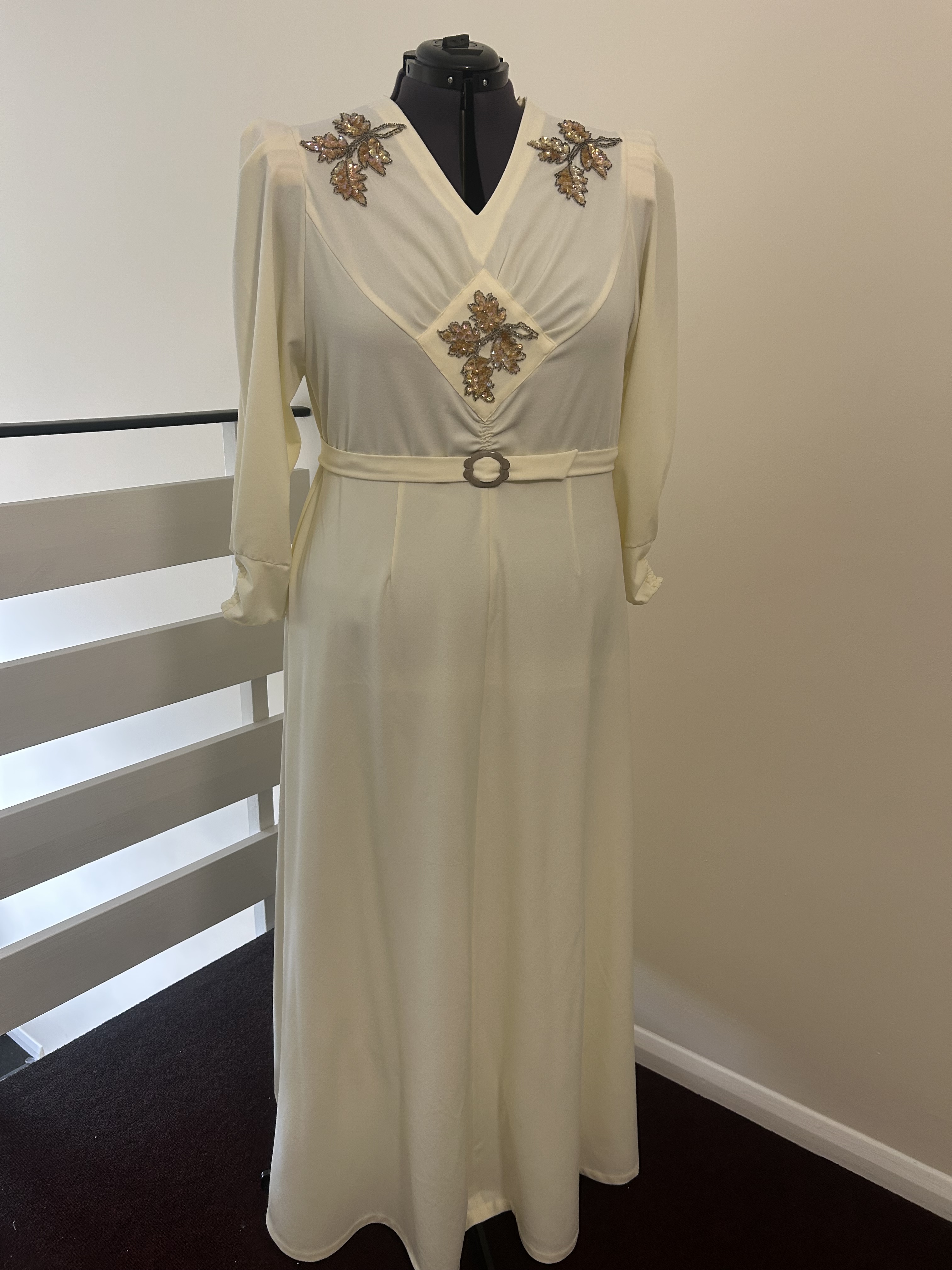
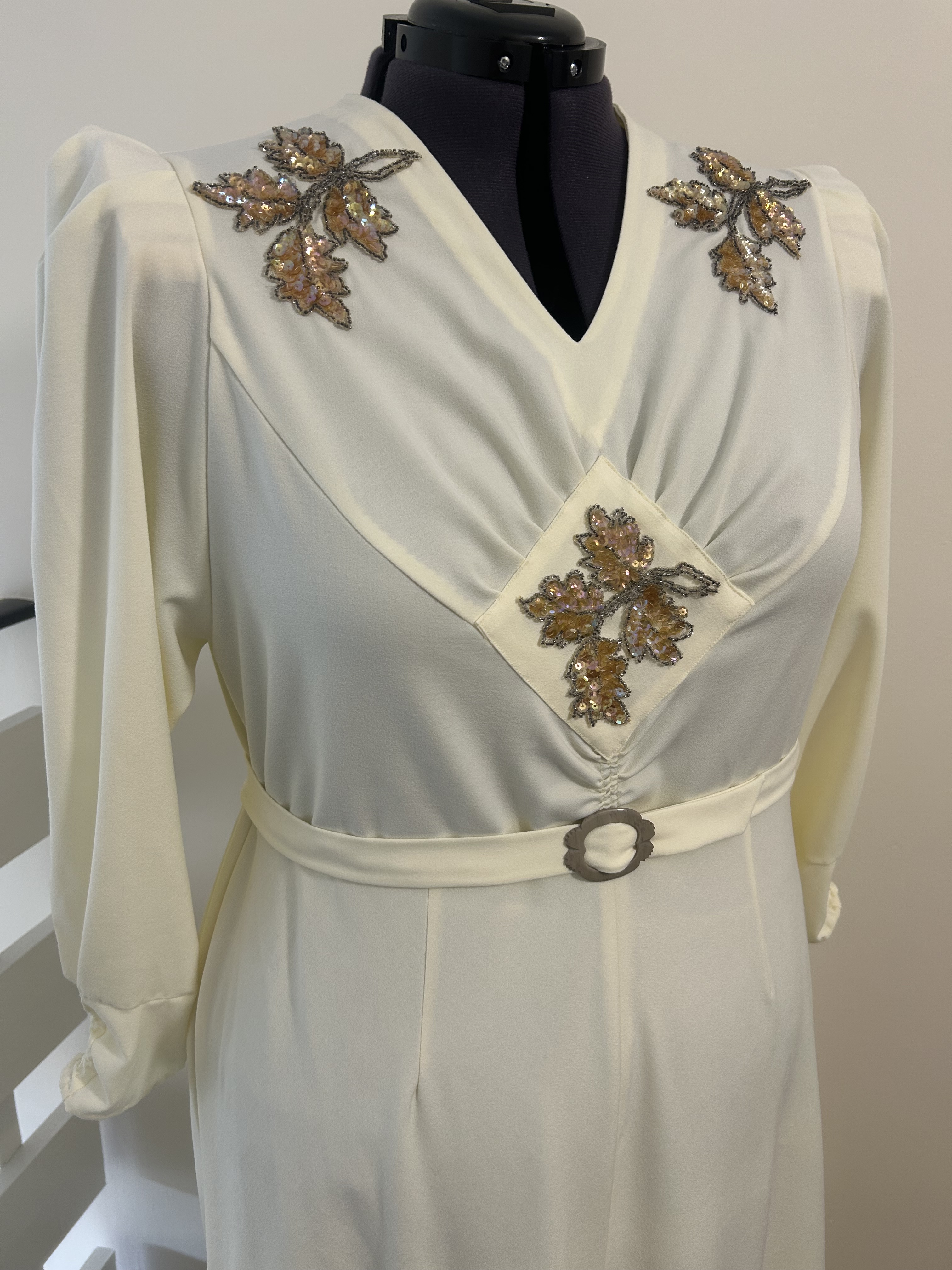
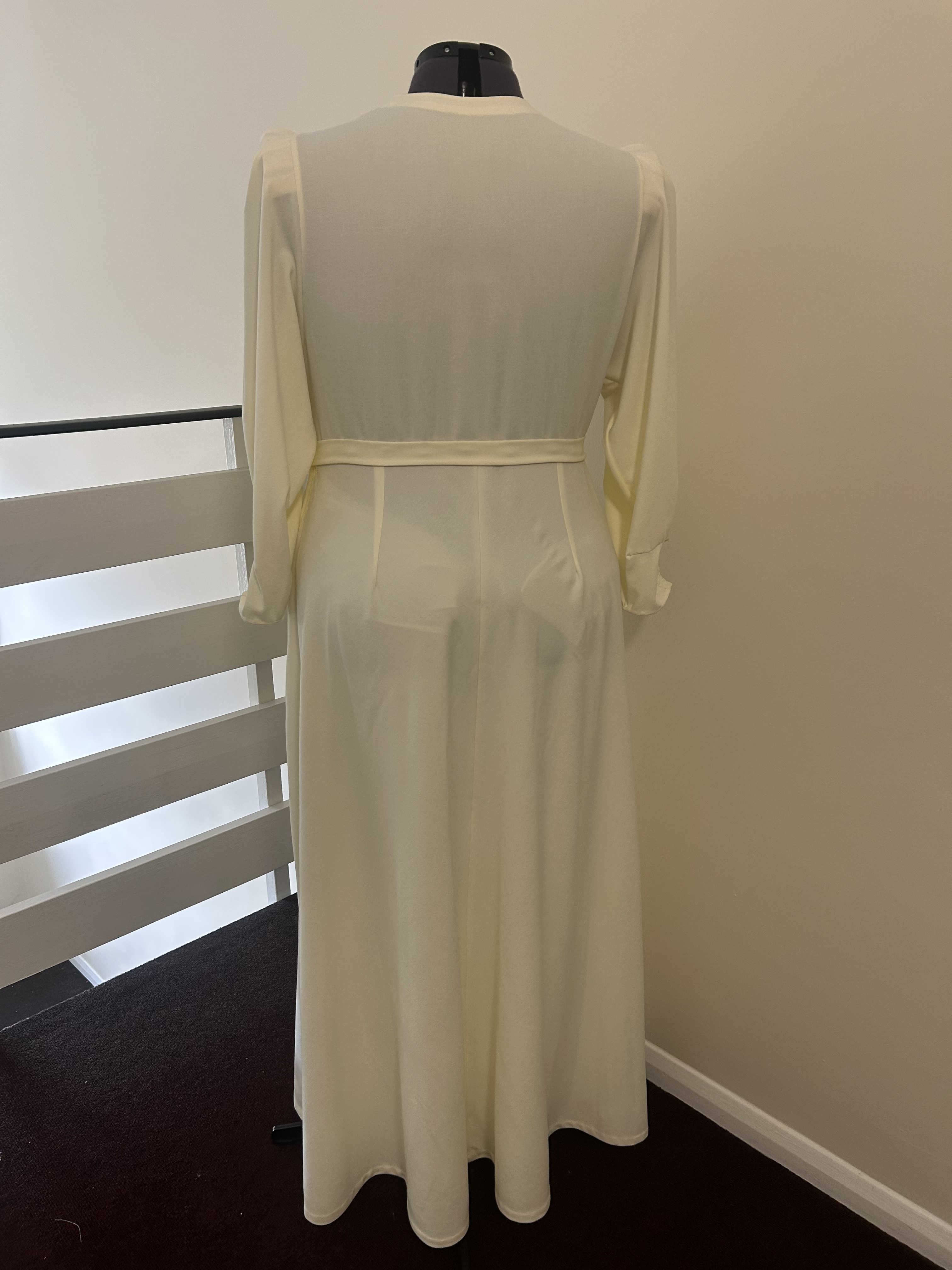
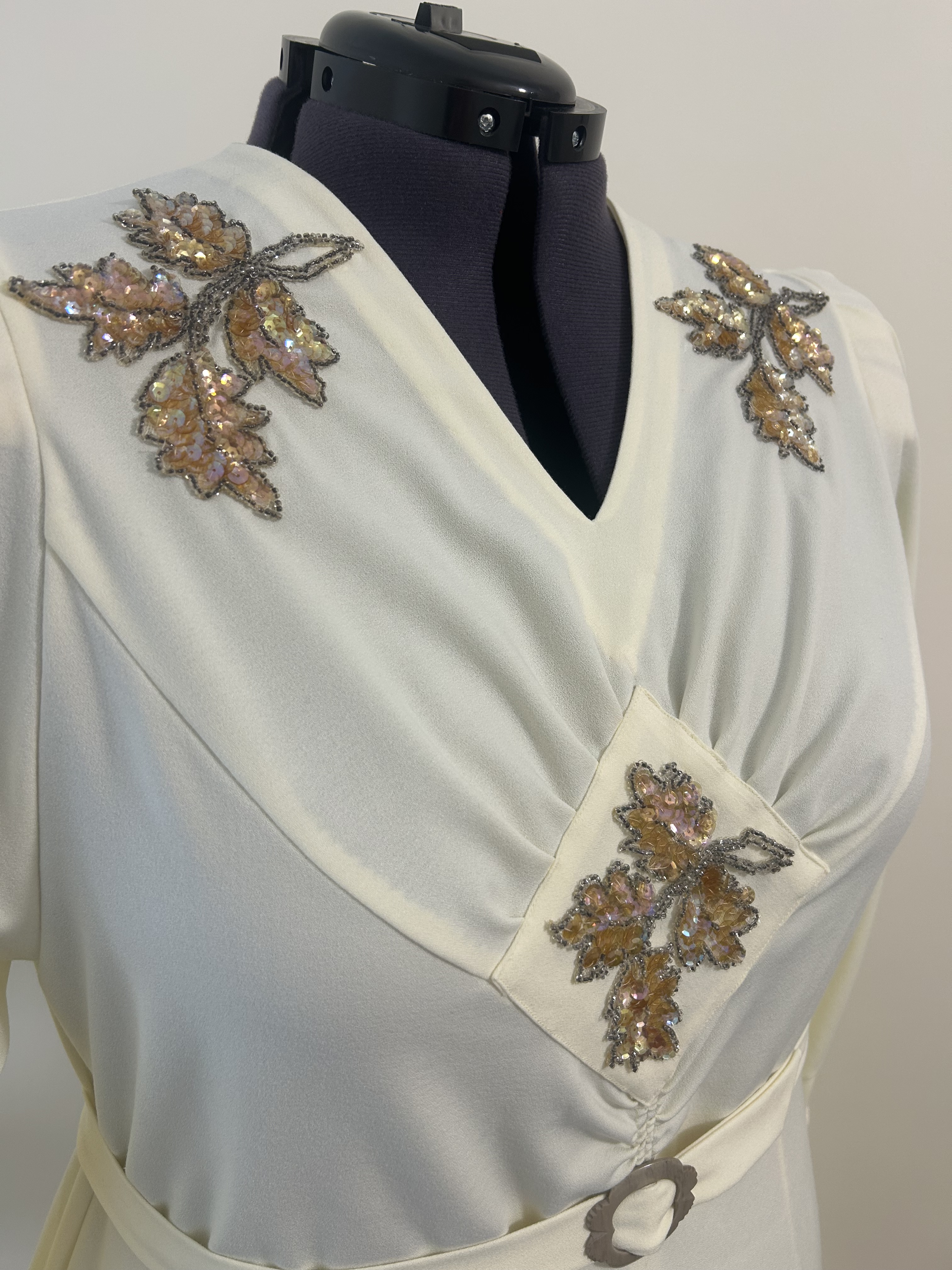
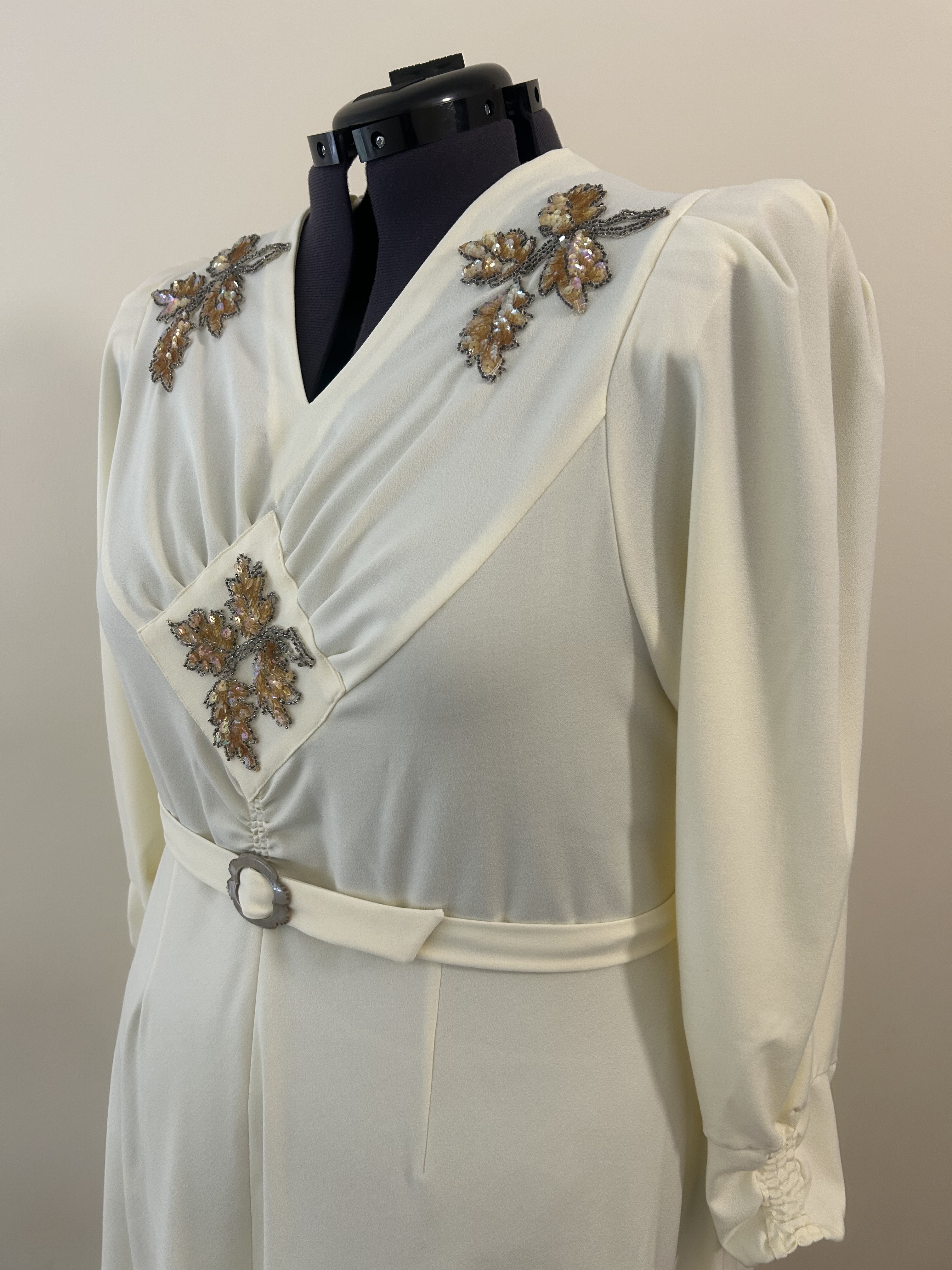
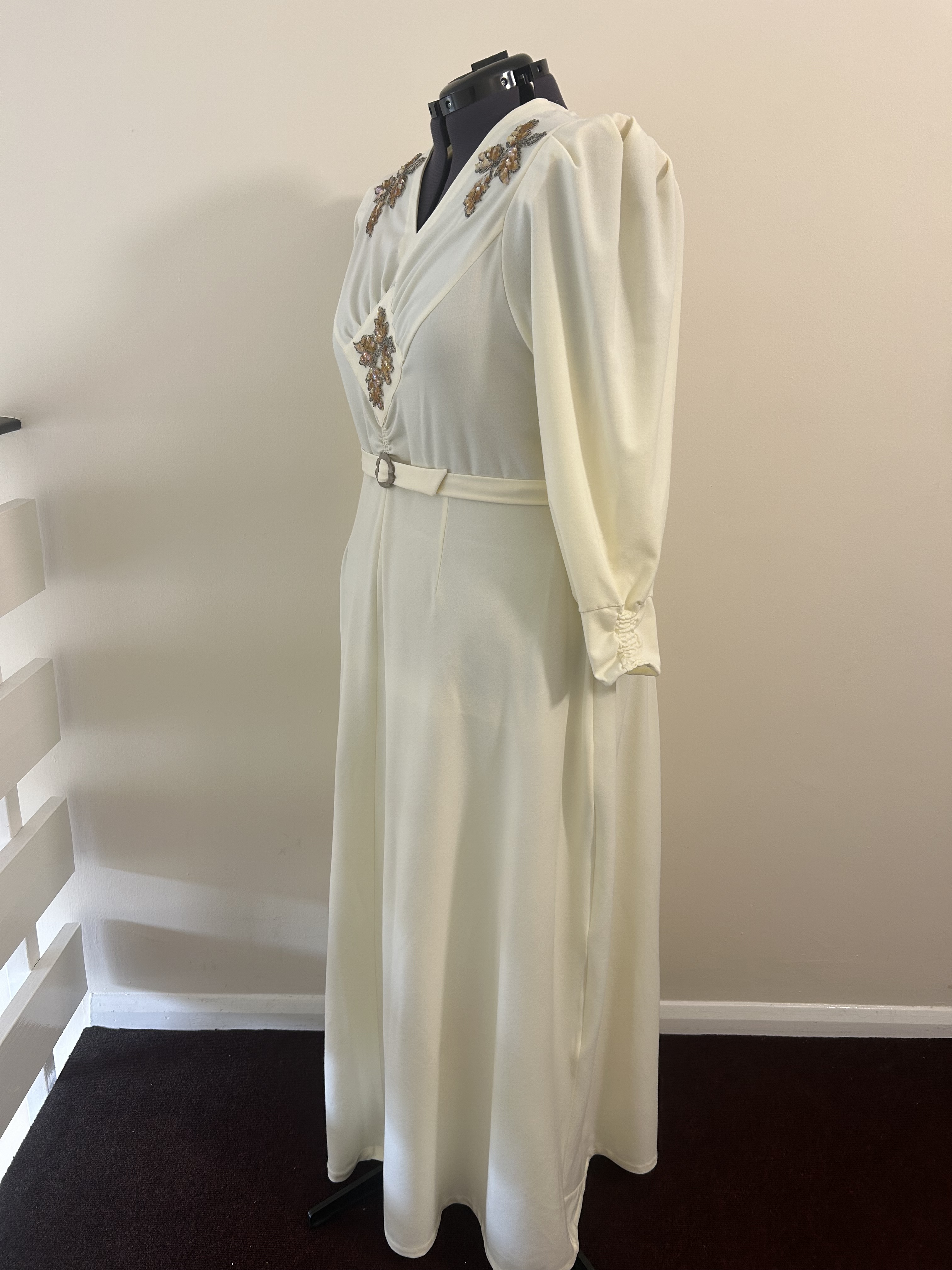
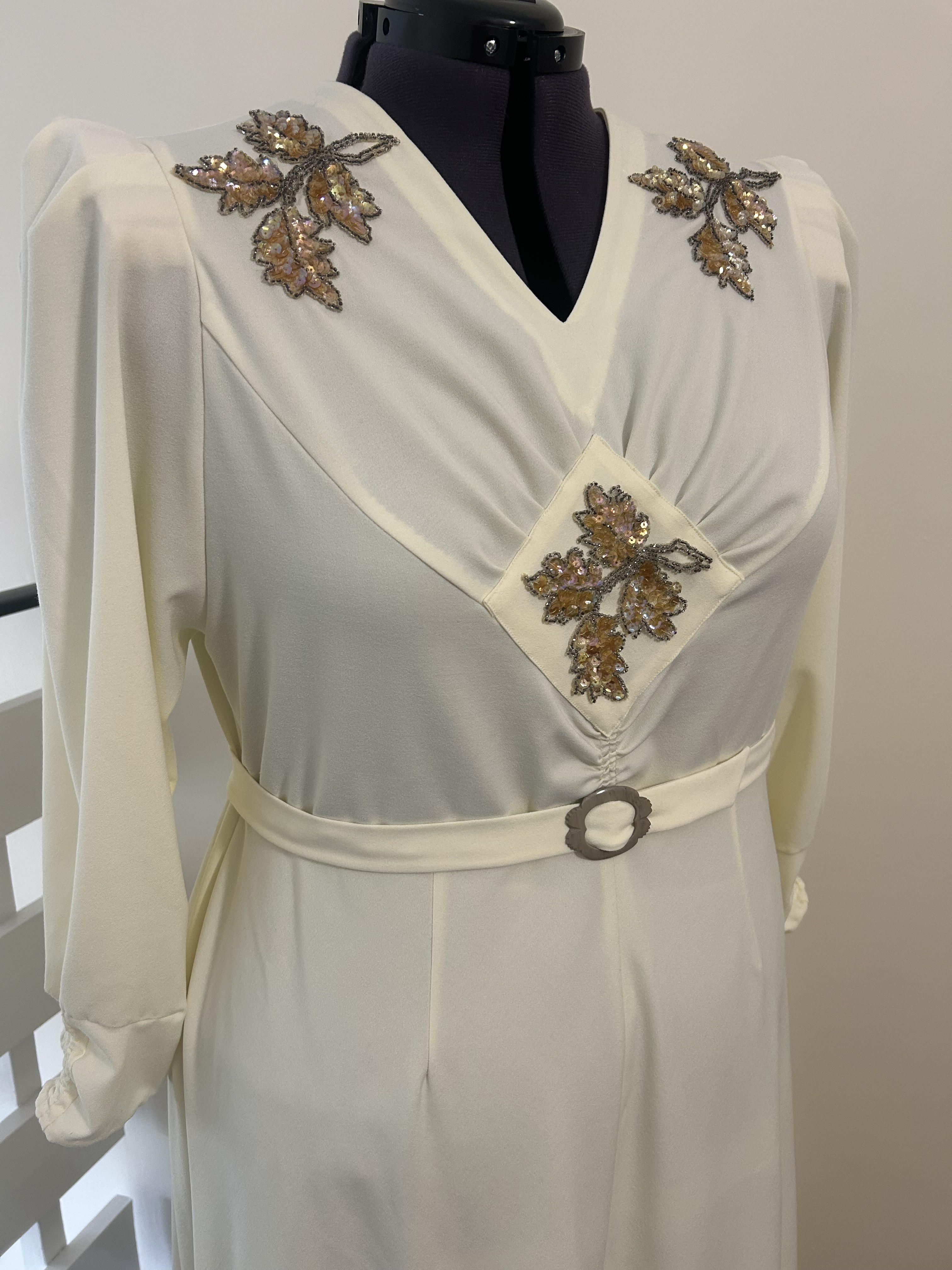
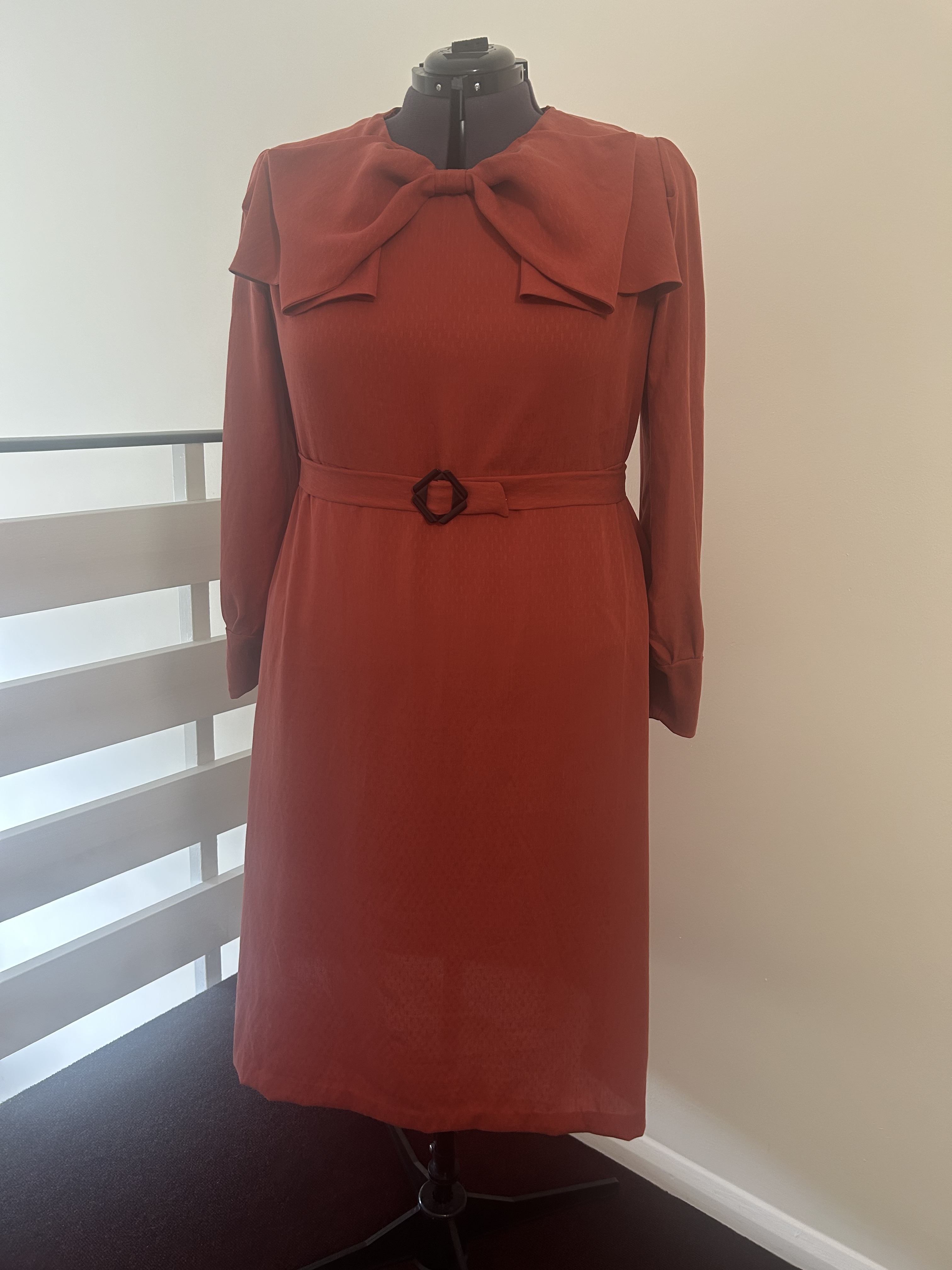
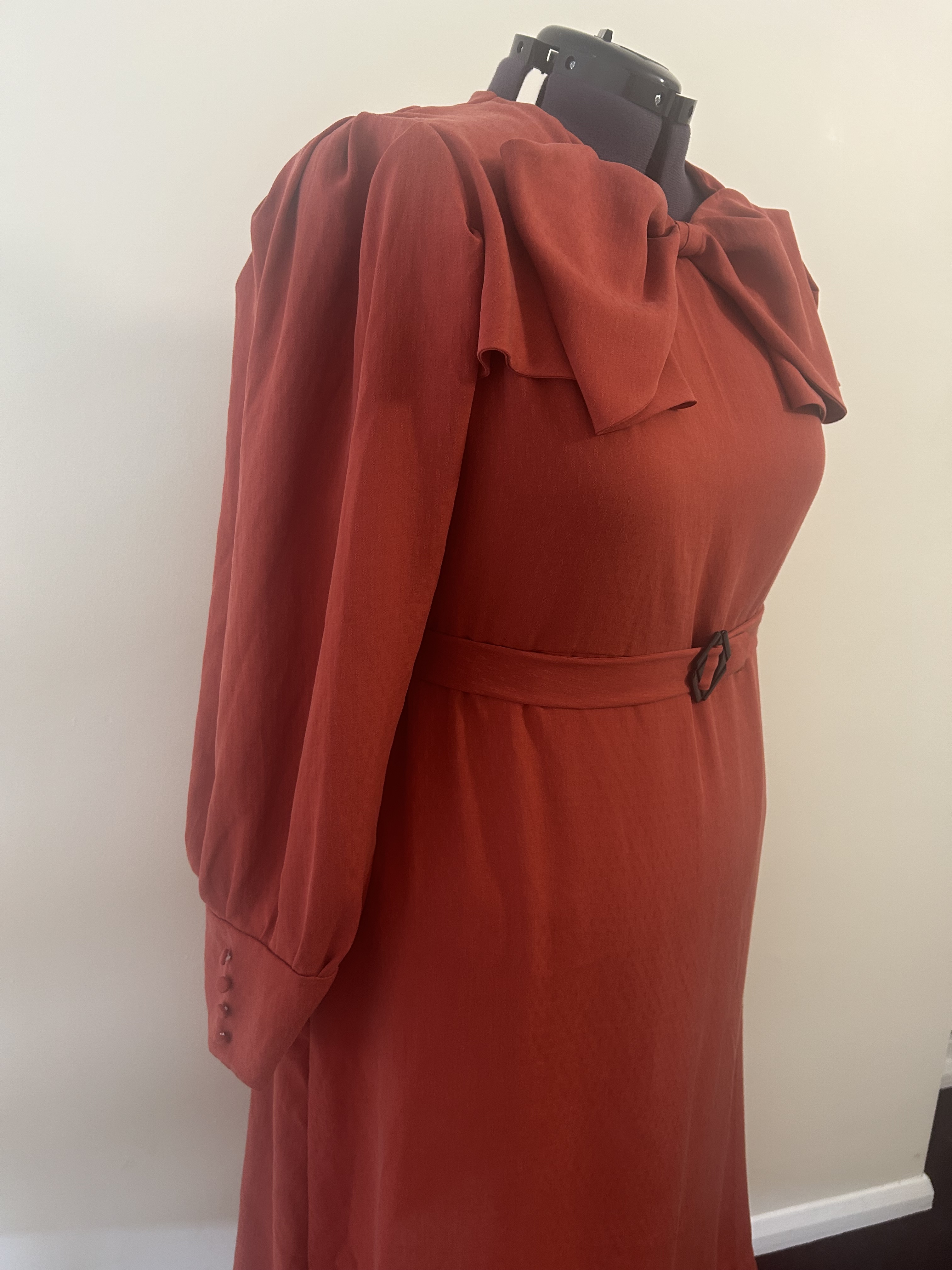
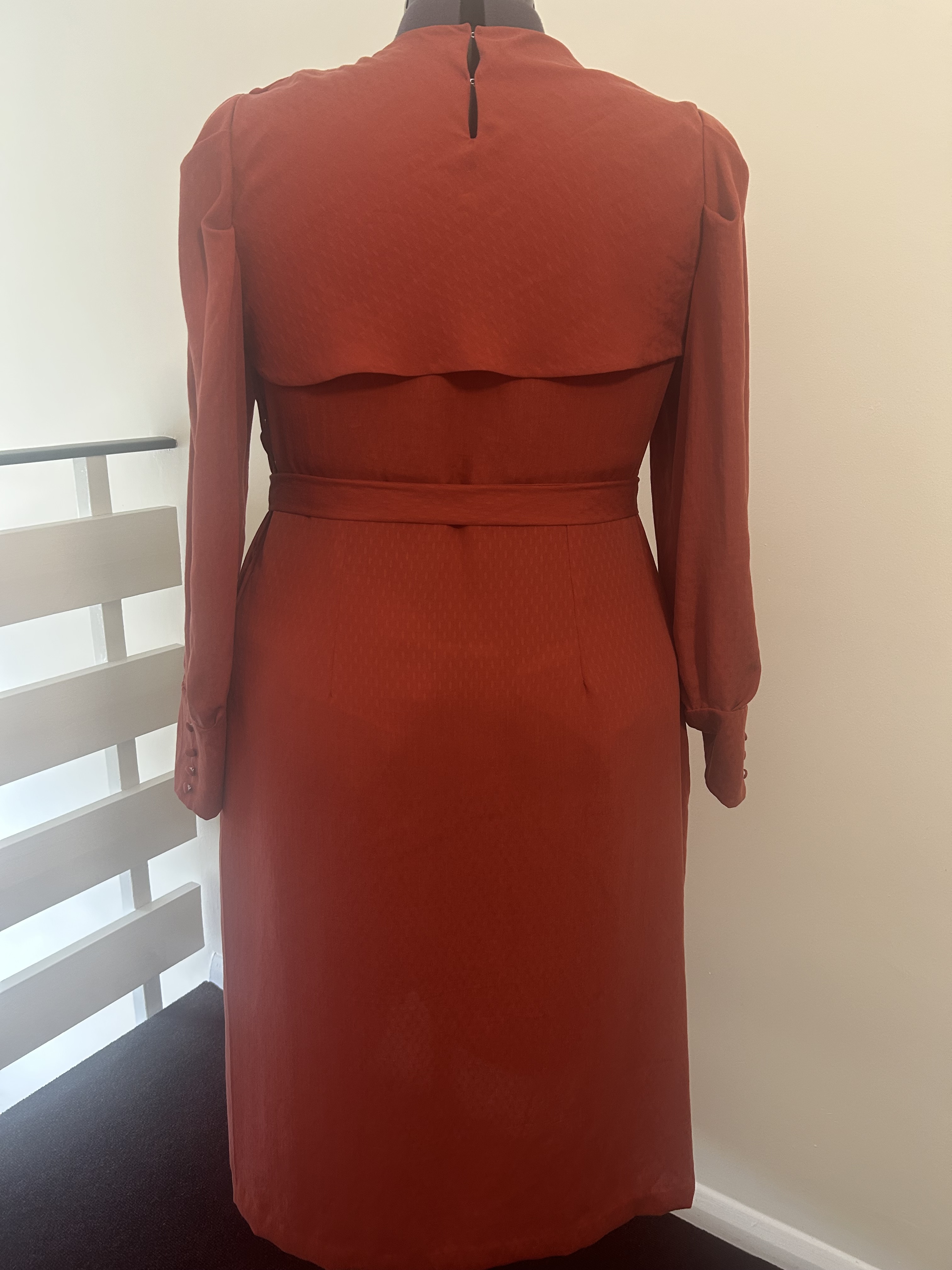
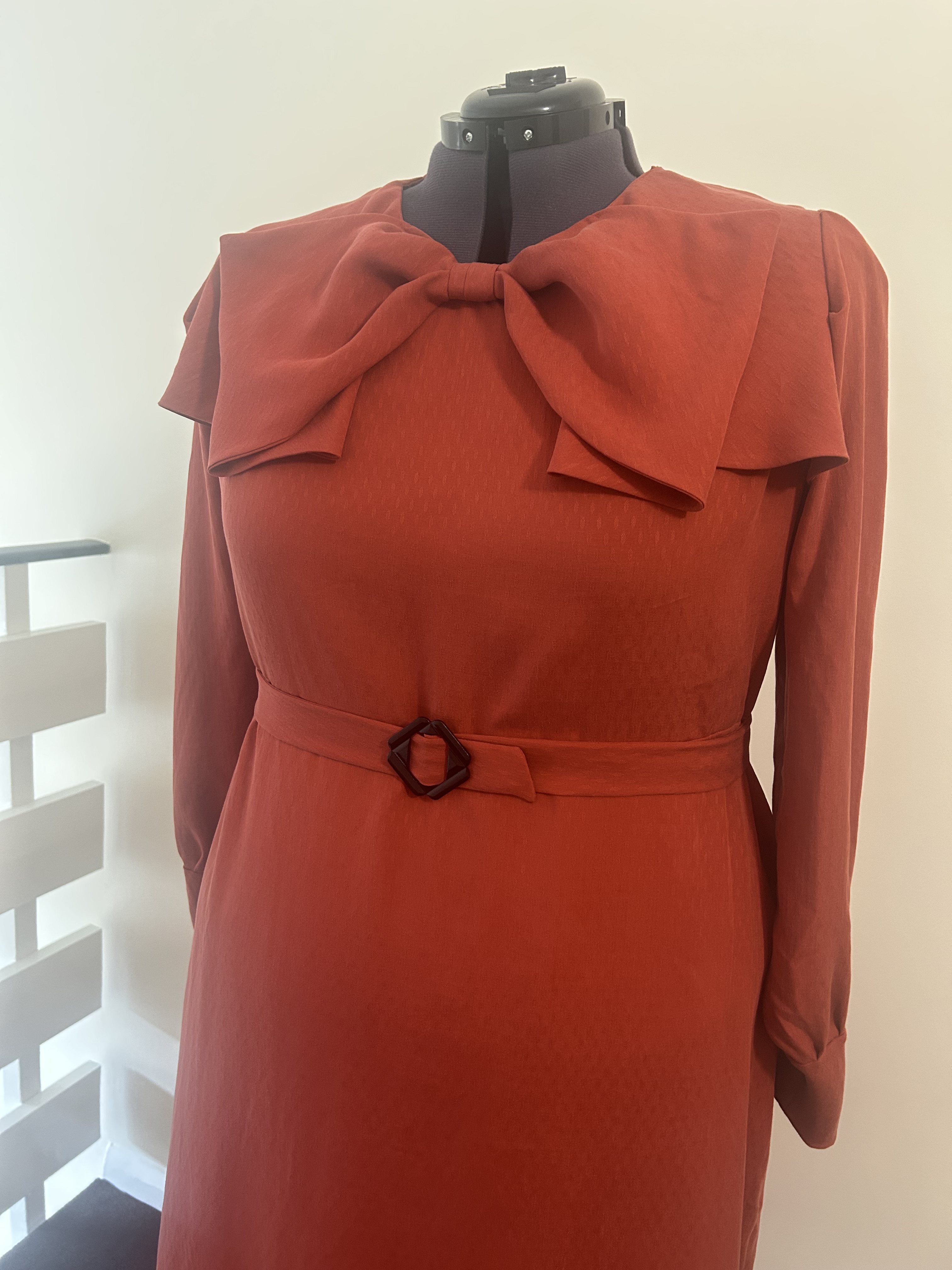
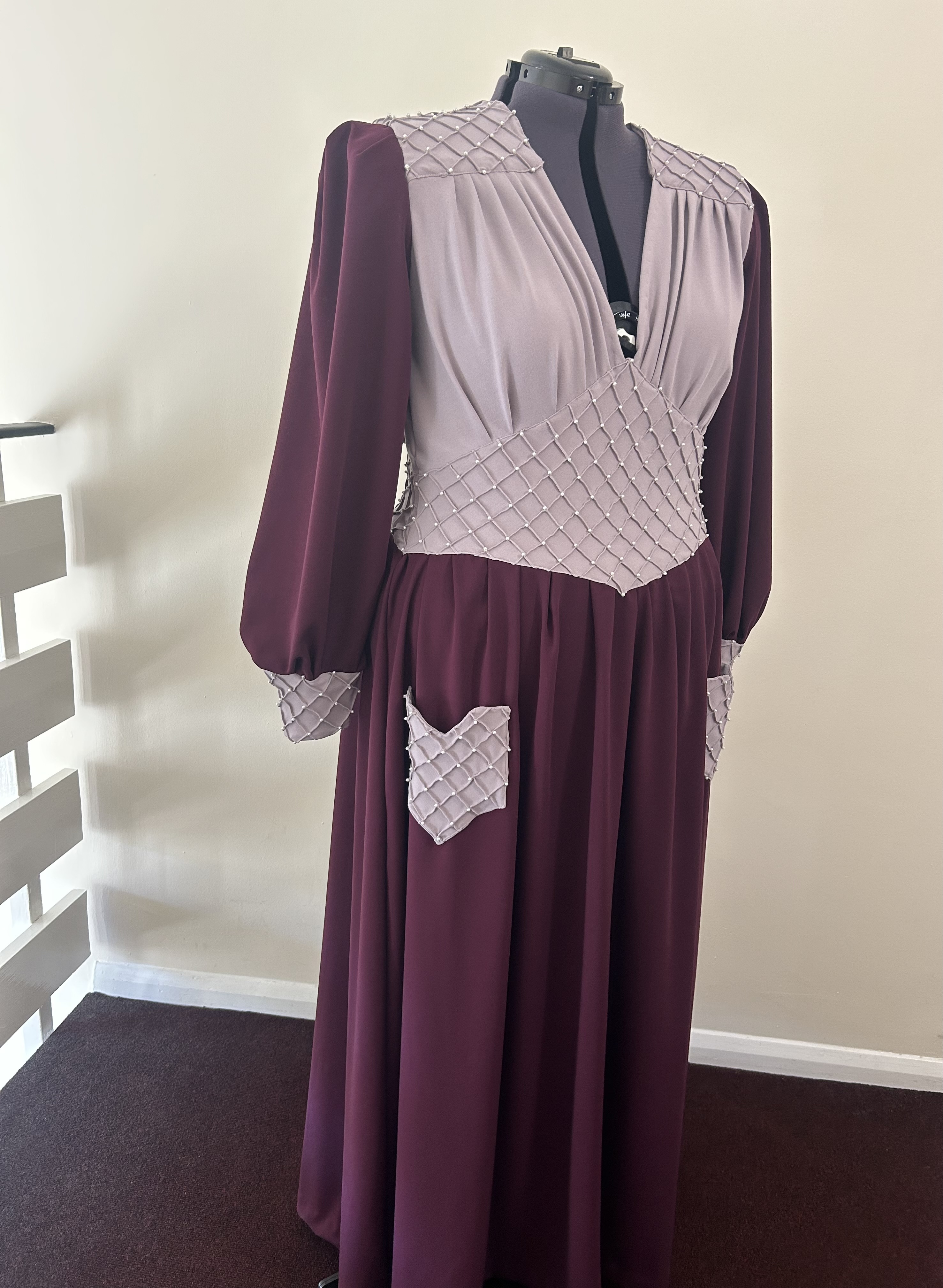
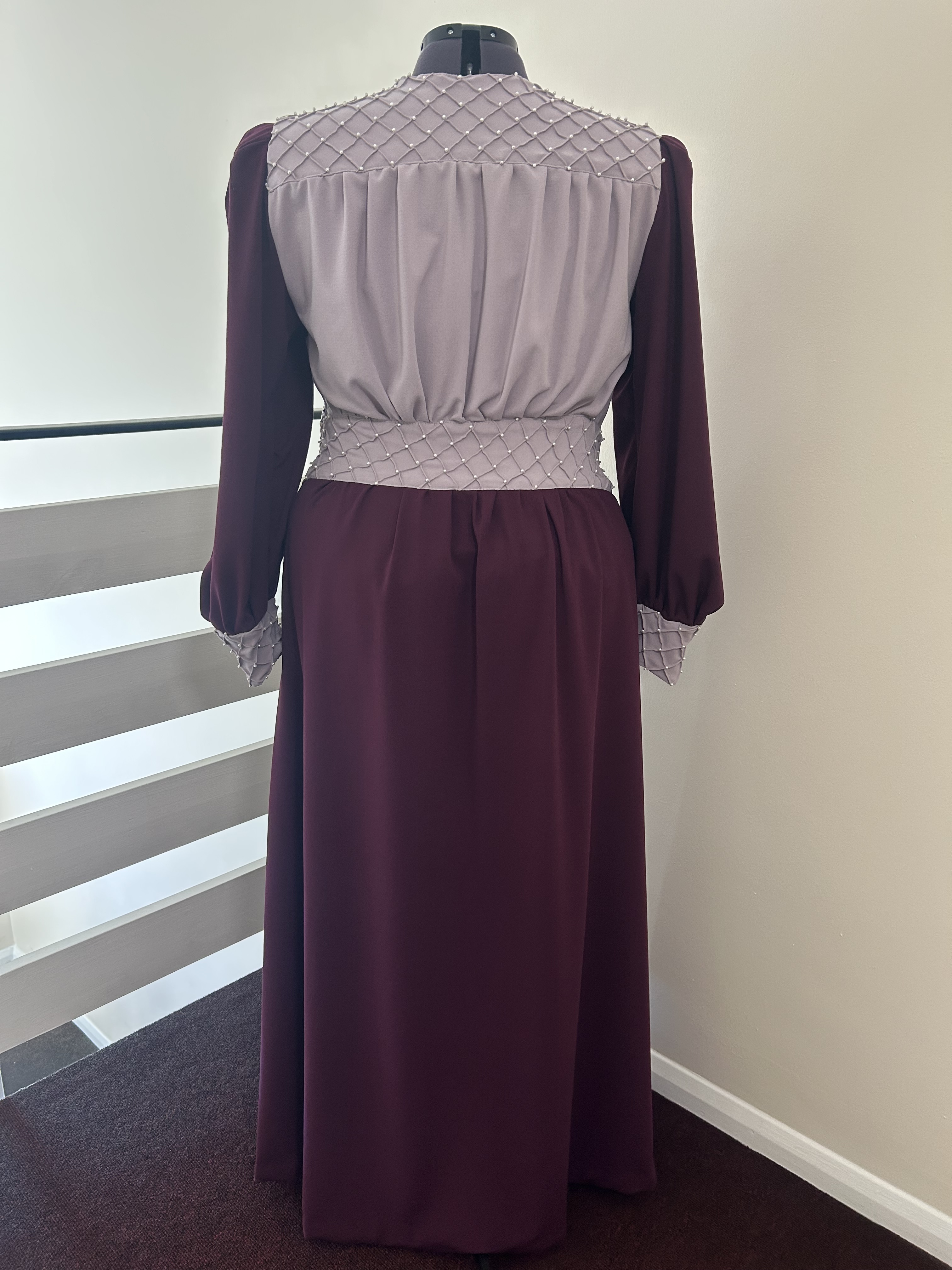
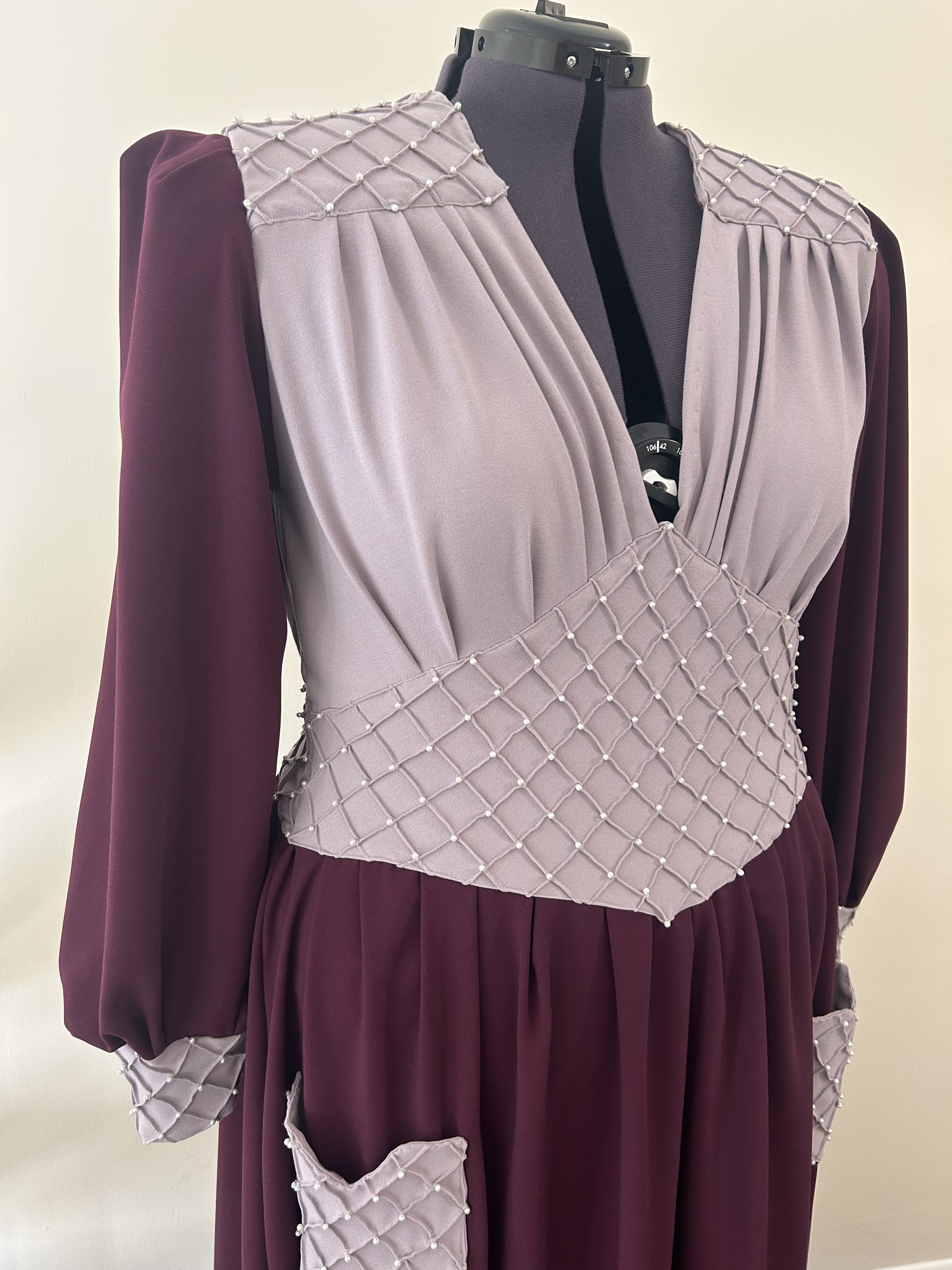
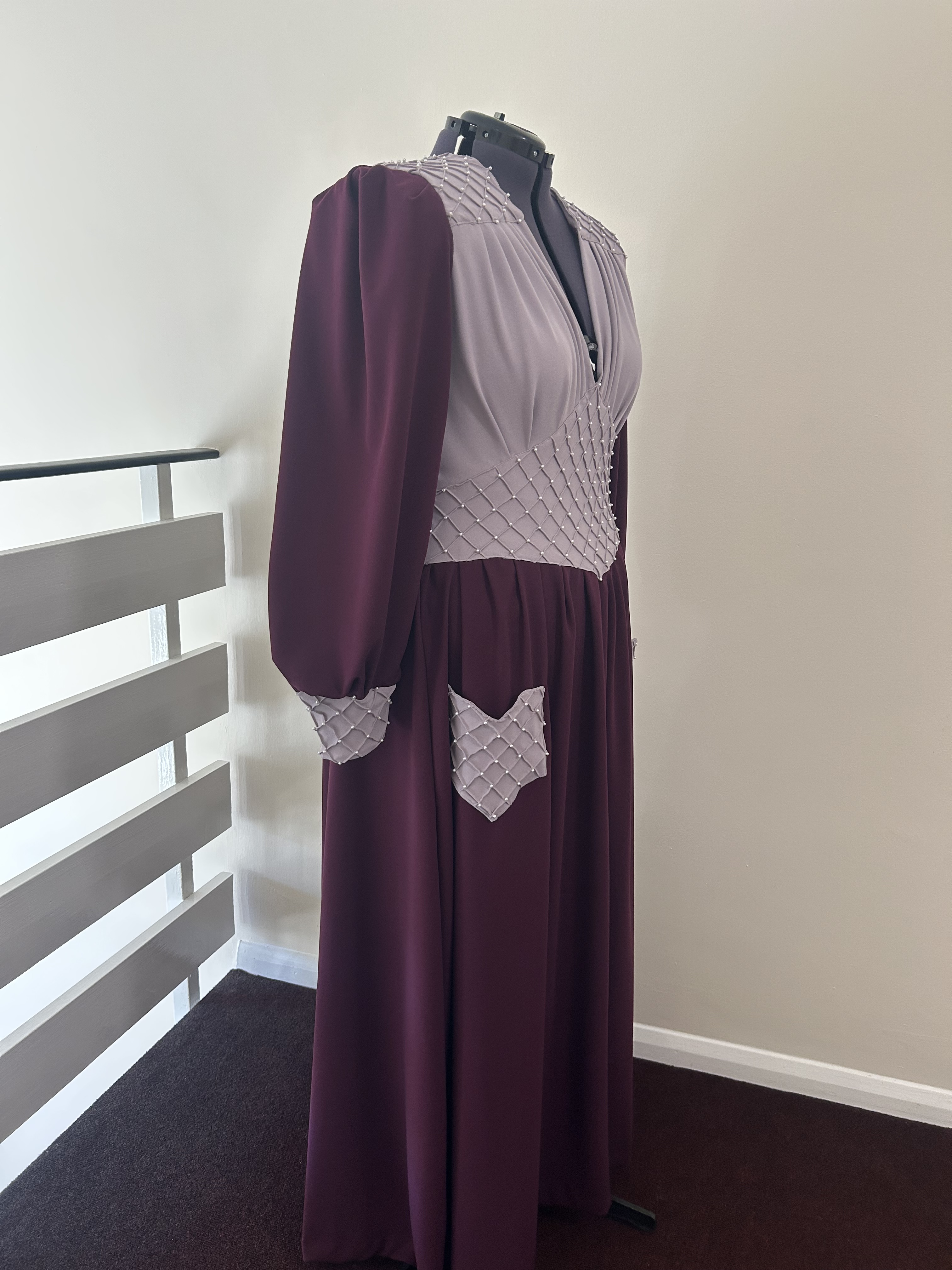
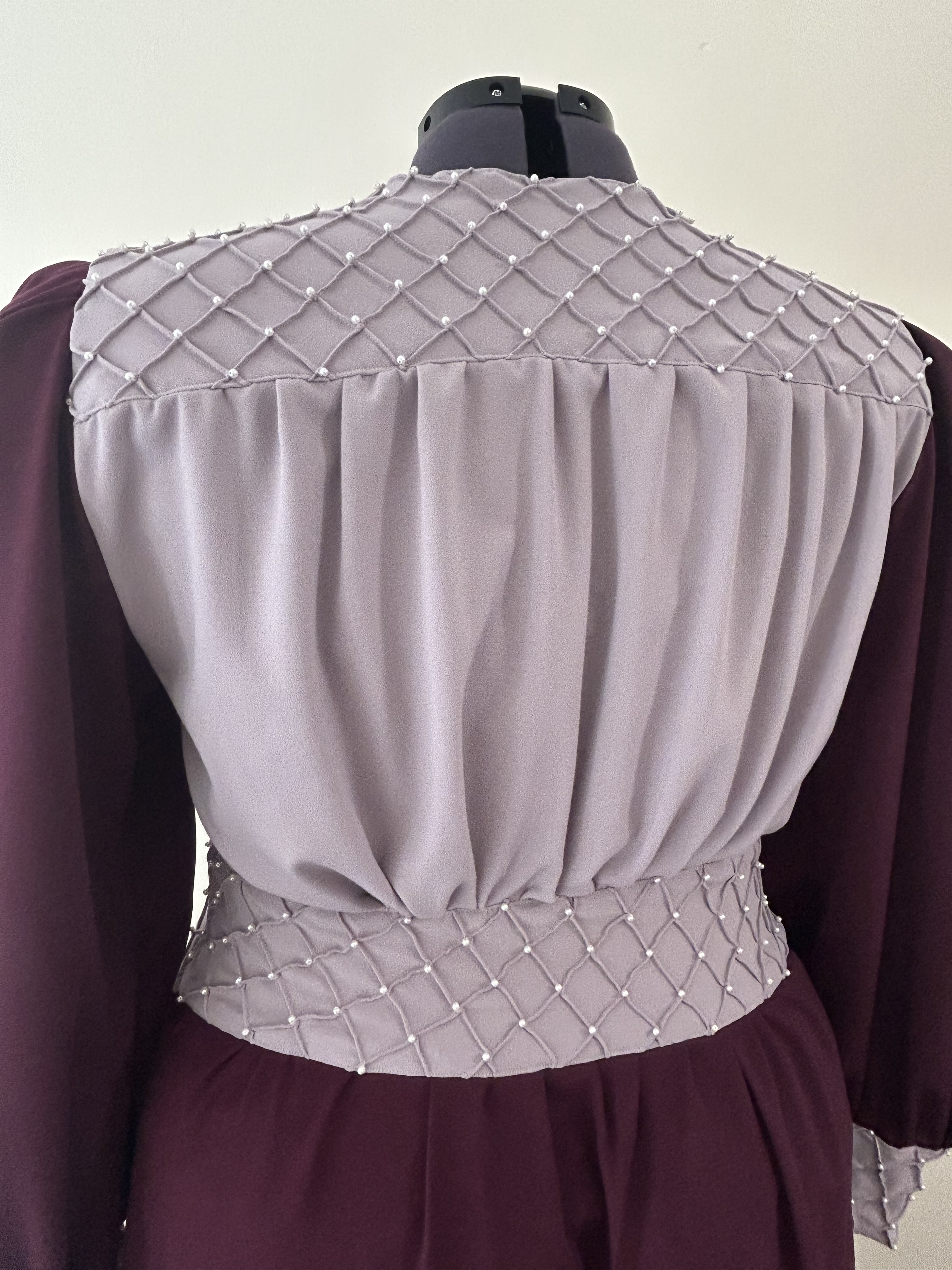
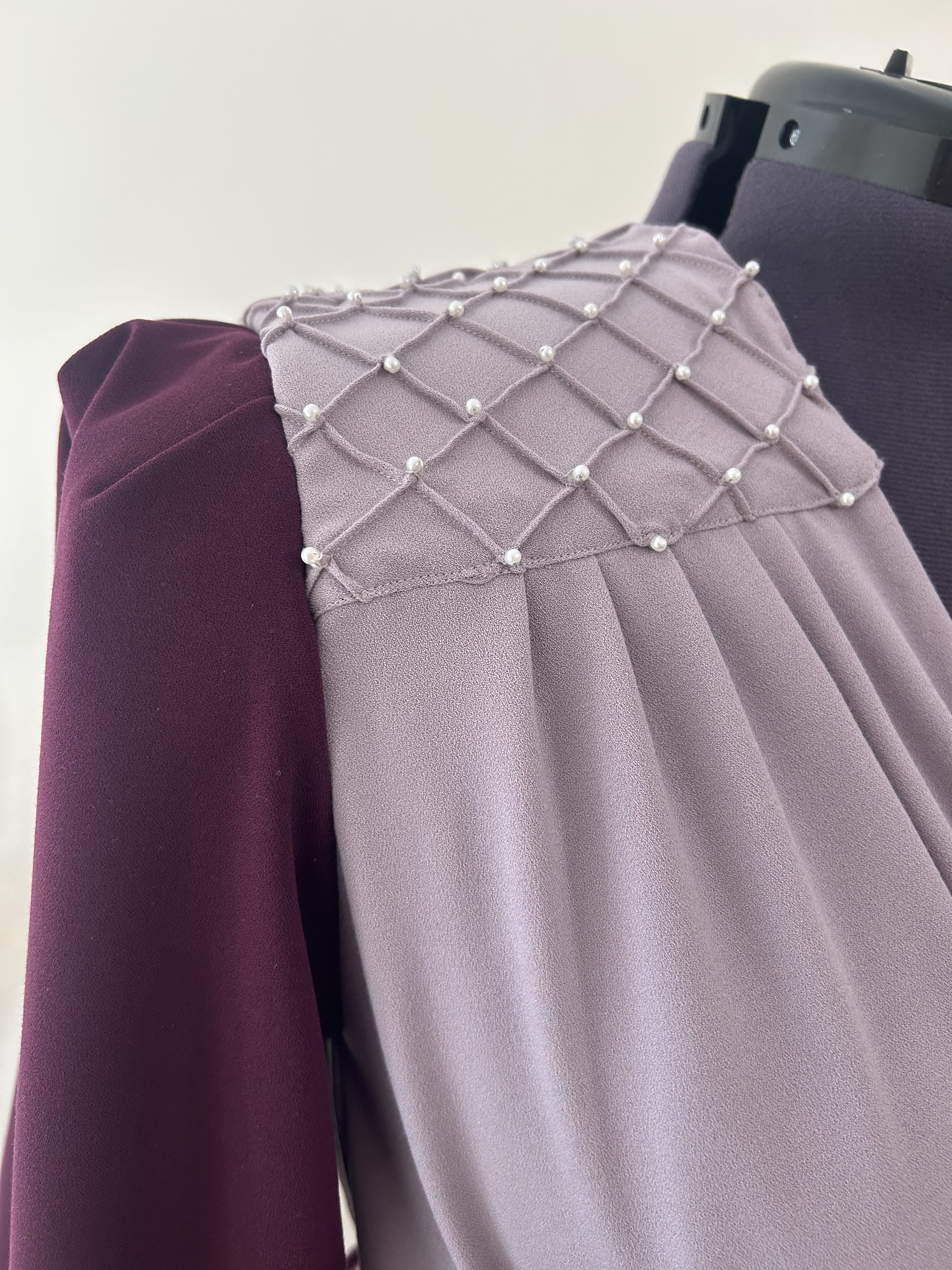
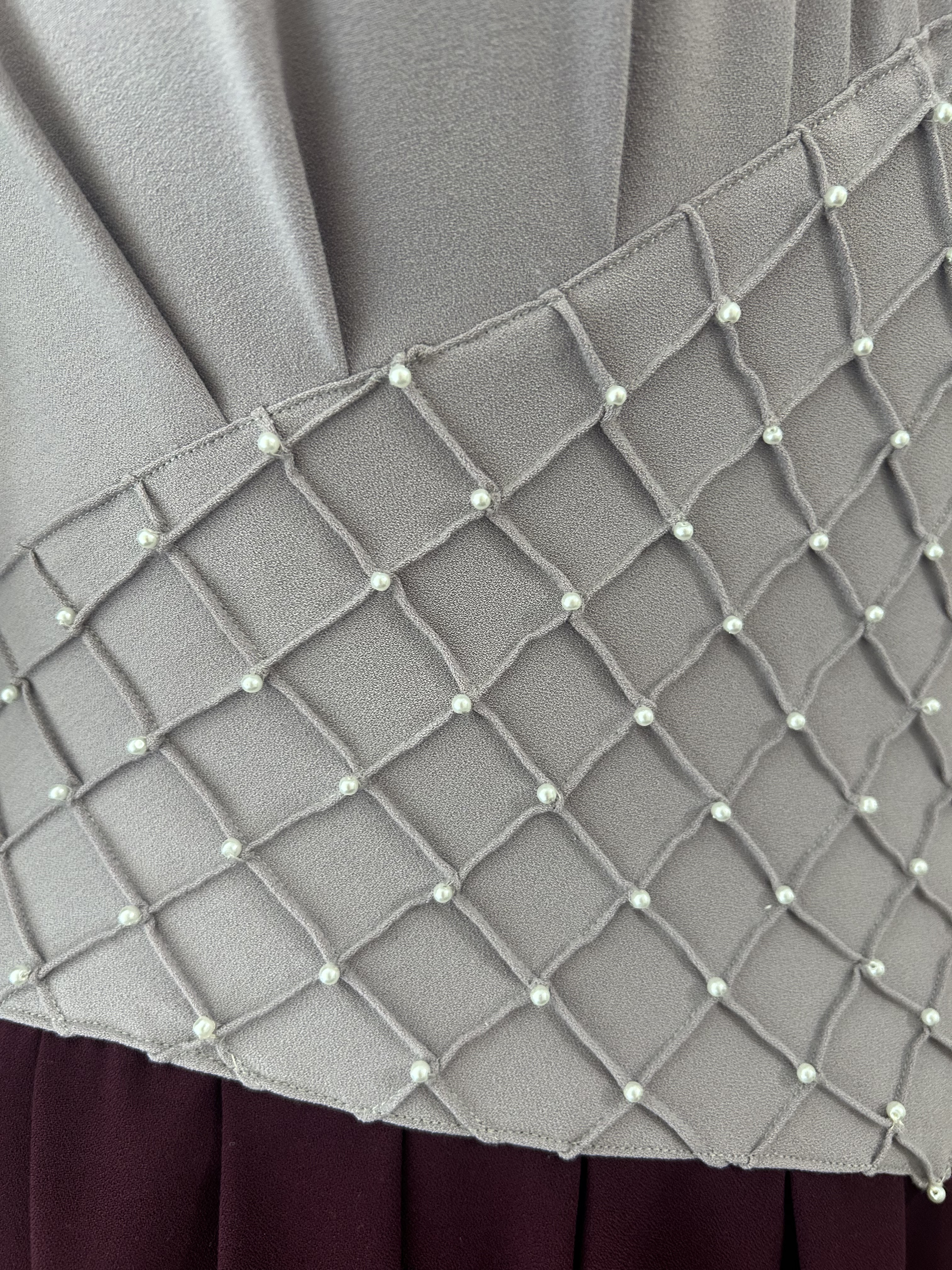
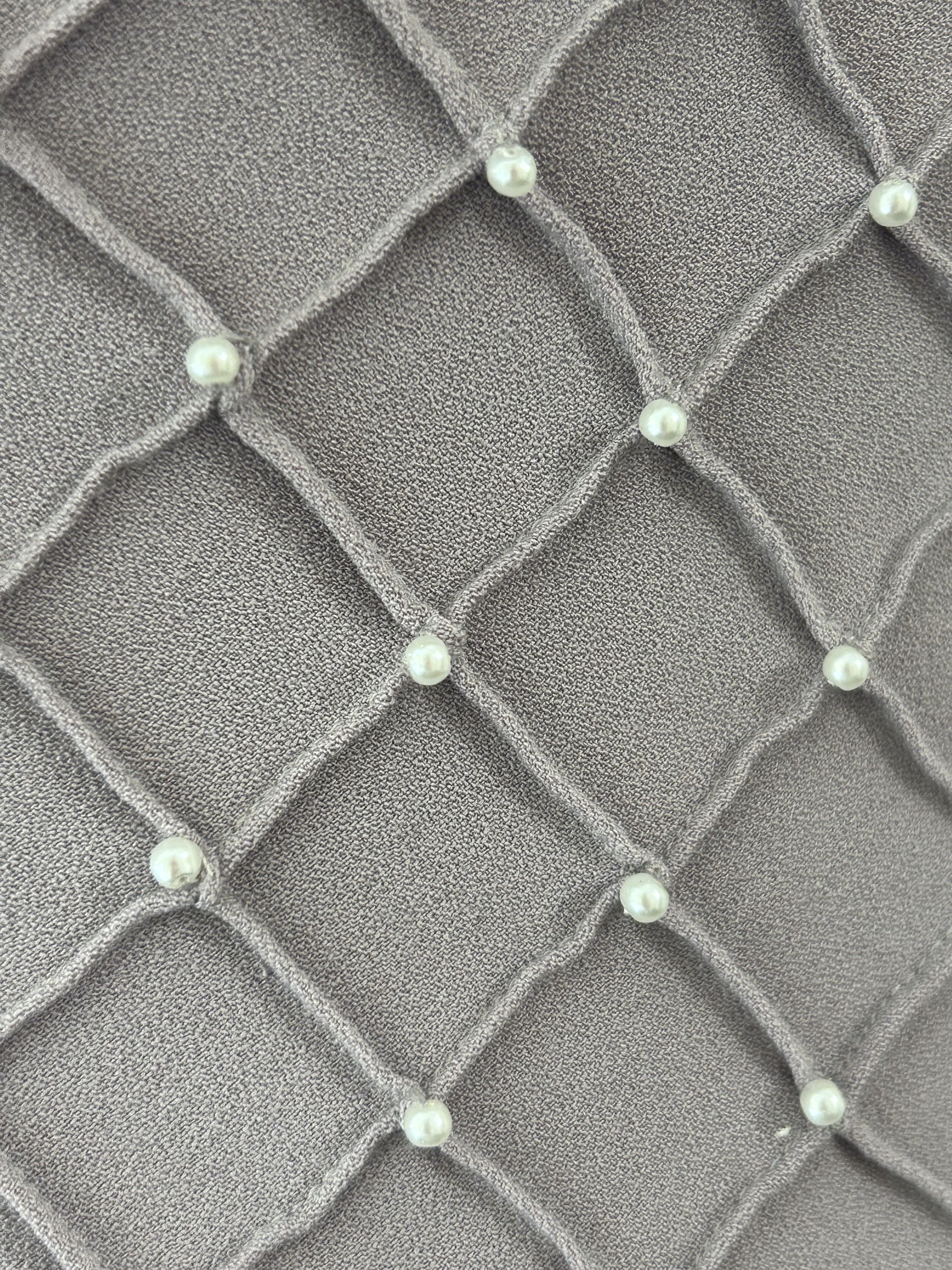
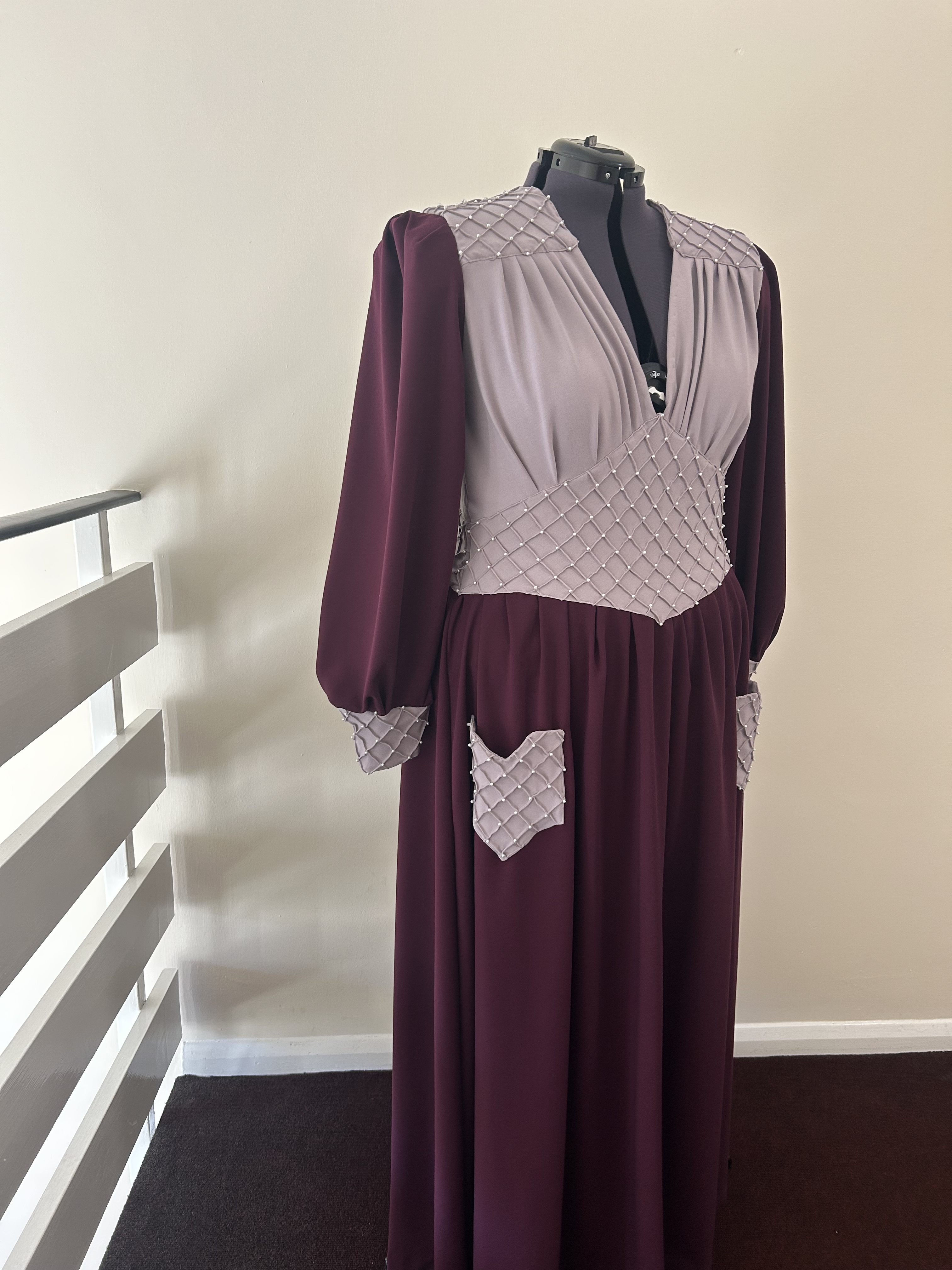
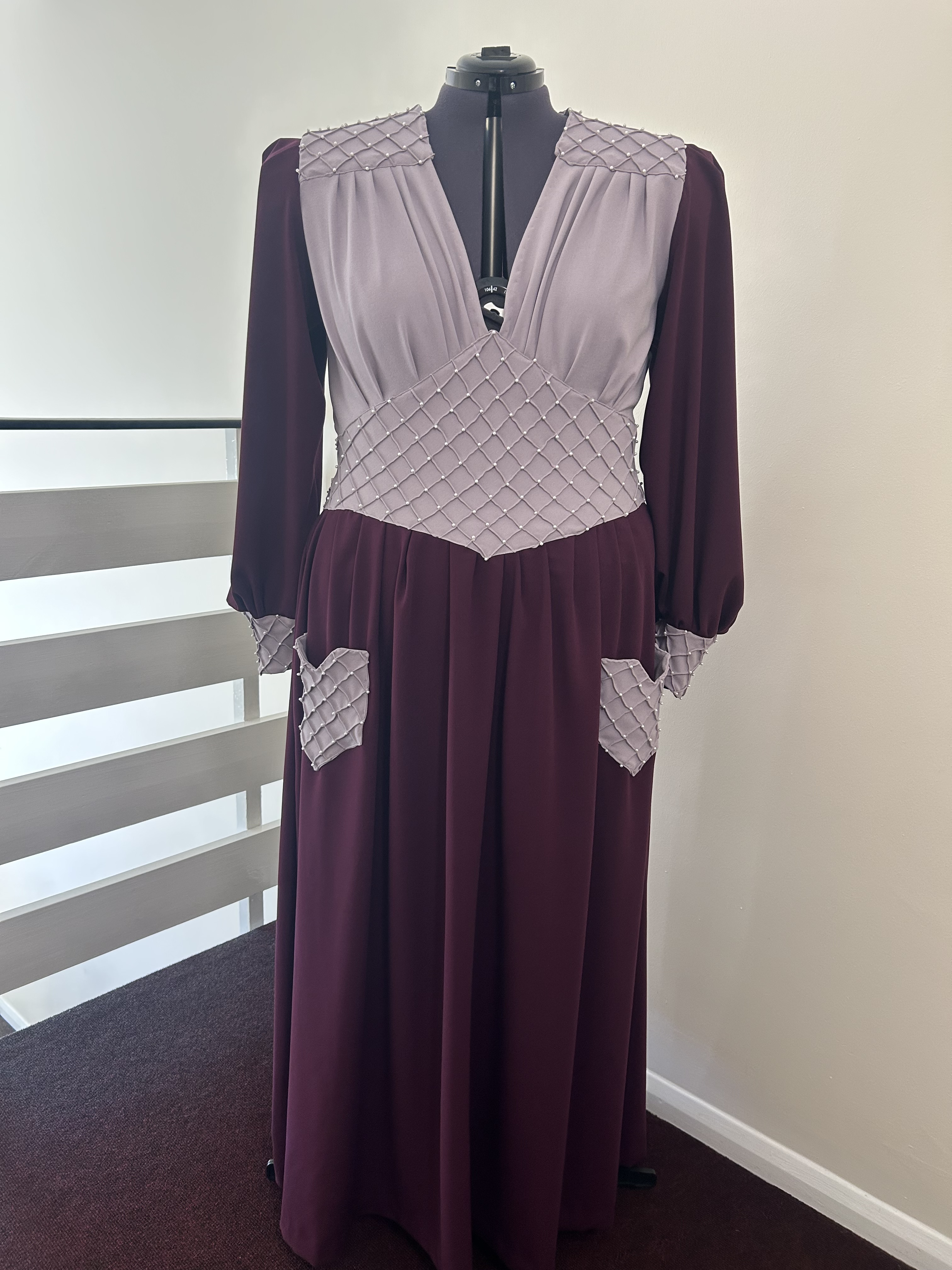
Early 1940s style colour blocking dress

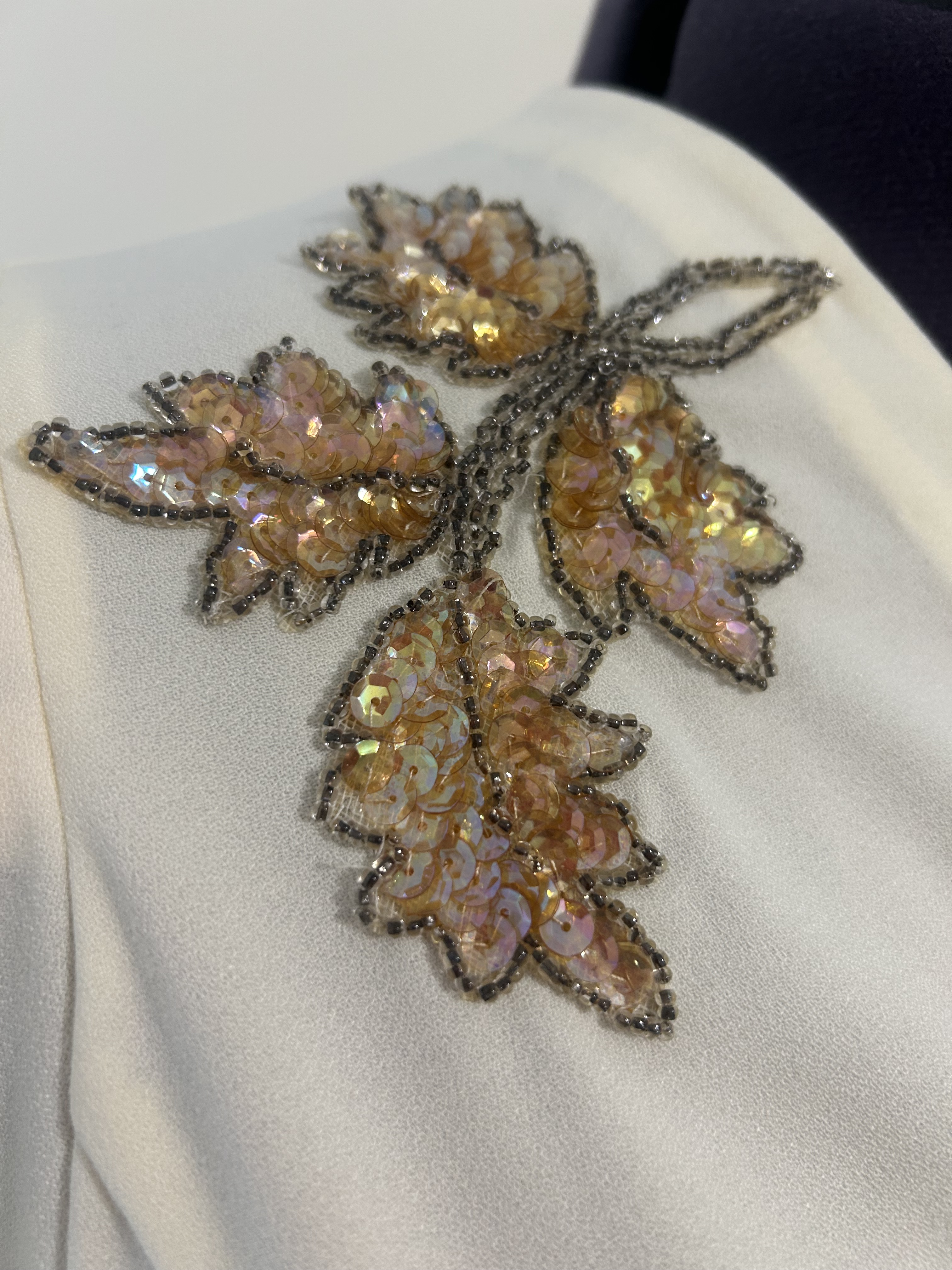
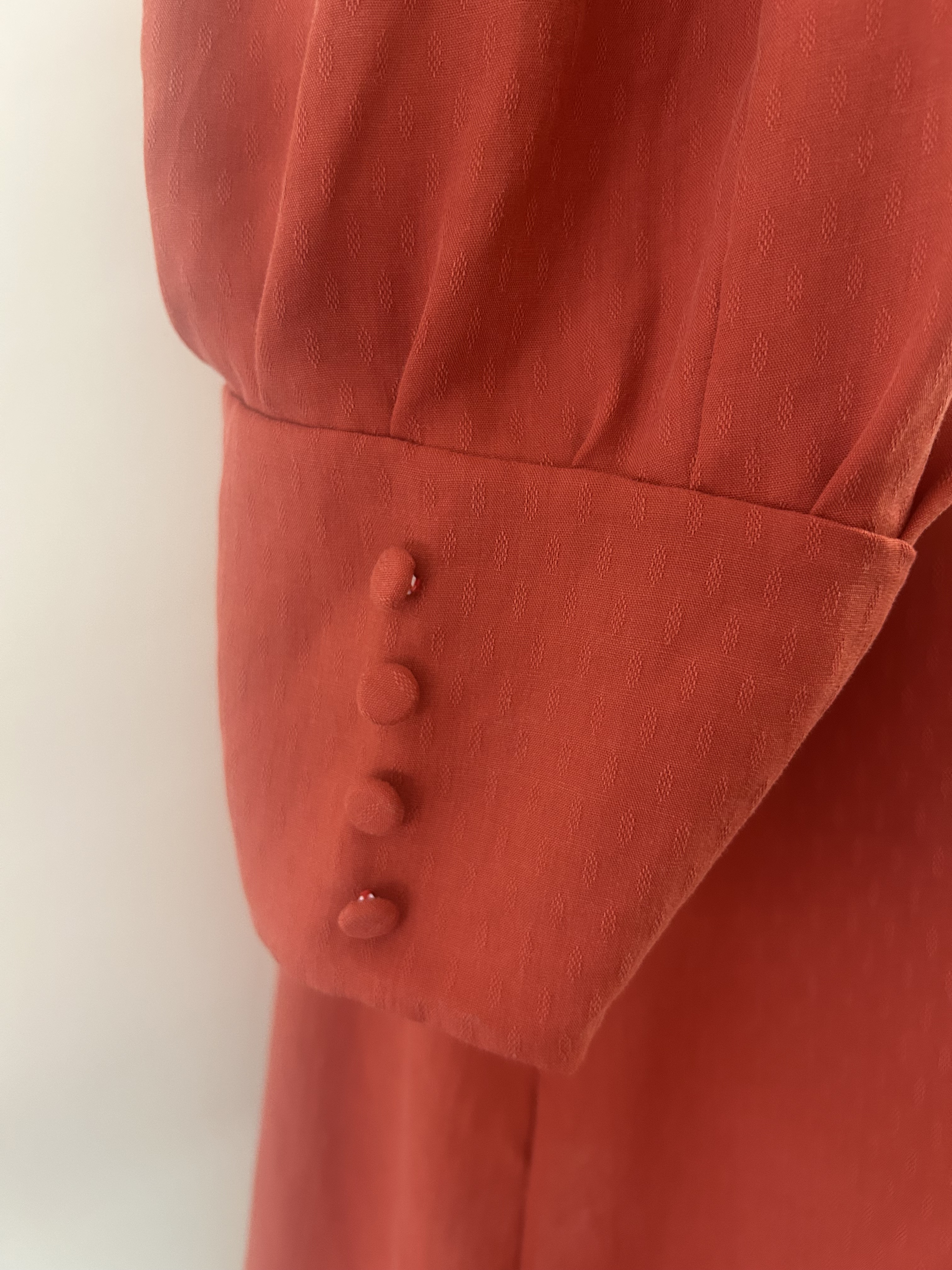
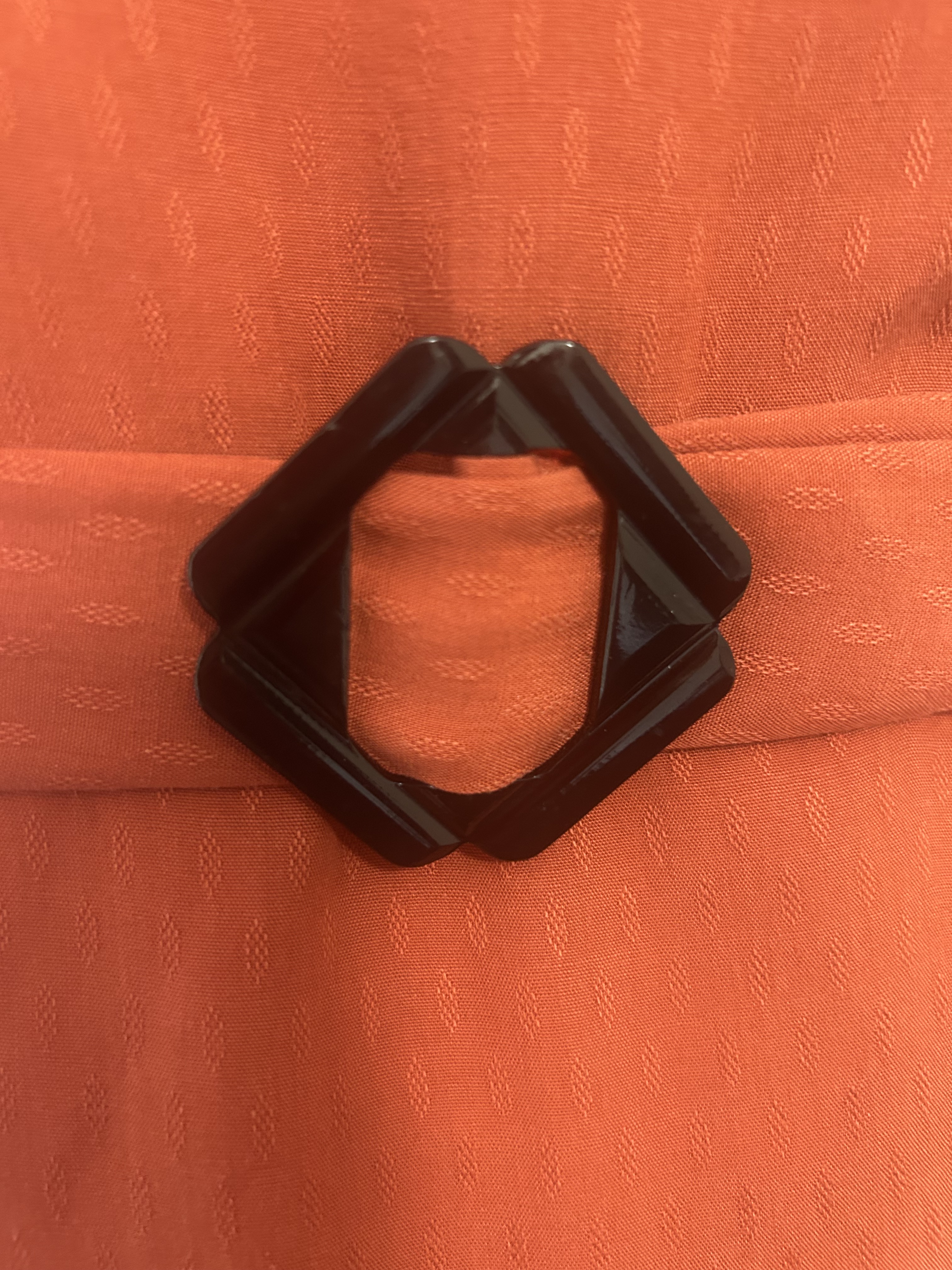
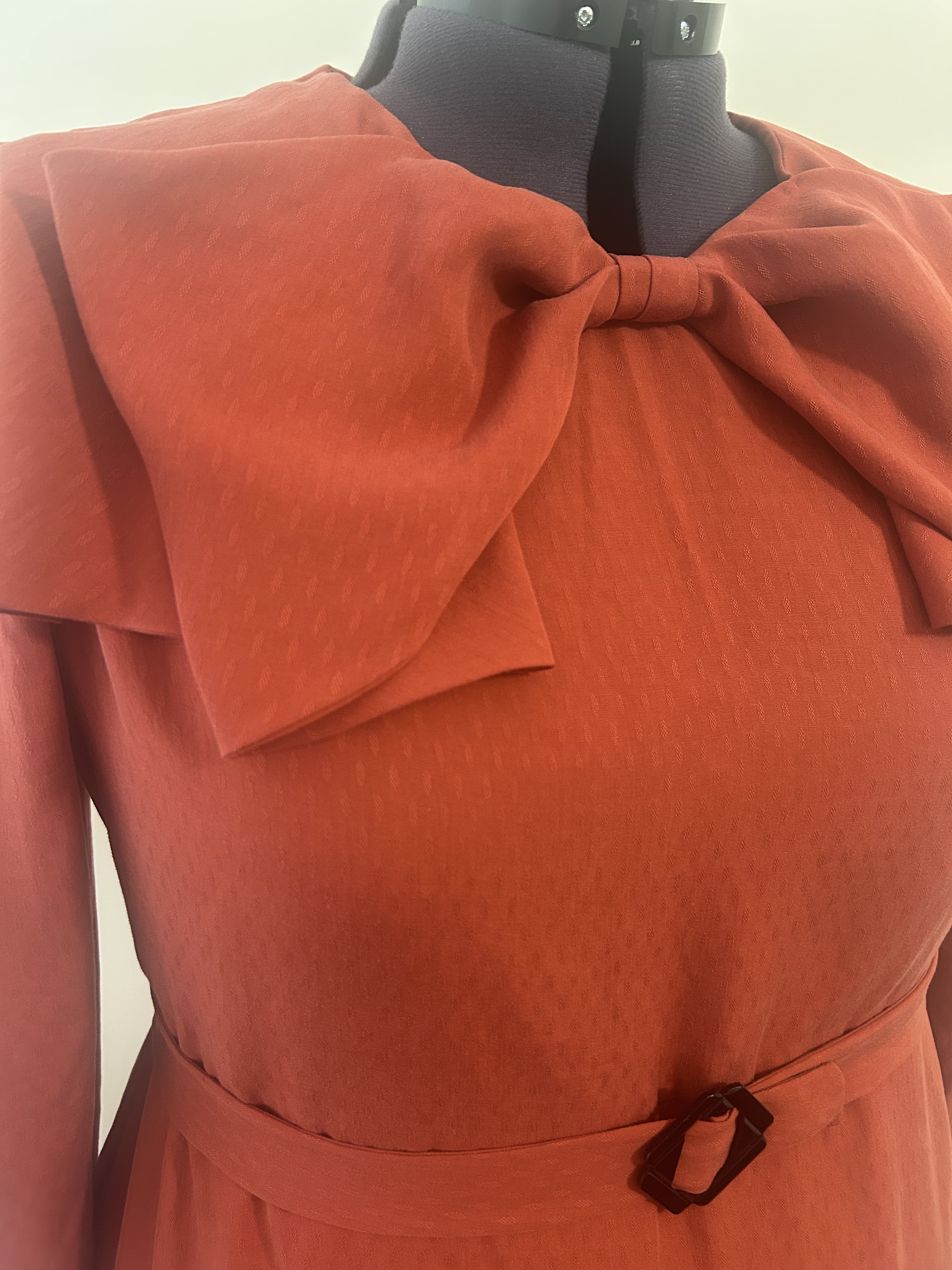
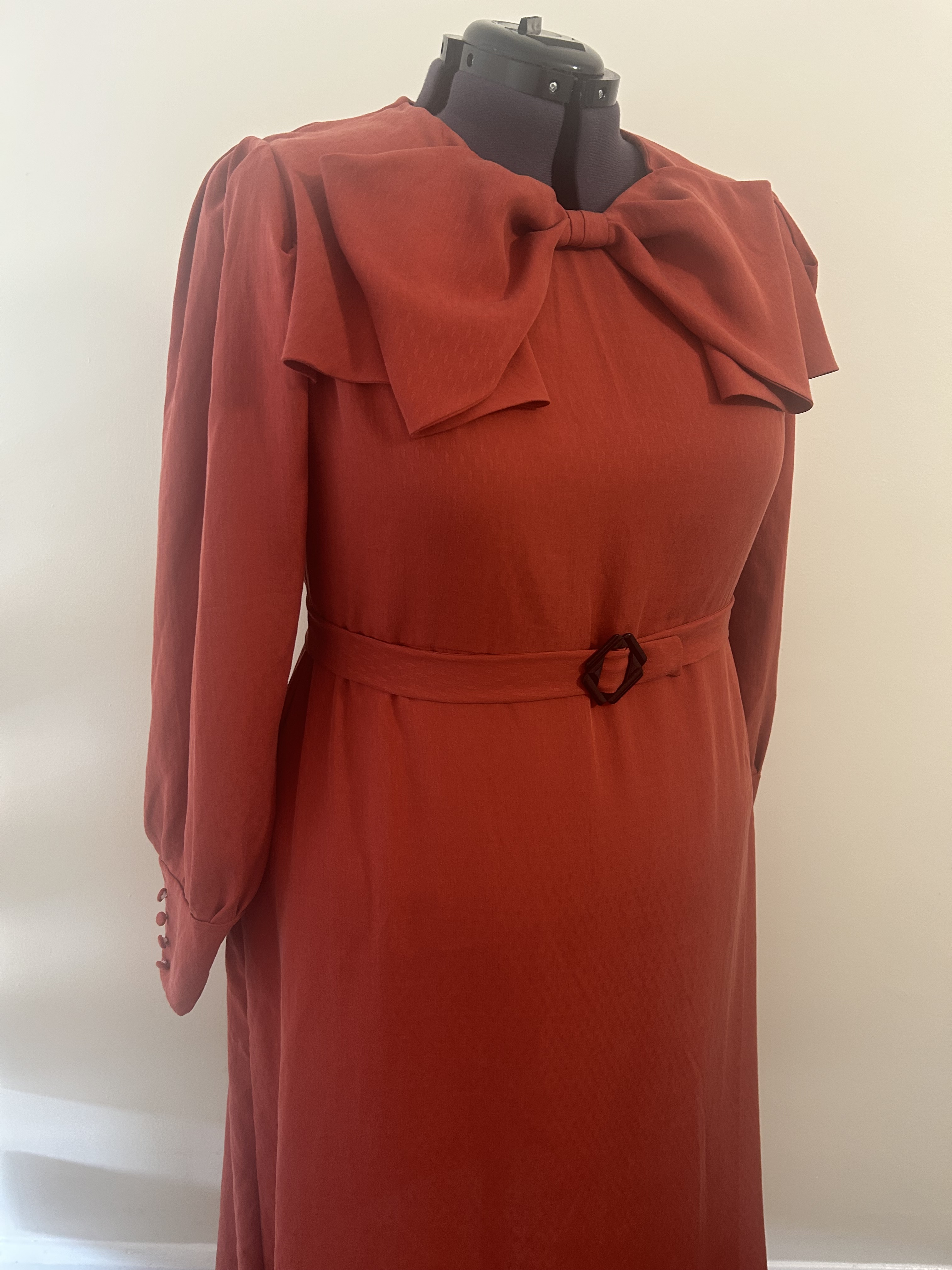
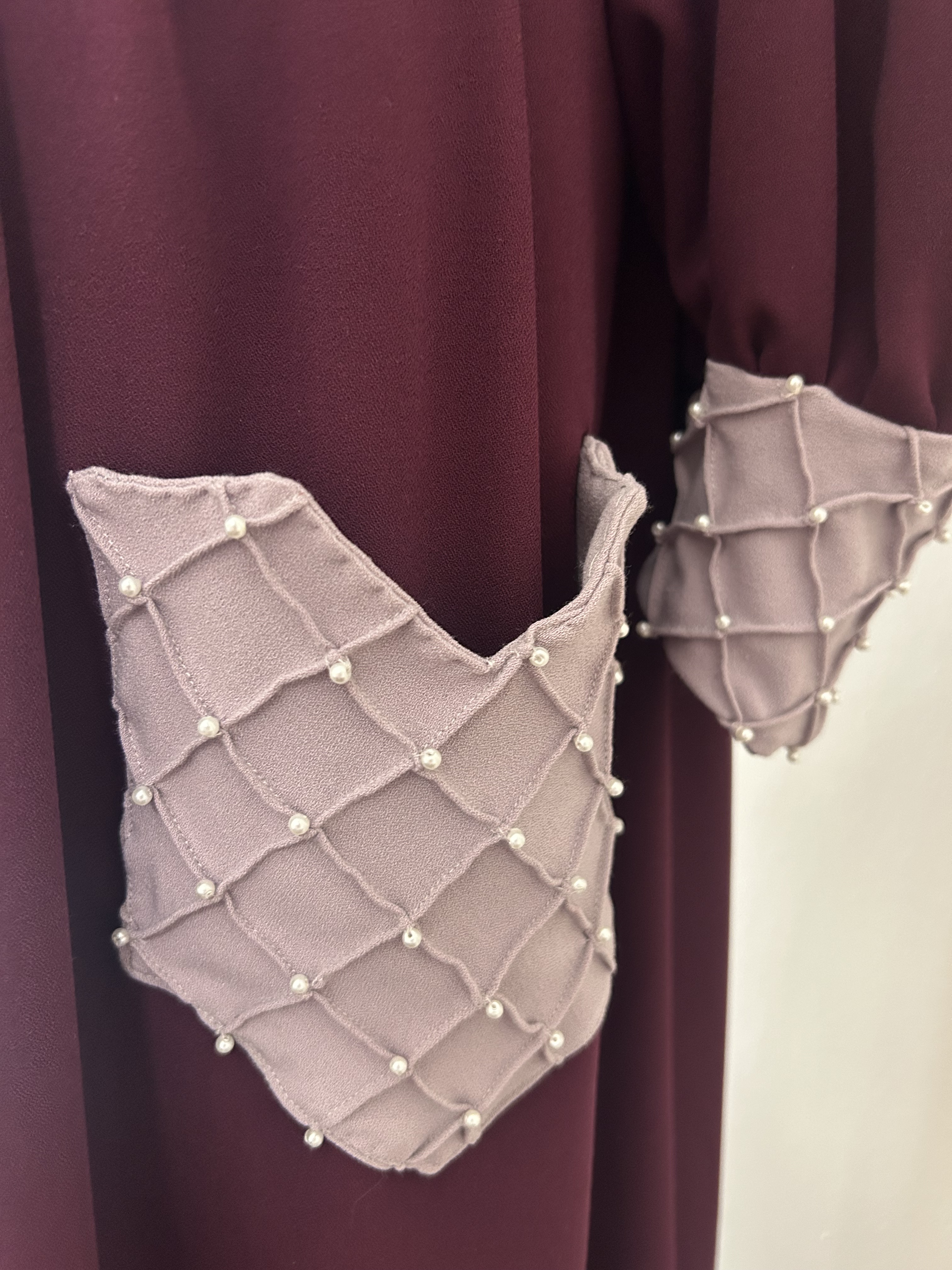
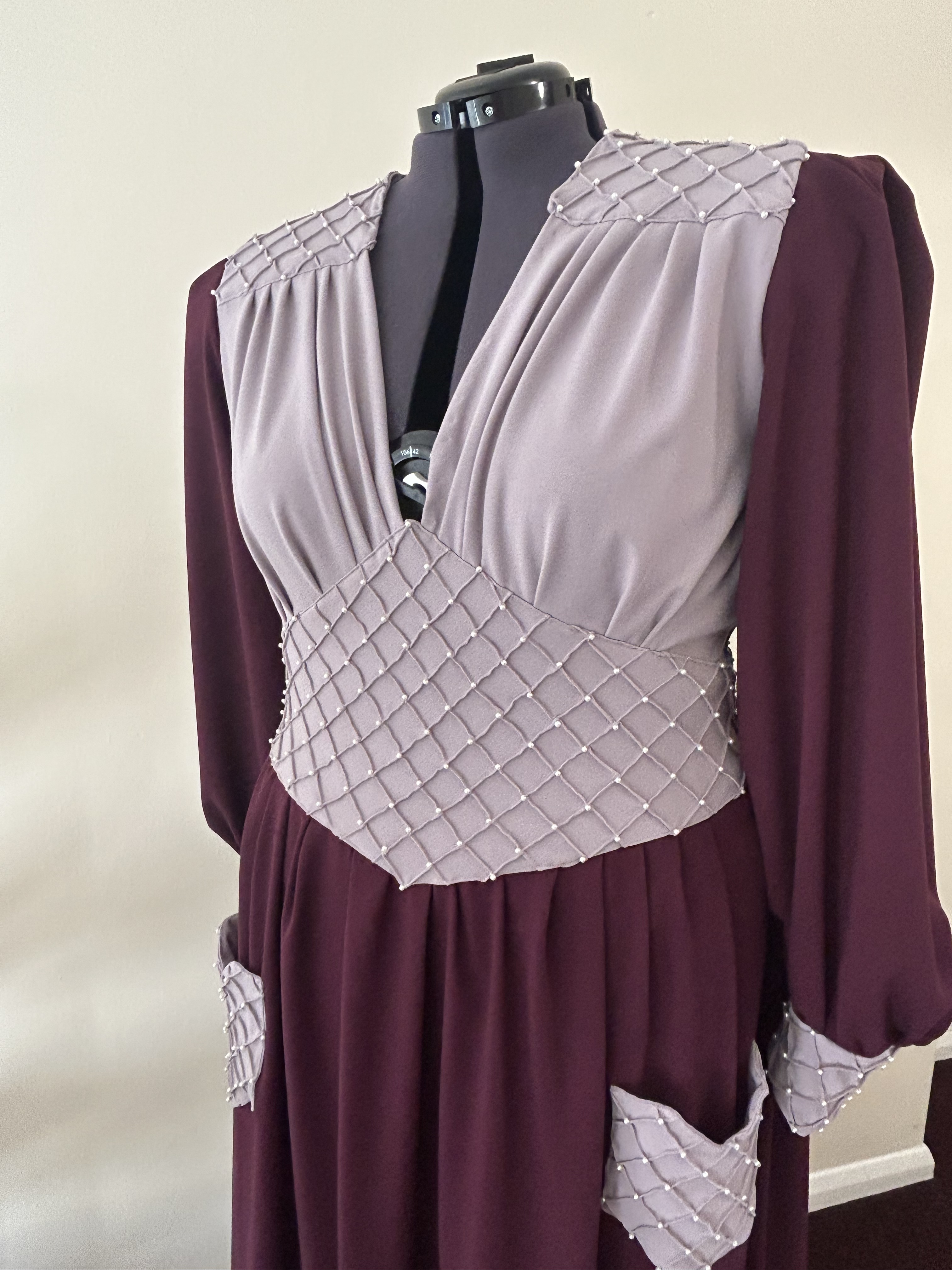
Here’s an interesting example of colour blocking in this striking early 1940s style viscose crepe dress. Colour blocking in wartime clothing was a sign of resourcefulness and practicality and usually in more muted tones, but still creating an interesting contrast. The silhouette in this dress is the classic and very favoured of the era, the snug side zipped shirred bodice with a flattering deep V-neck and hand embroidered pearl midriff yoke, front and back yokes and long pleated skirt, with long padded puffed bishop sleeves and cuffs adorned with pearl embroidery. It also features sweet pockets in the skirt.

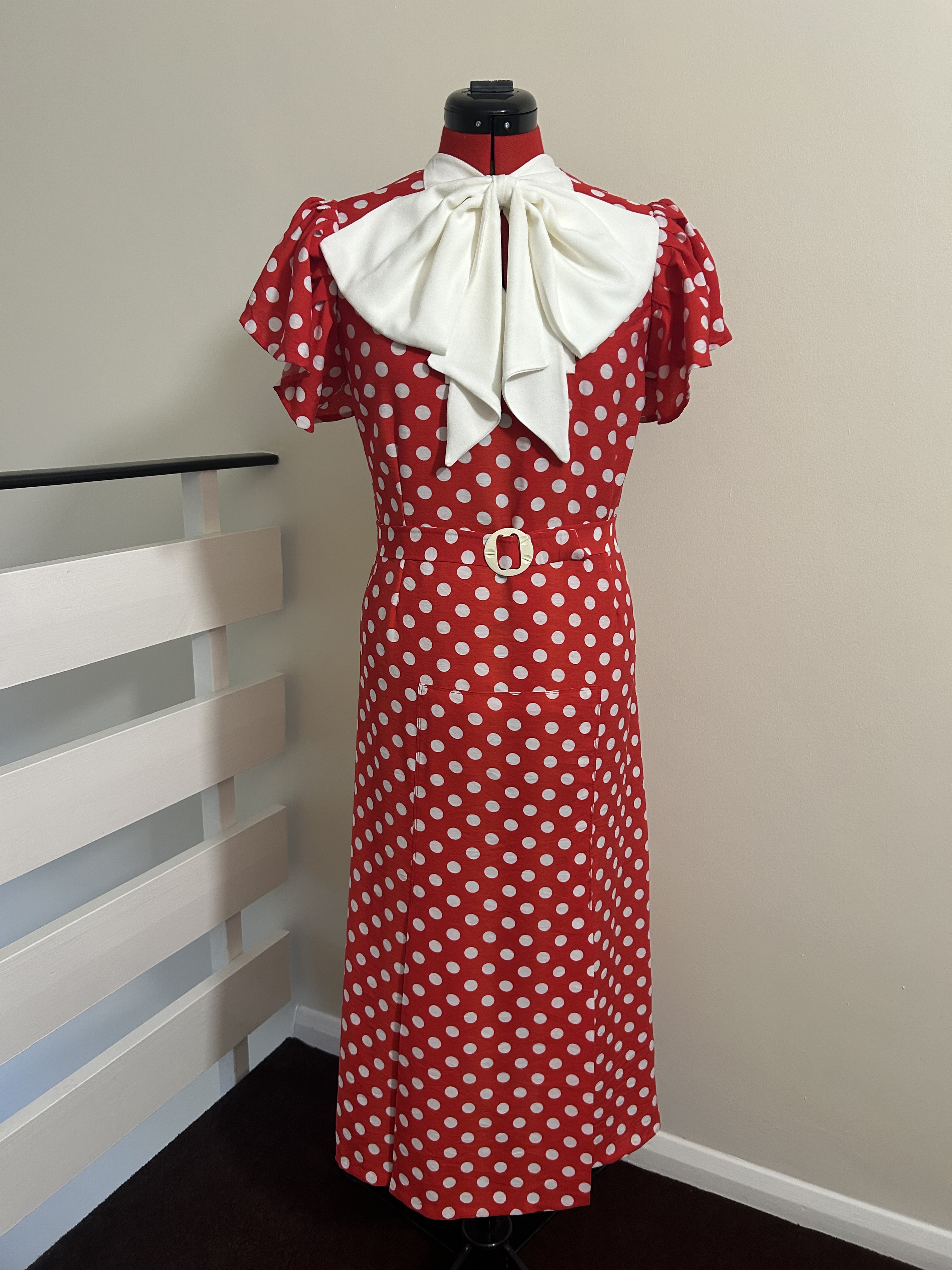
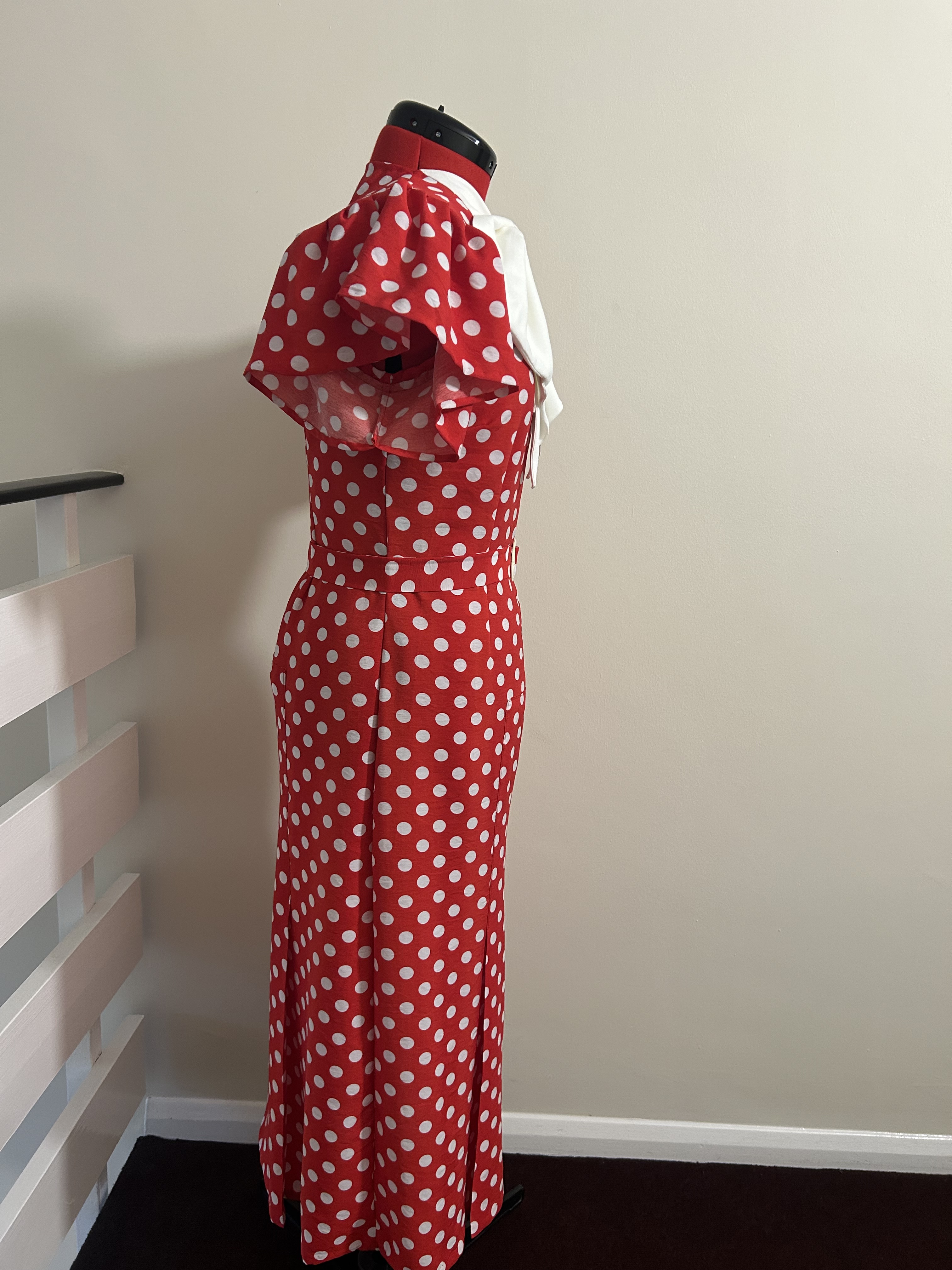
Early 1930s style polka dot darling

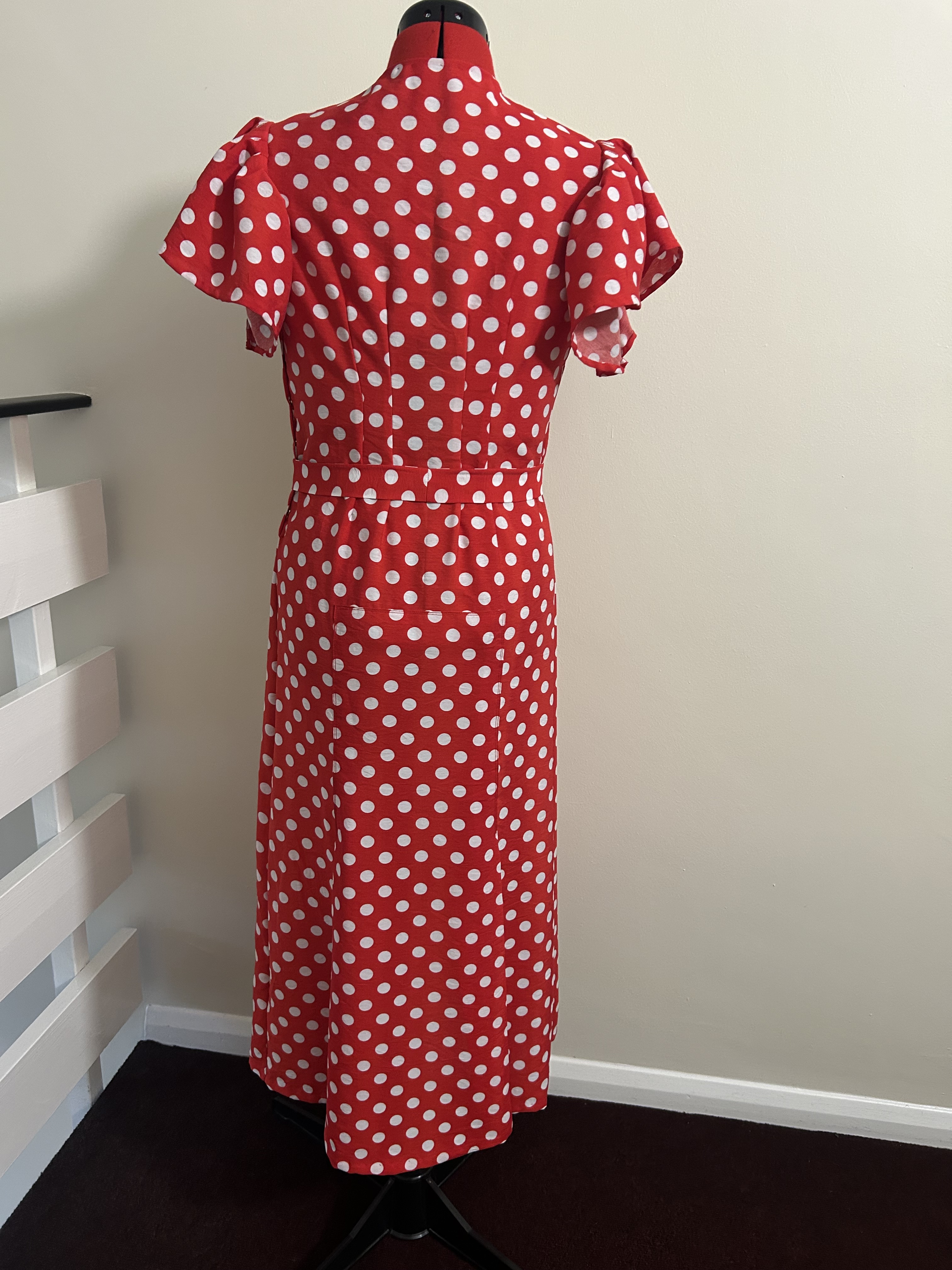
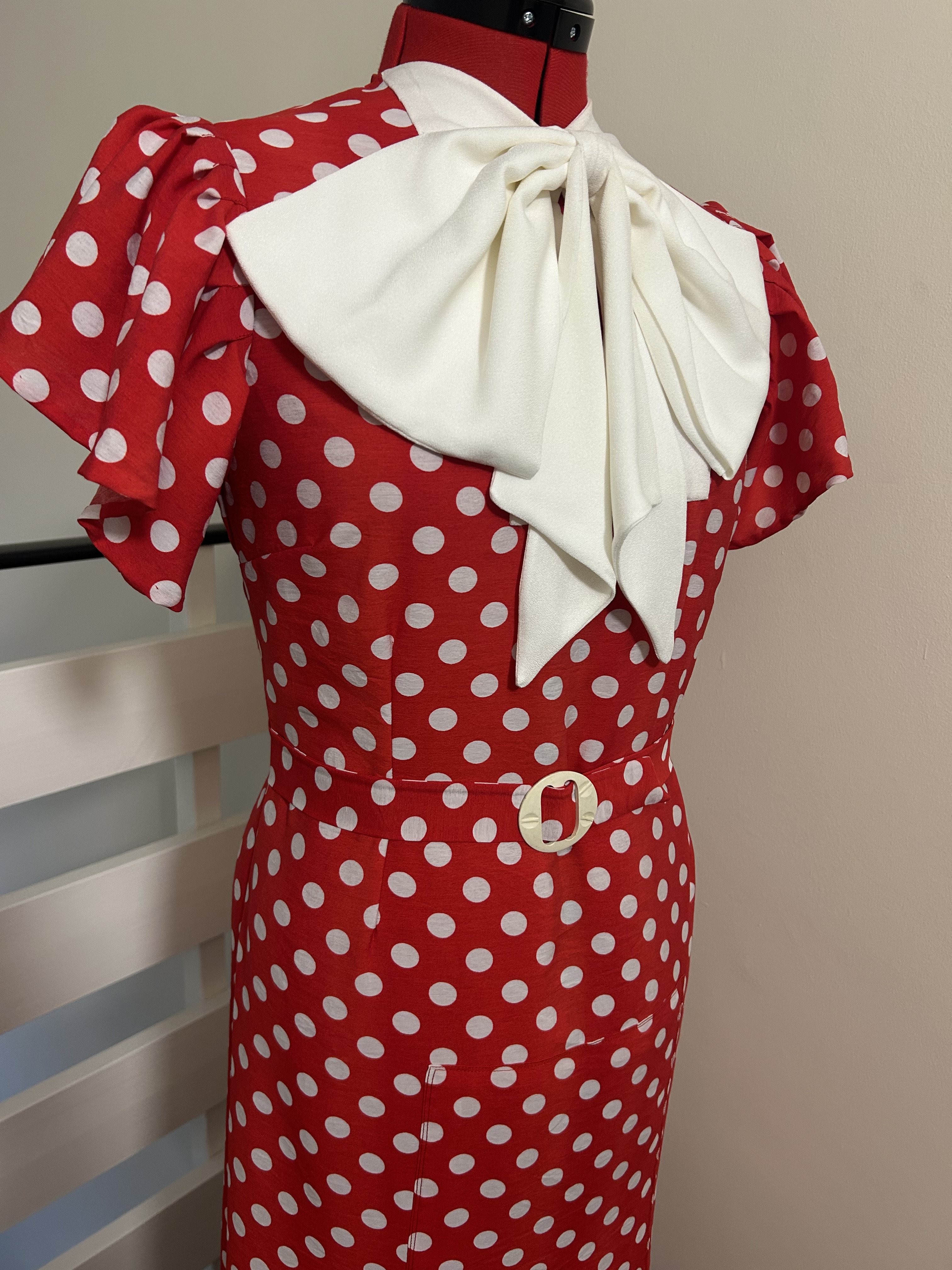
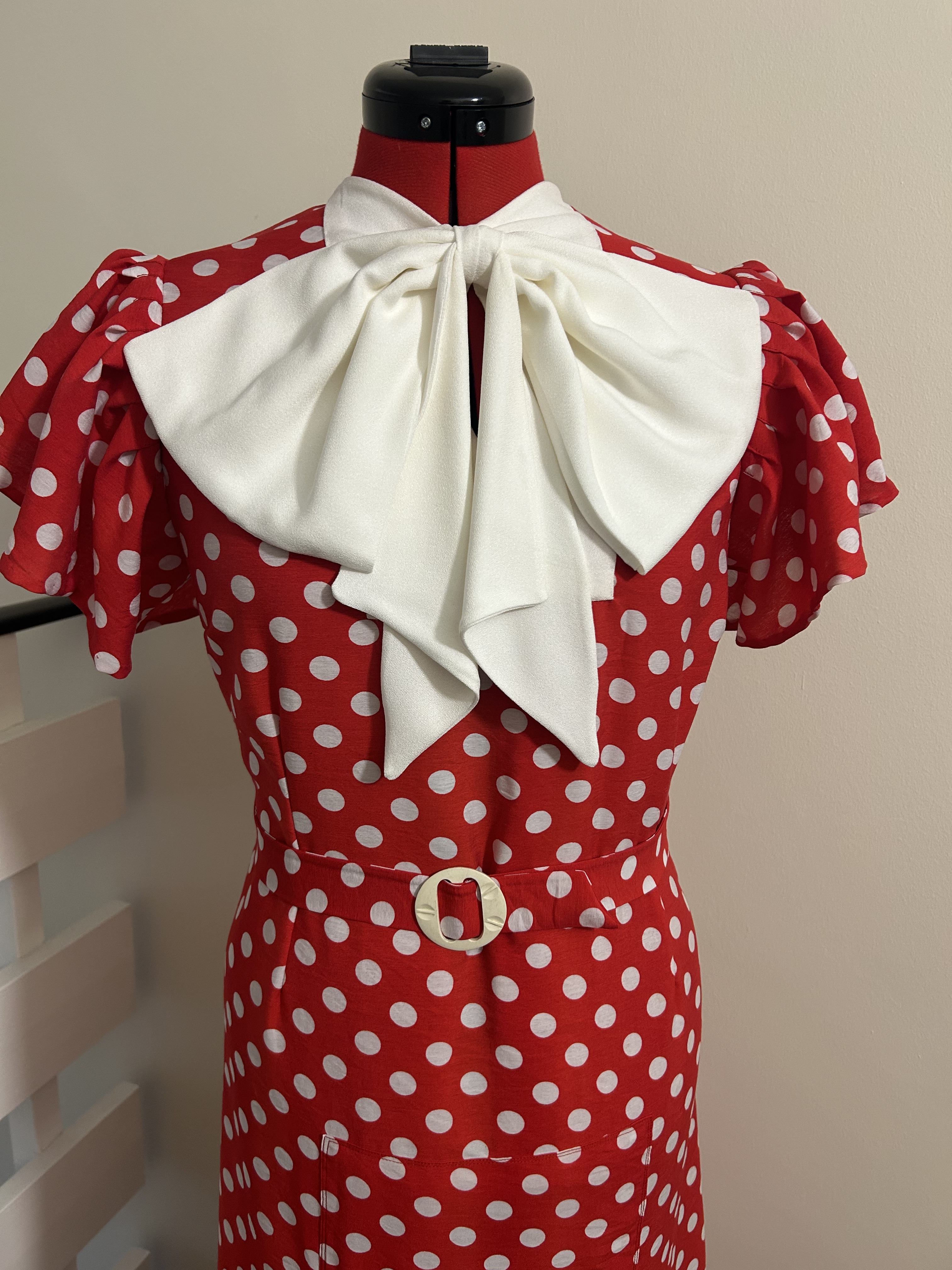
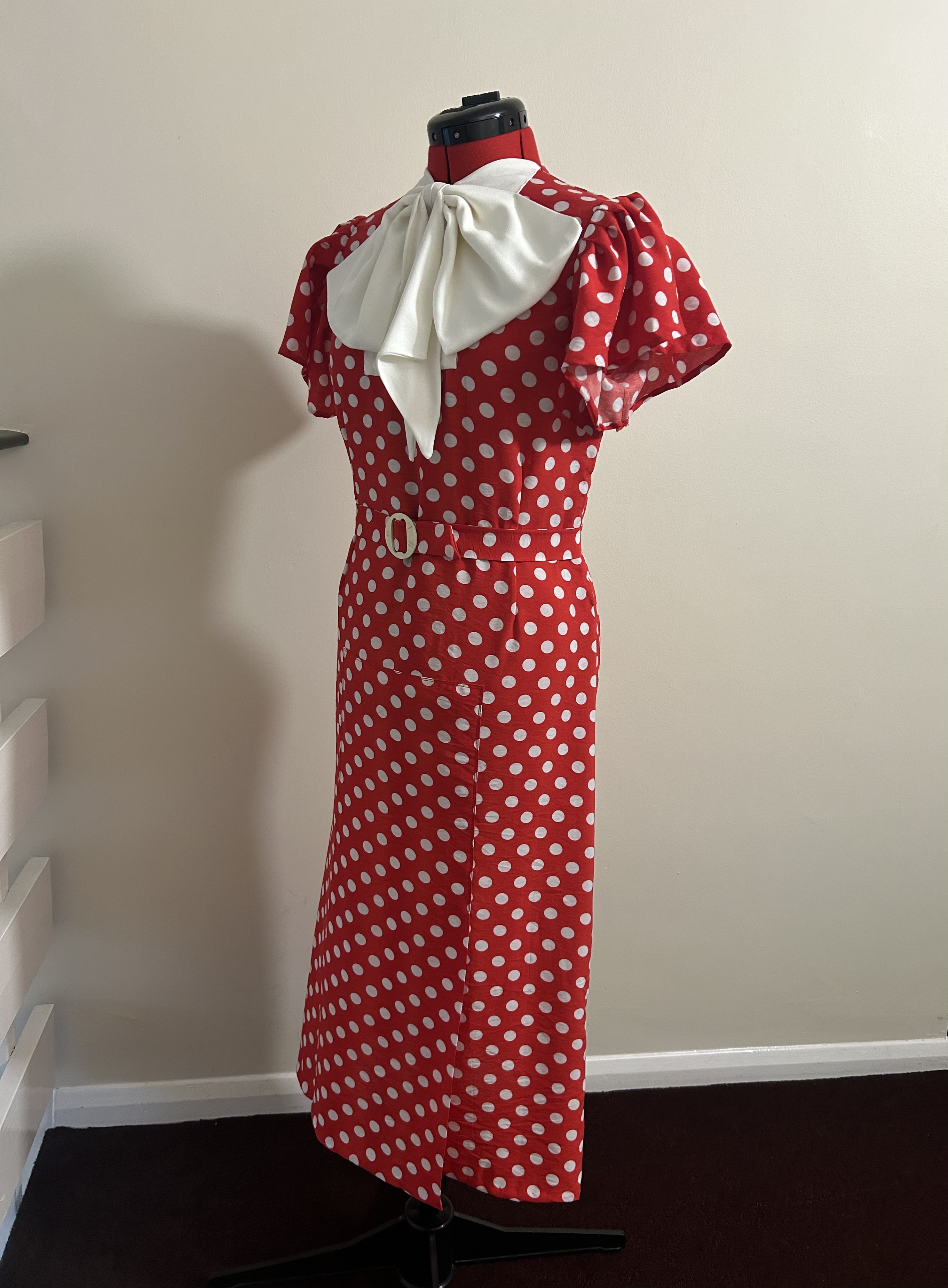
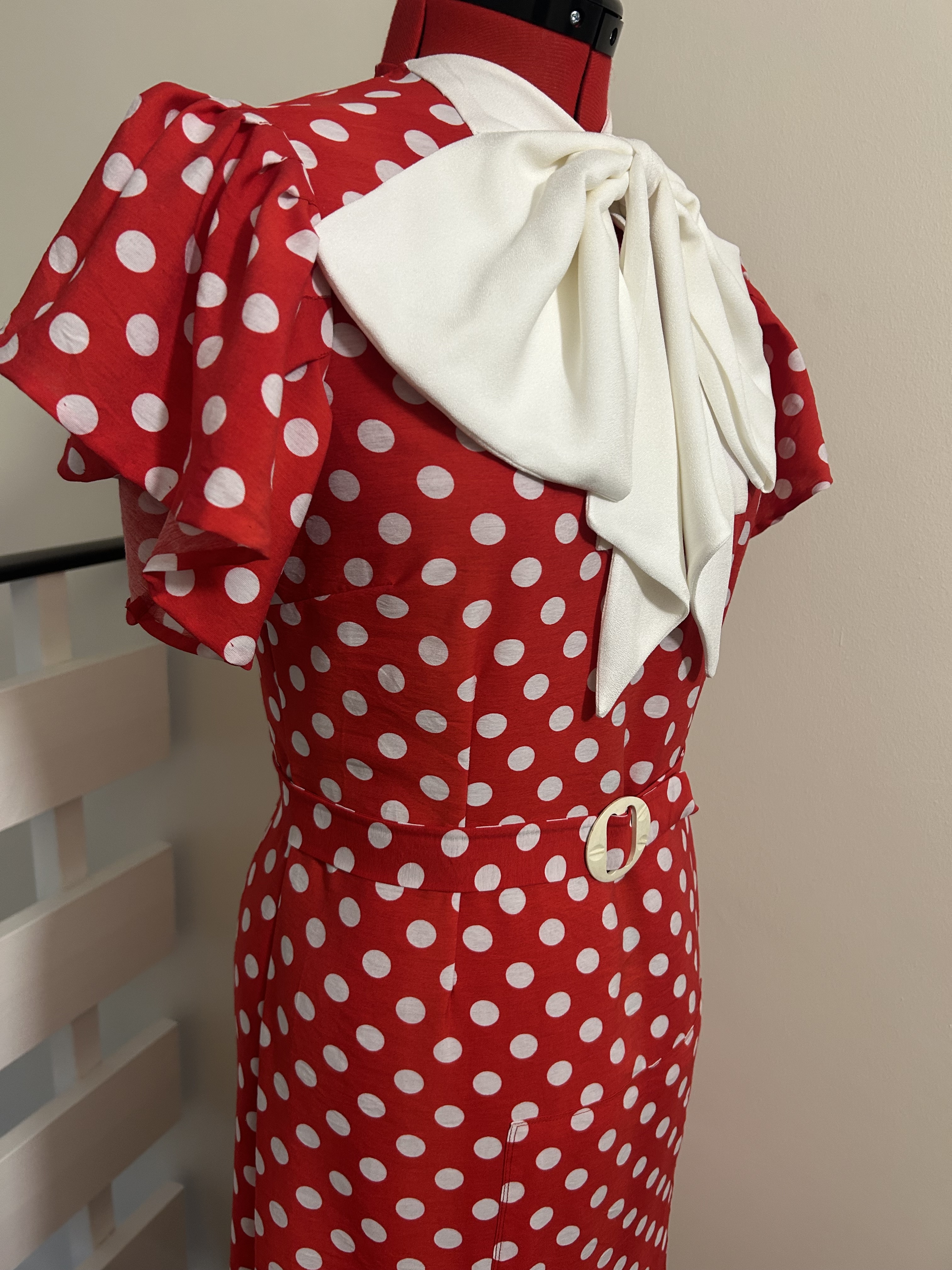
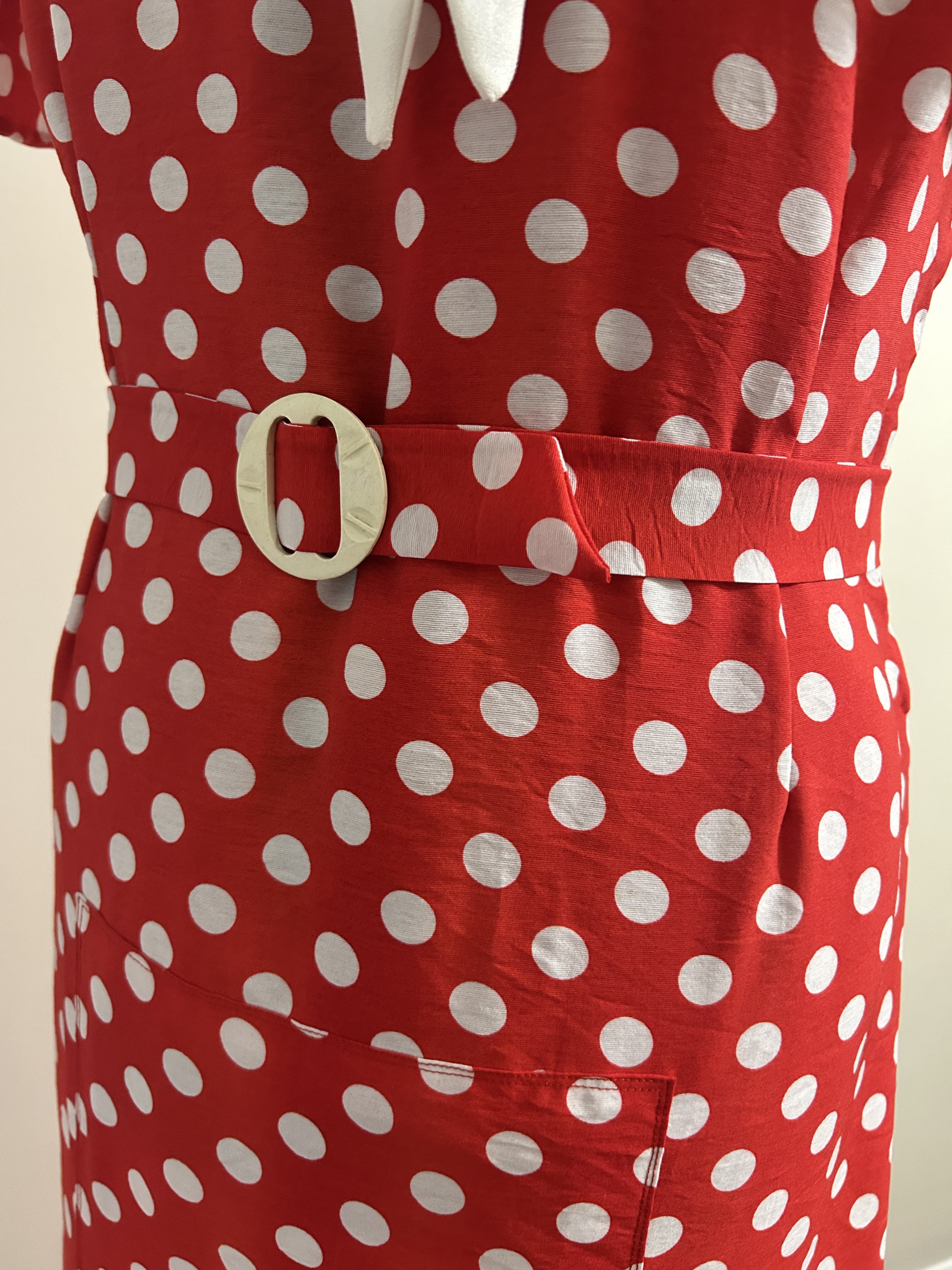
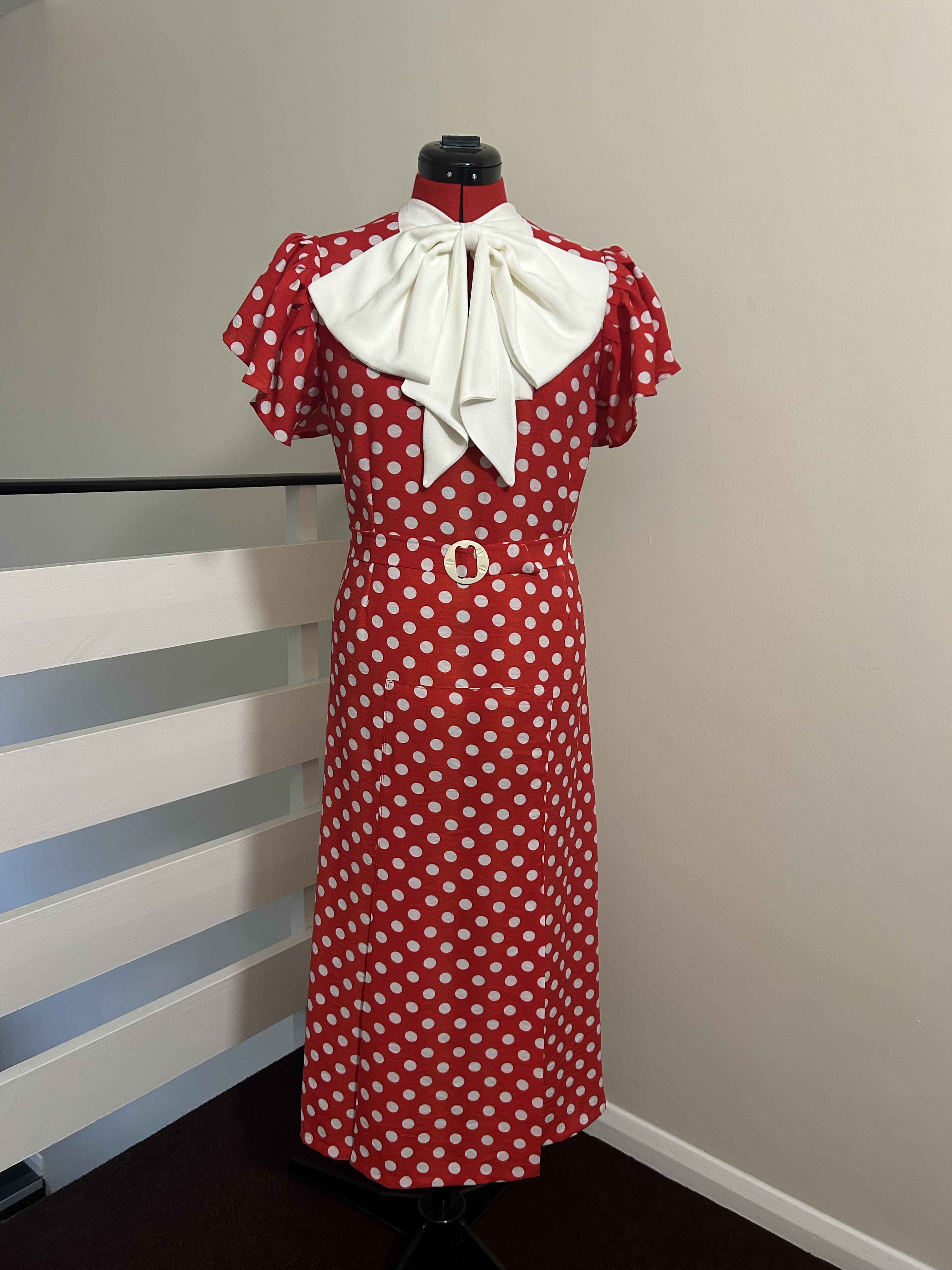
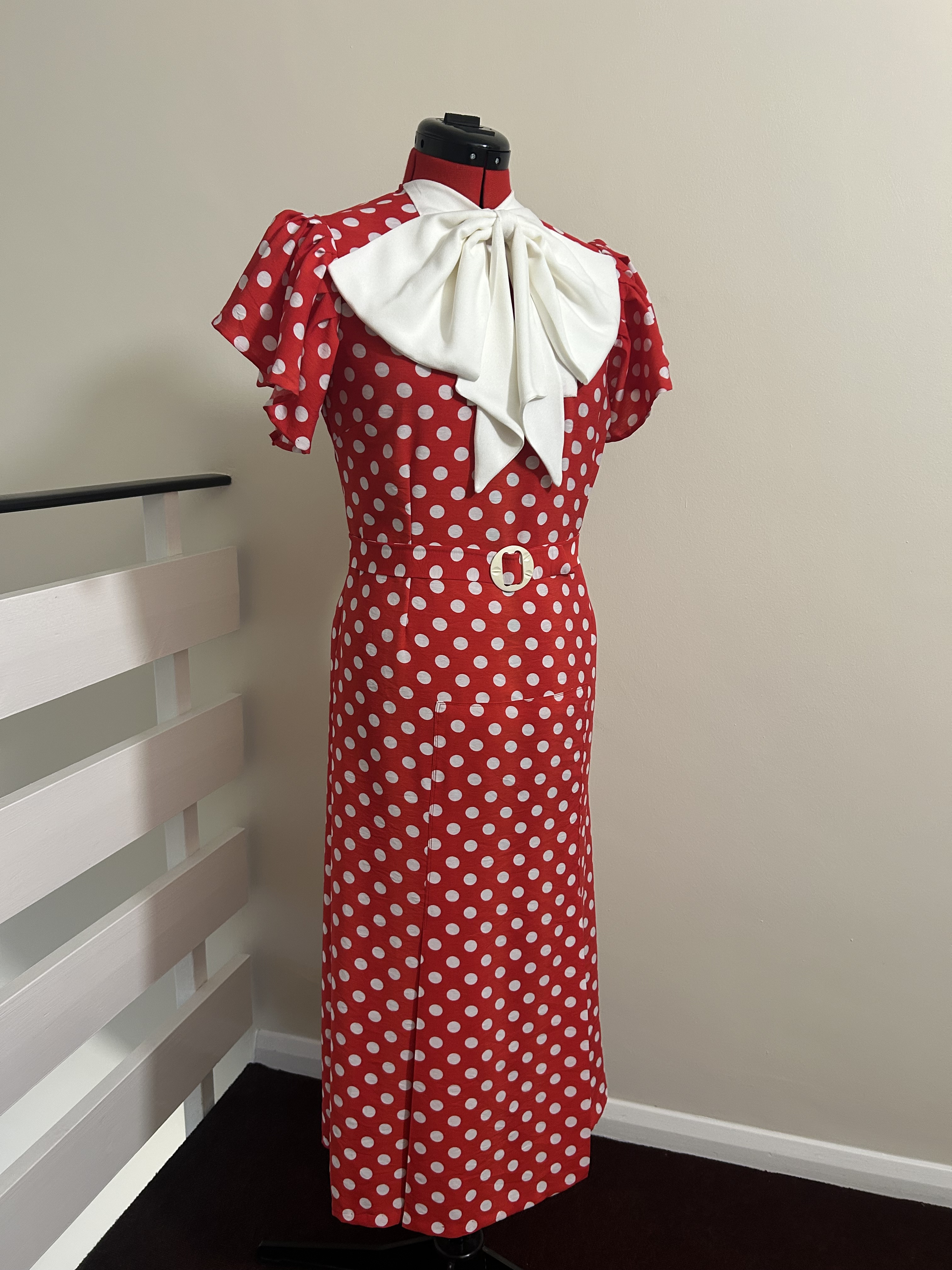
This beautiful summer dress in large polka dot viscose rayon with a statement white rayon crepe bow screams 1930s all over! It features butterfly sleeves and the very art deco style square panelling at the front and back of the skirt which also has kick pleats on both sides. Double darts at the front and back give a bit more shape to the dress. The bow fastens with a snap at the collar. Snap fastening at the side. The belt features a cream vintage bakelite buckle.

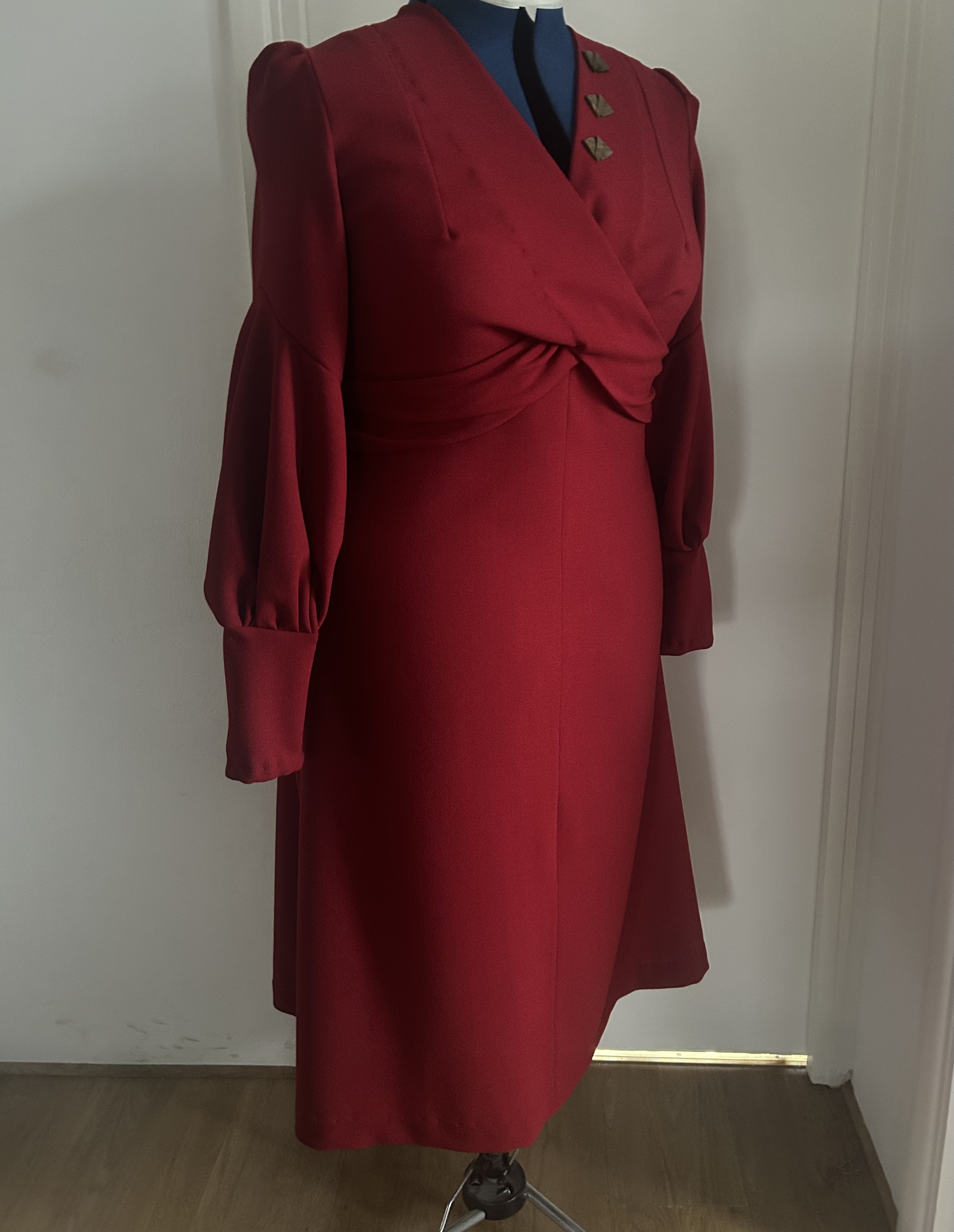
Claudette in poinsette wool crepe

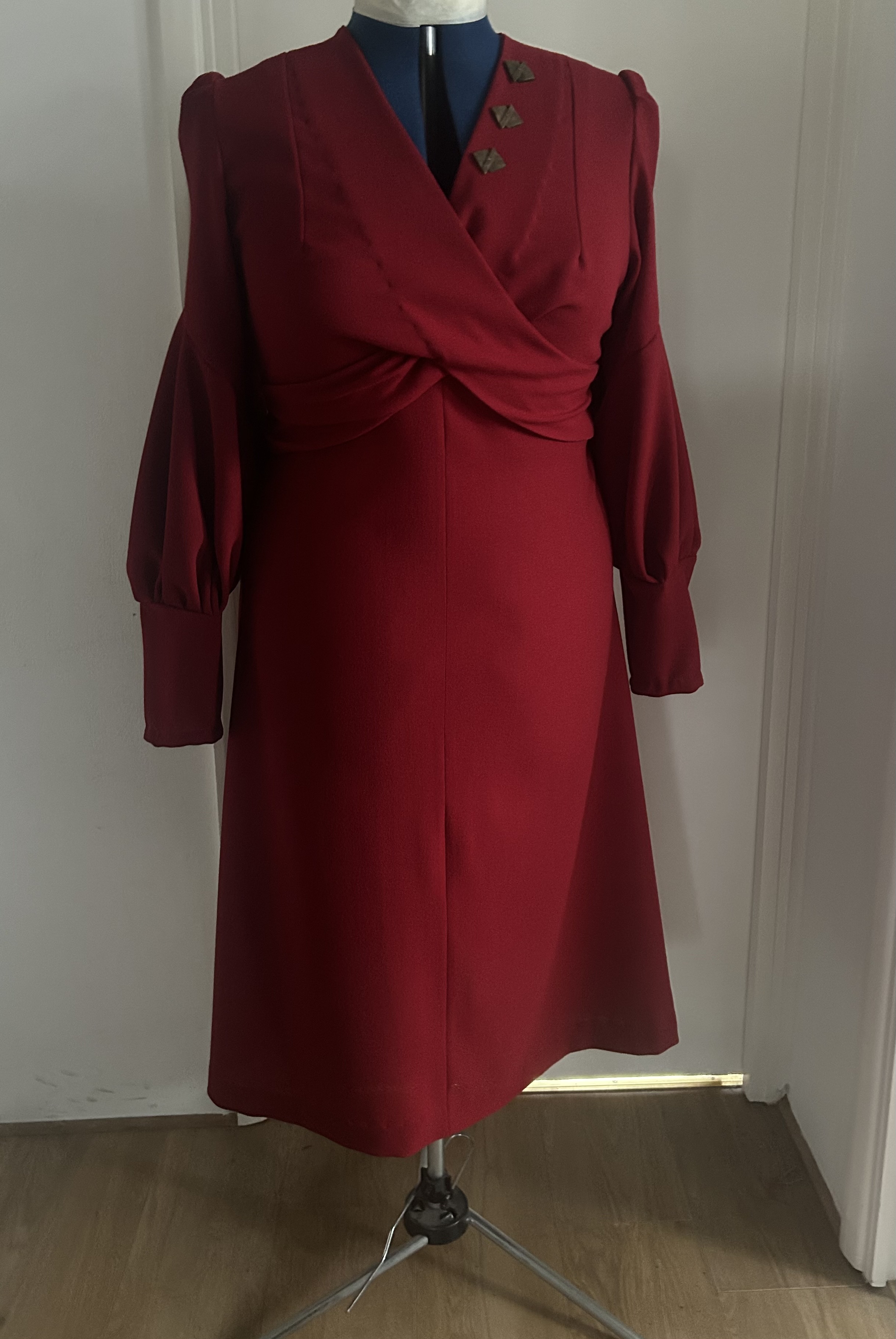
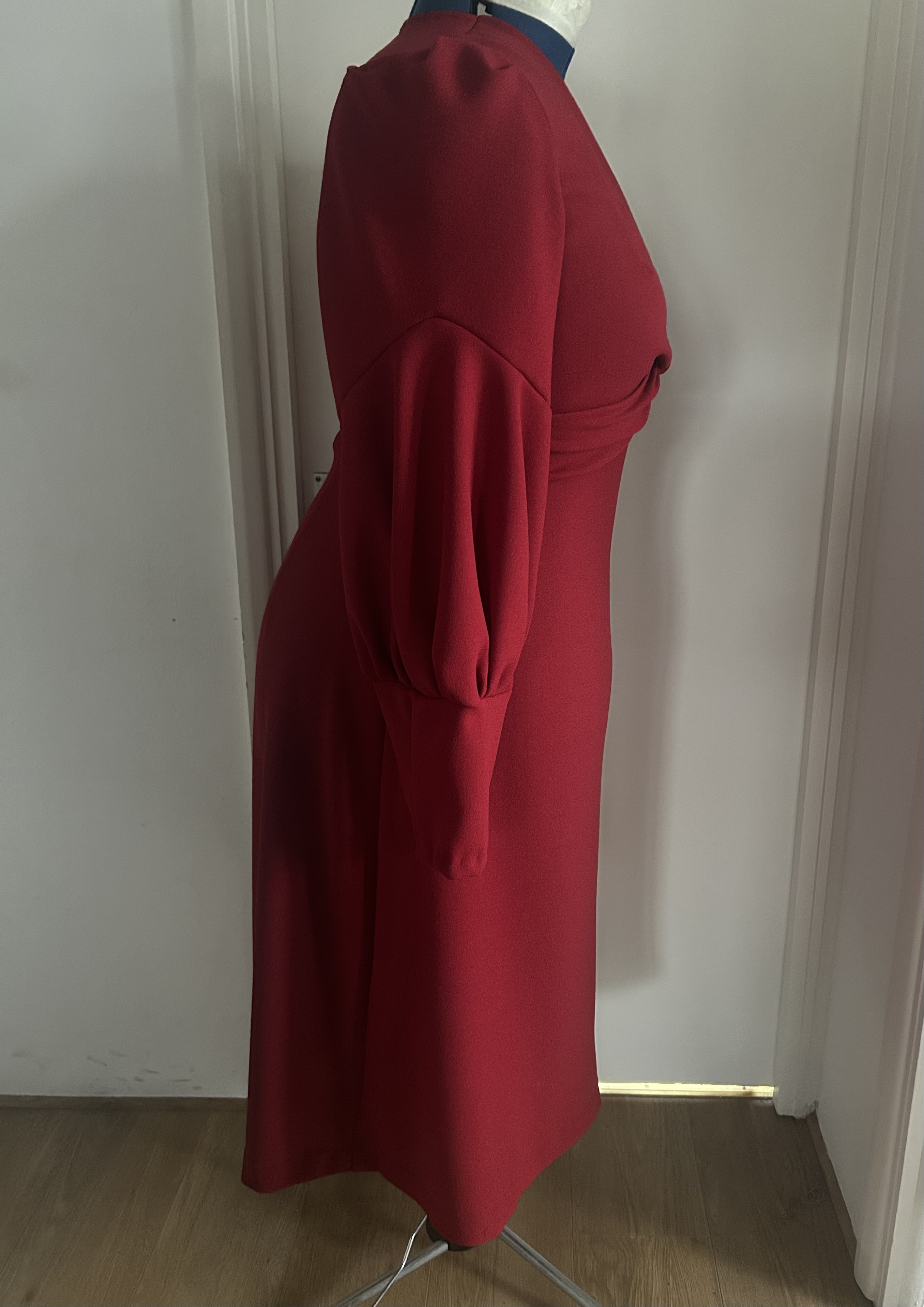
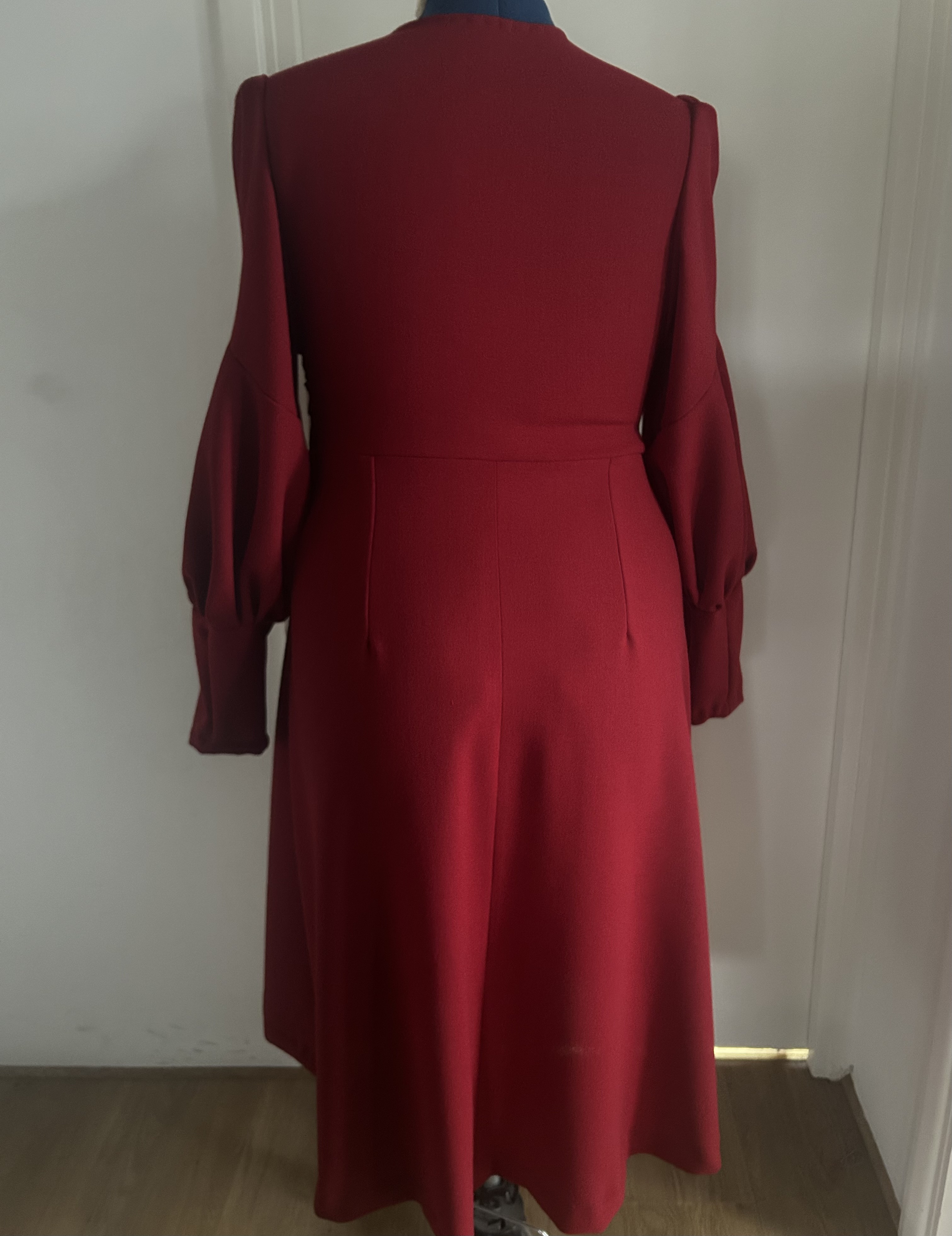
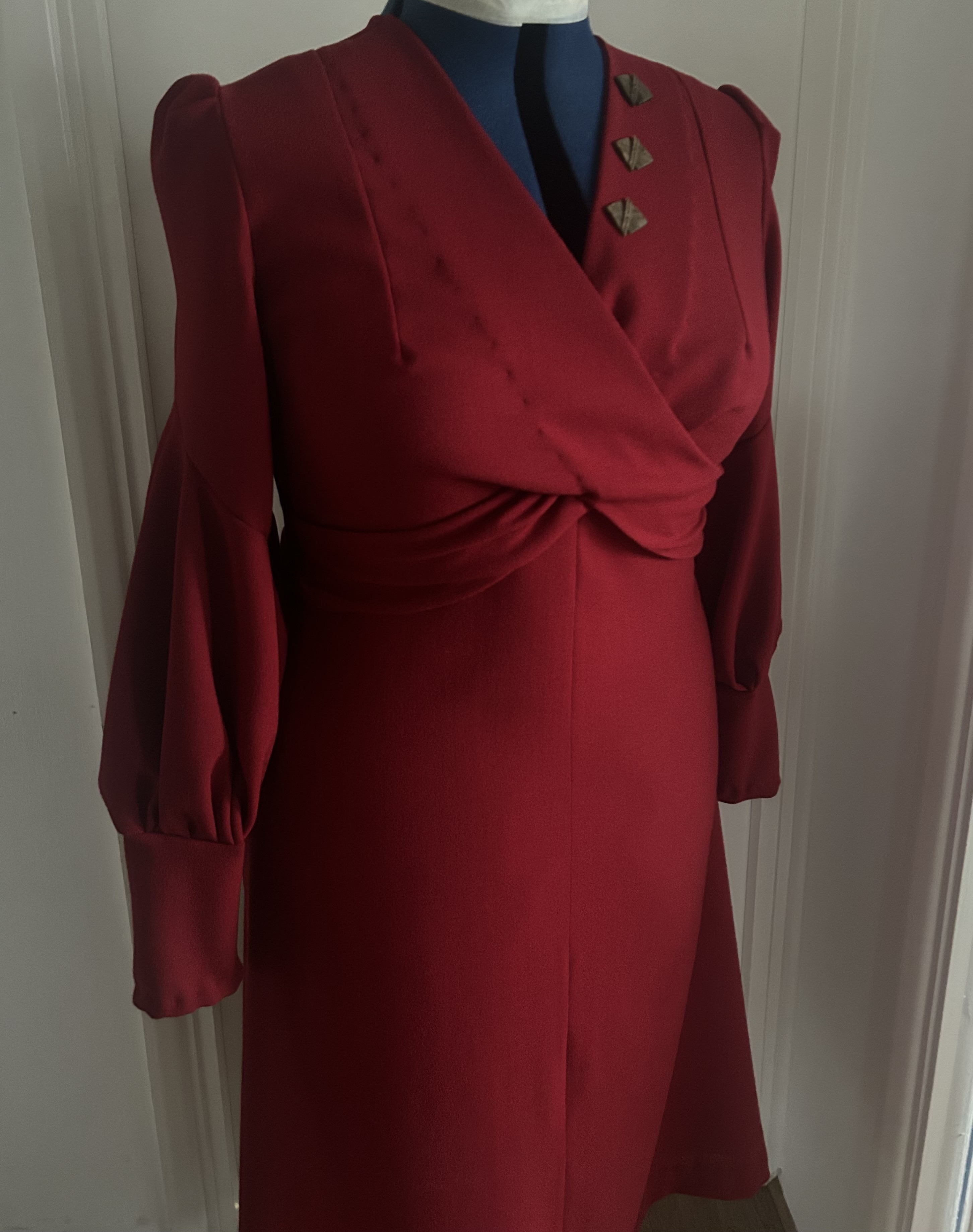
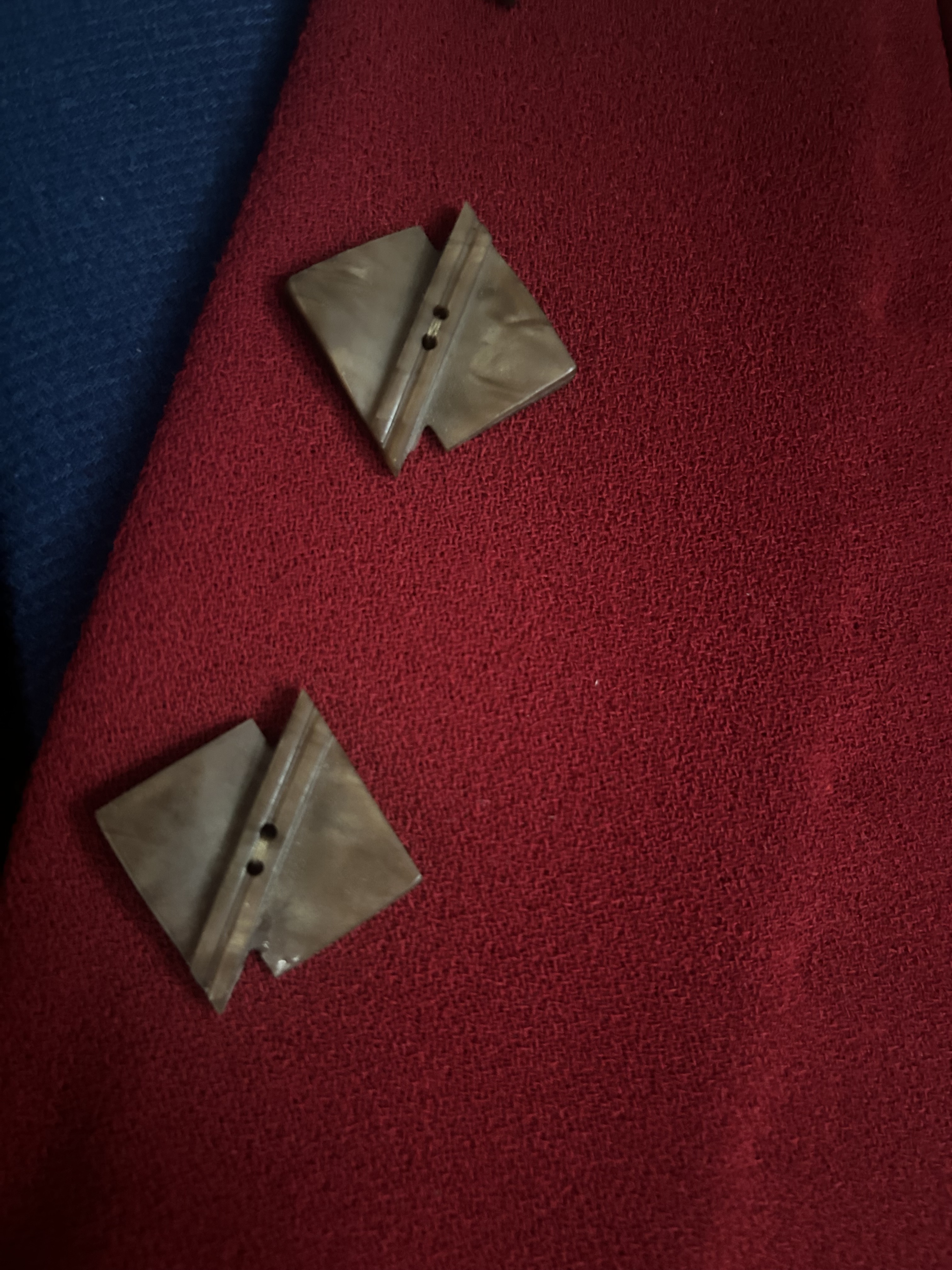
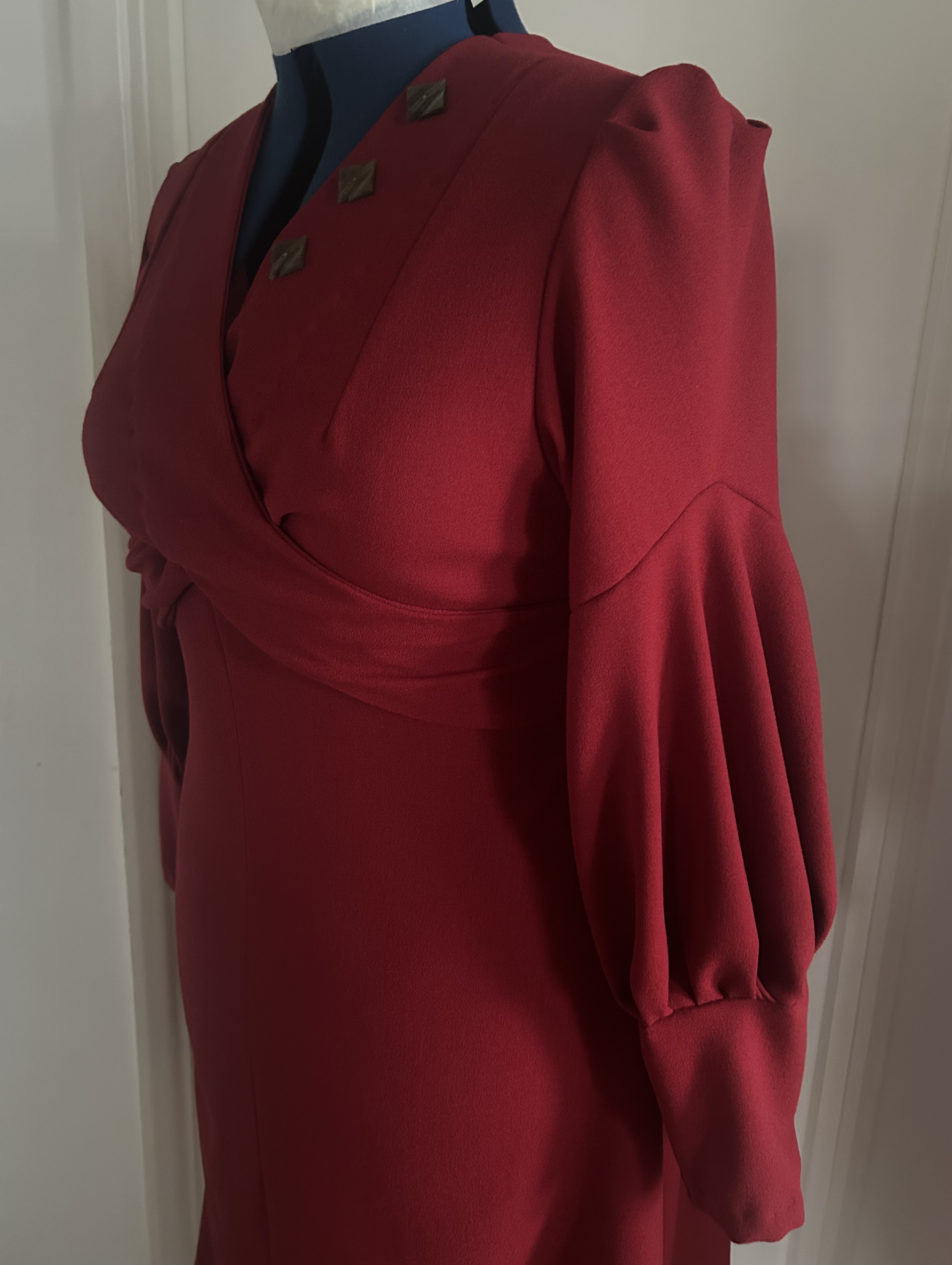
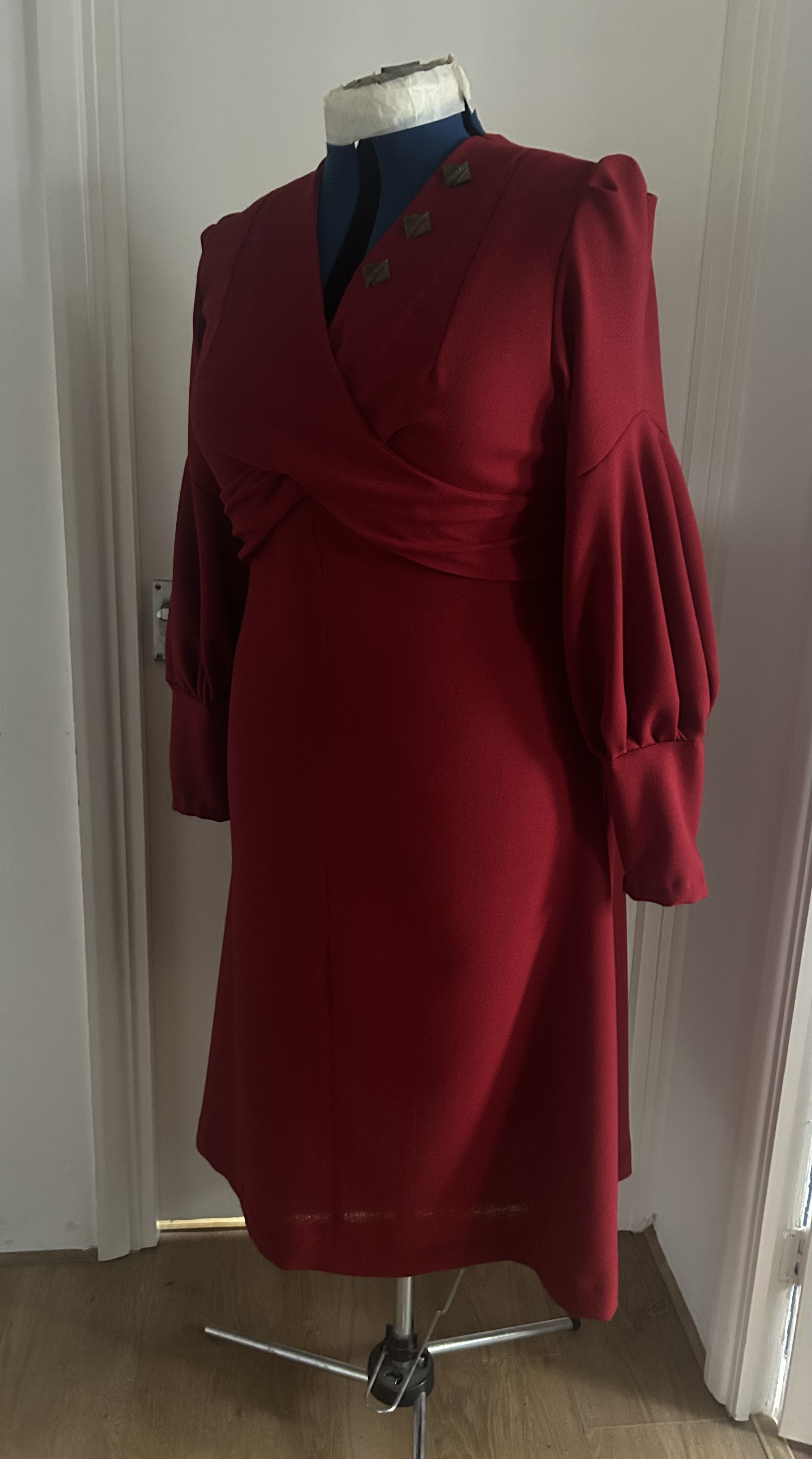
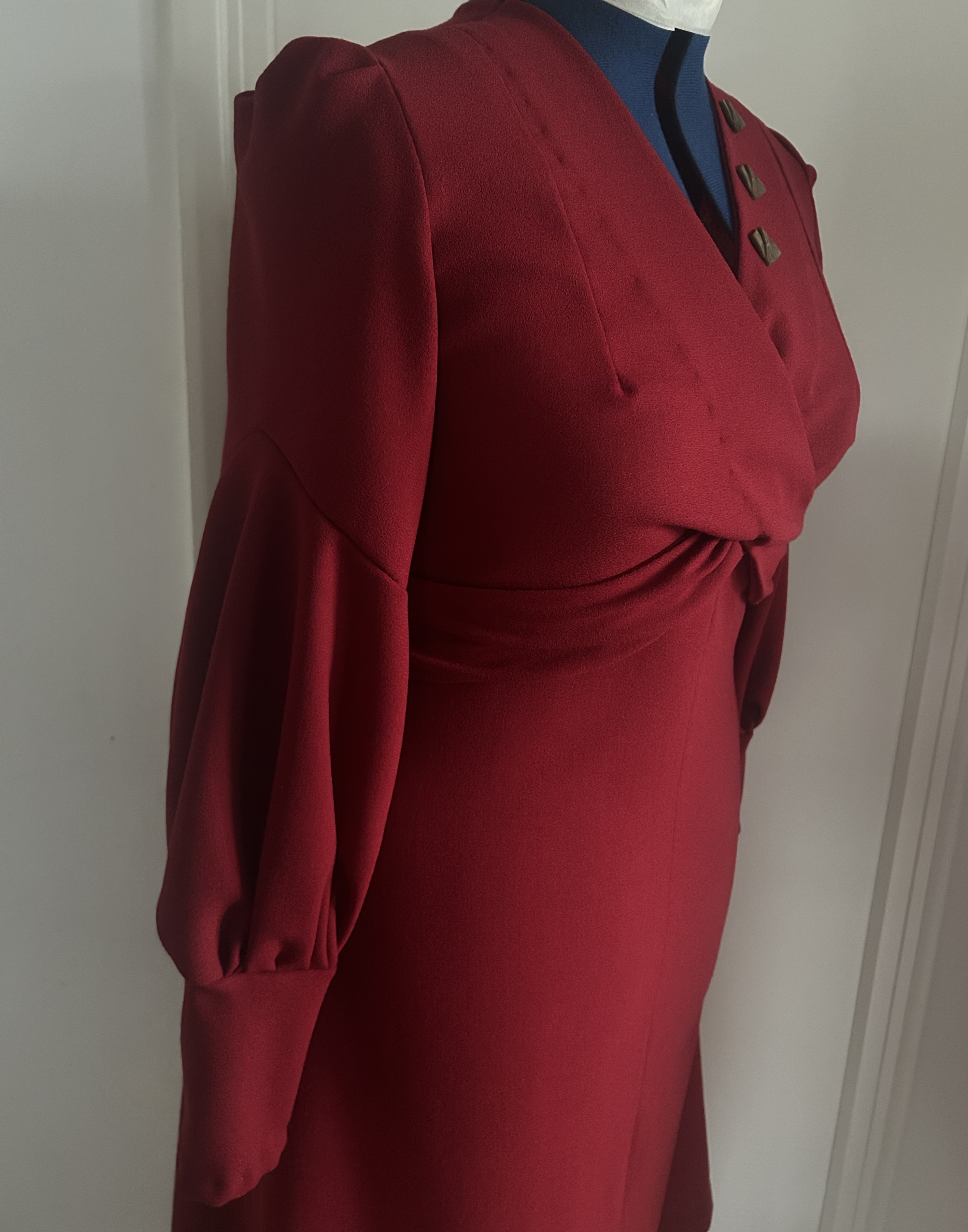
Here’s yet another version of my popular “ Claudette” dress from my very first 1930s dress collection, in a lovely pionette wool crepe. This early 1930s style dress features a wraparound detail in the front bodice which gives a very flattering line to the silhouette. The long leg o’ mutton sleeves were very popular in the era. These ones have been gathered at the shoulders to create a puffy effect. The dress’s slightly above natural waist line is a very typical feature of the early 1930s. The beautiful vintage square art deco style bakelite buttons adorn the side of the neckline. Fastens with snaps at the side.

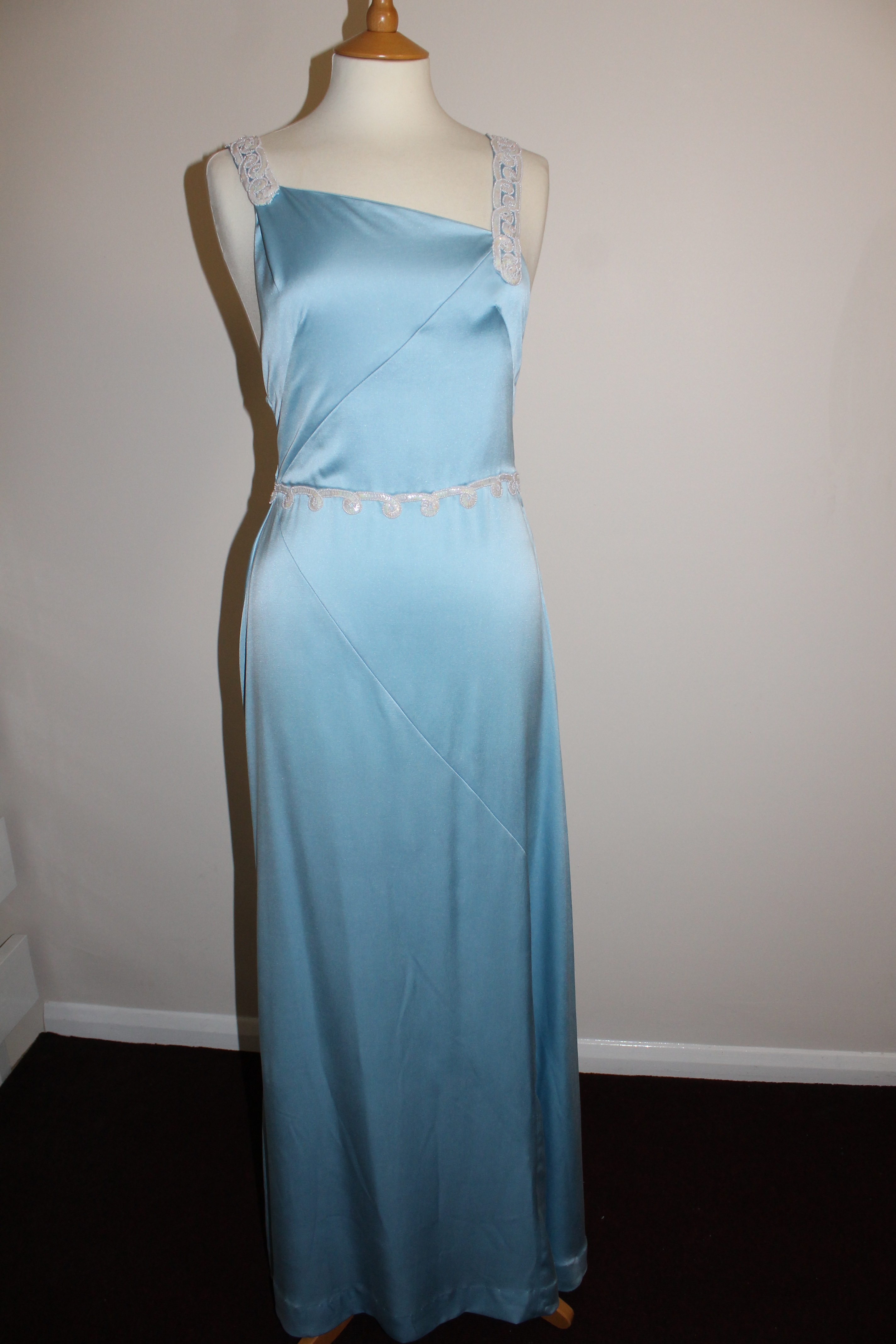
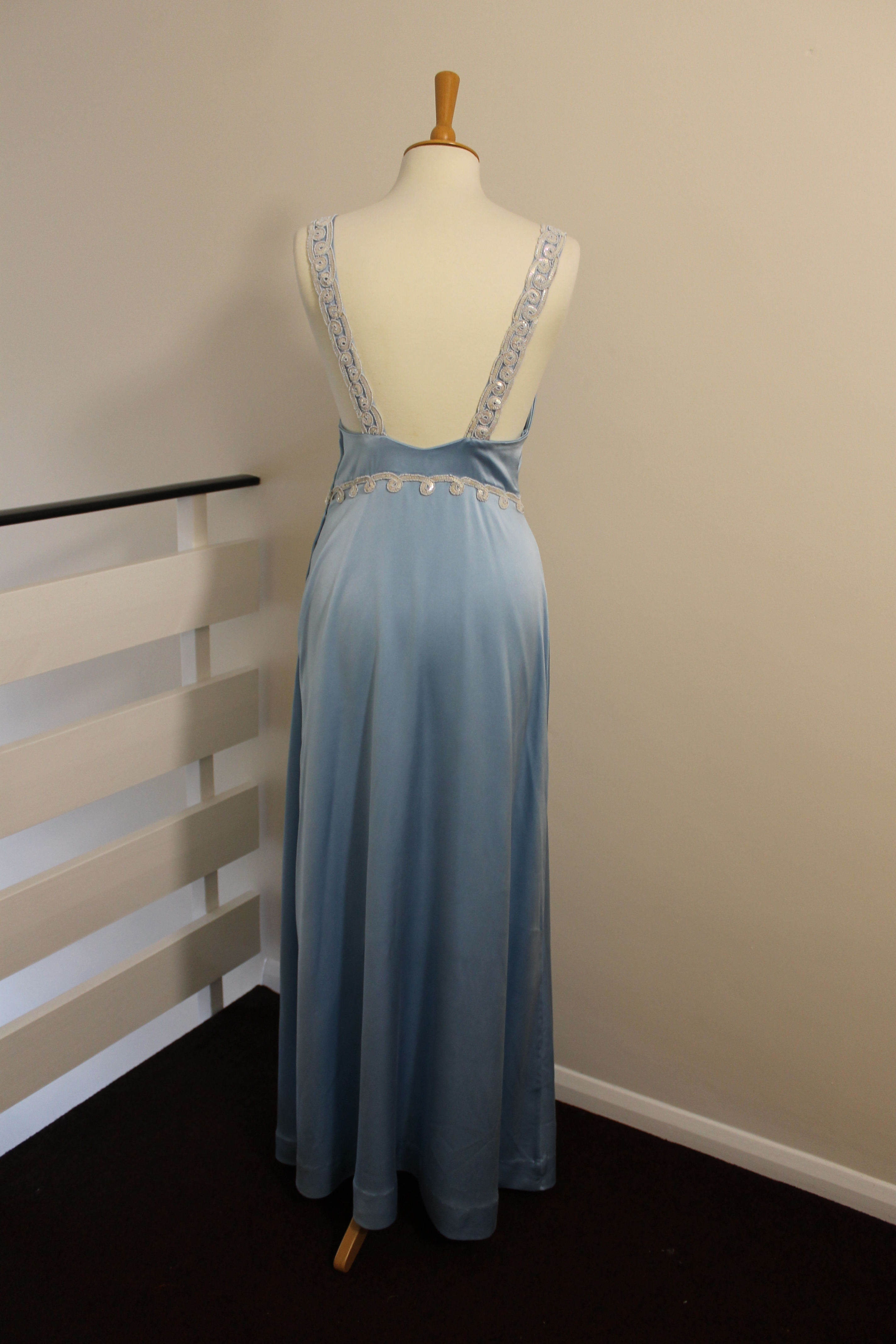
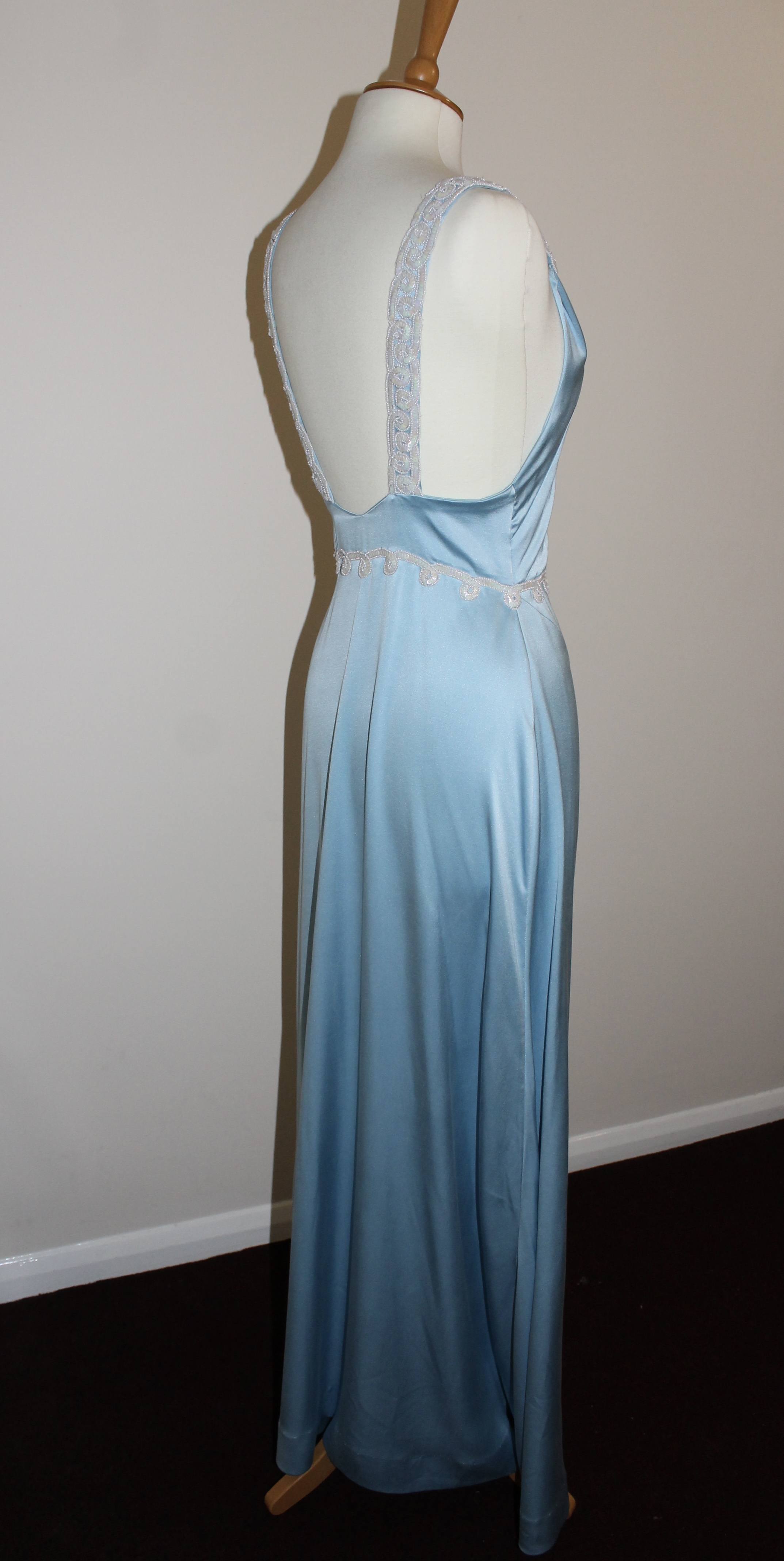
An early 1930s style silk crepe back satin evening dress

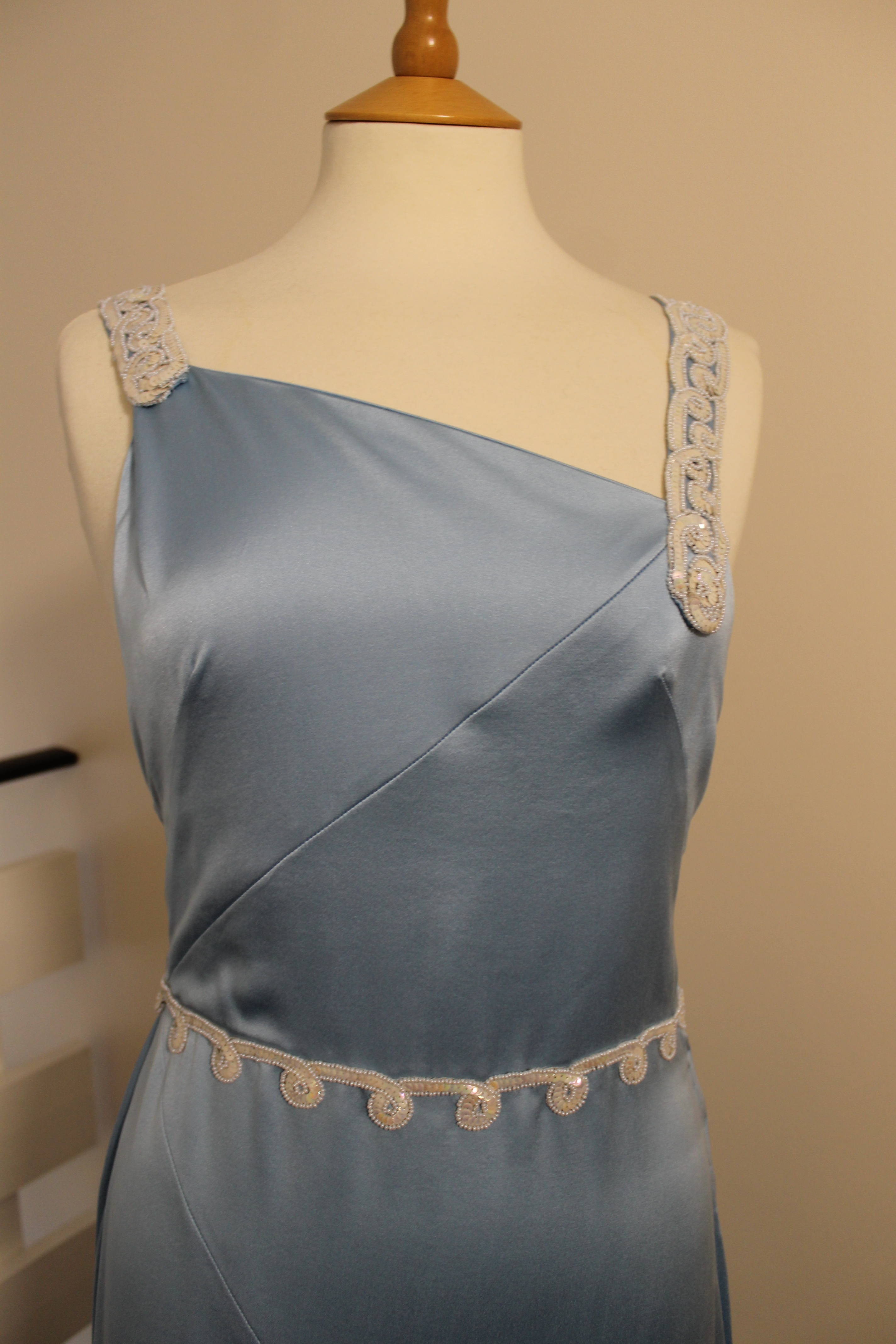
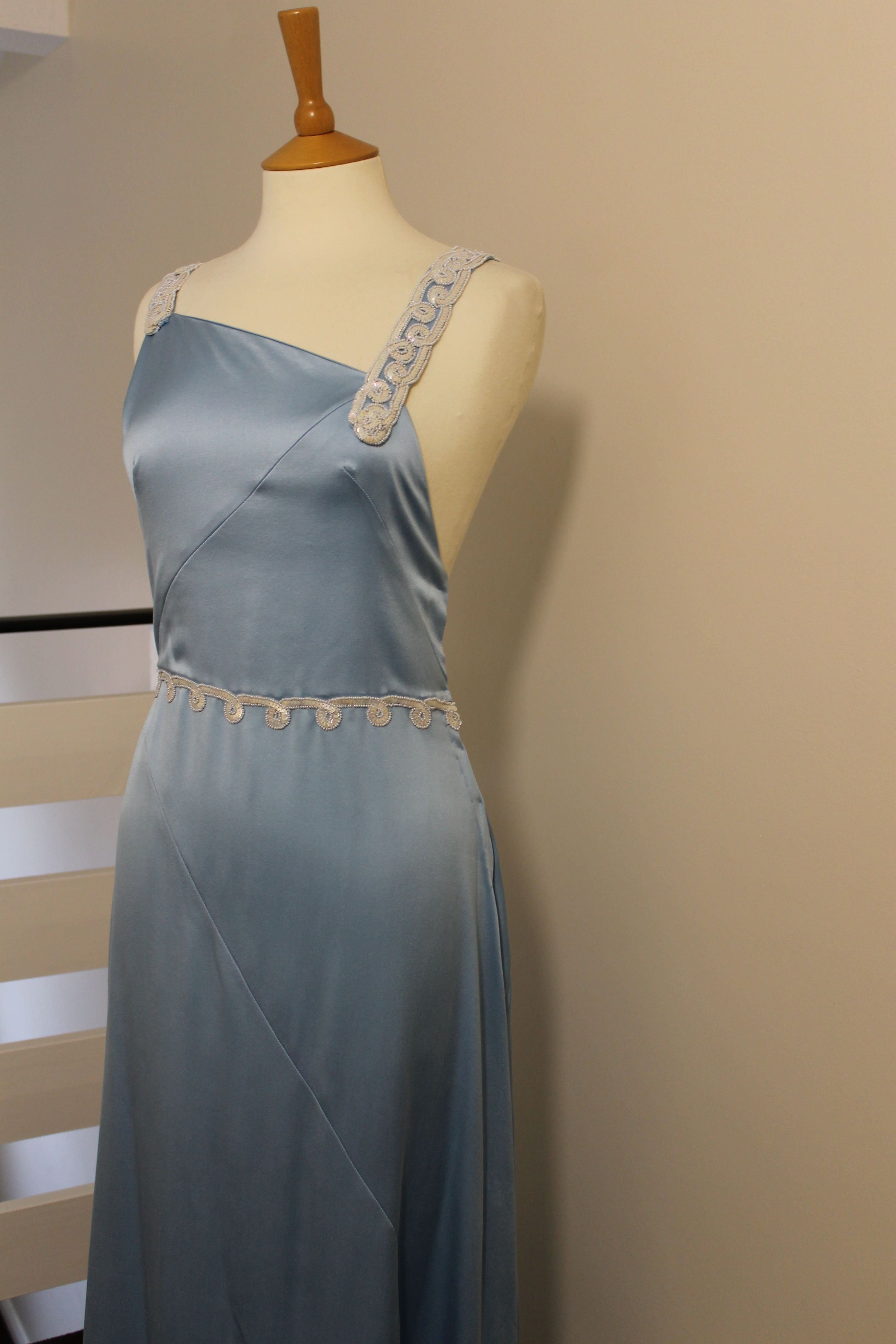
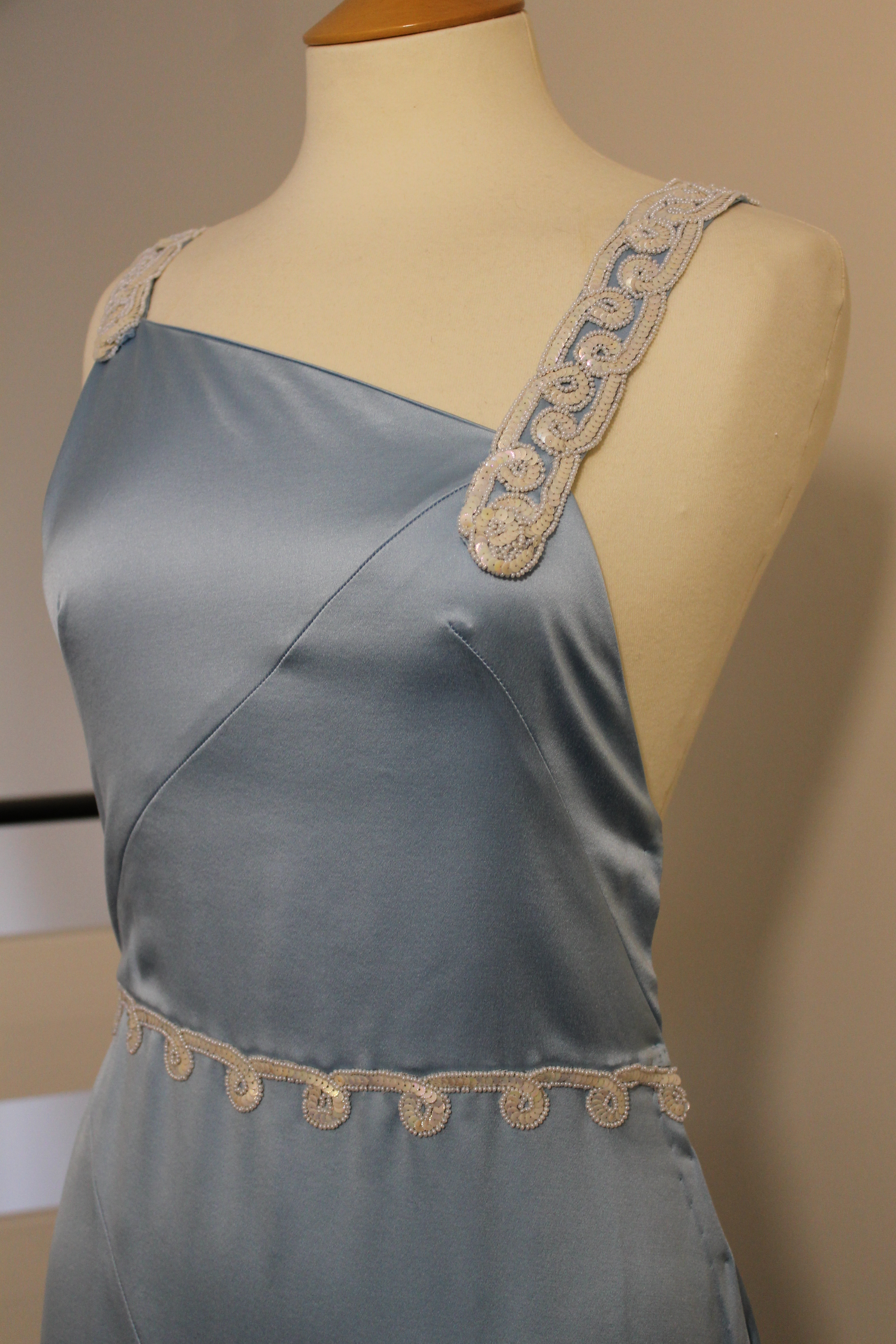
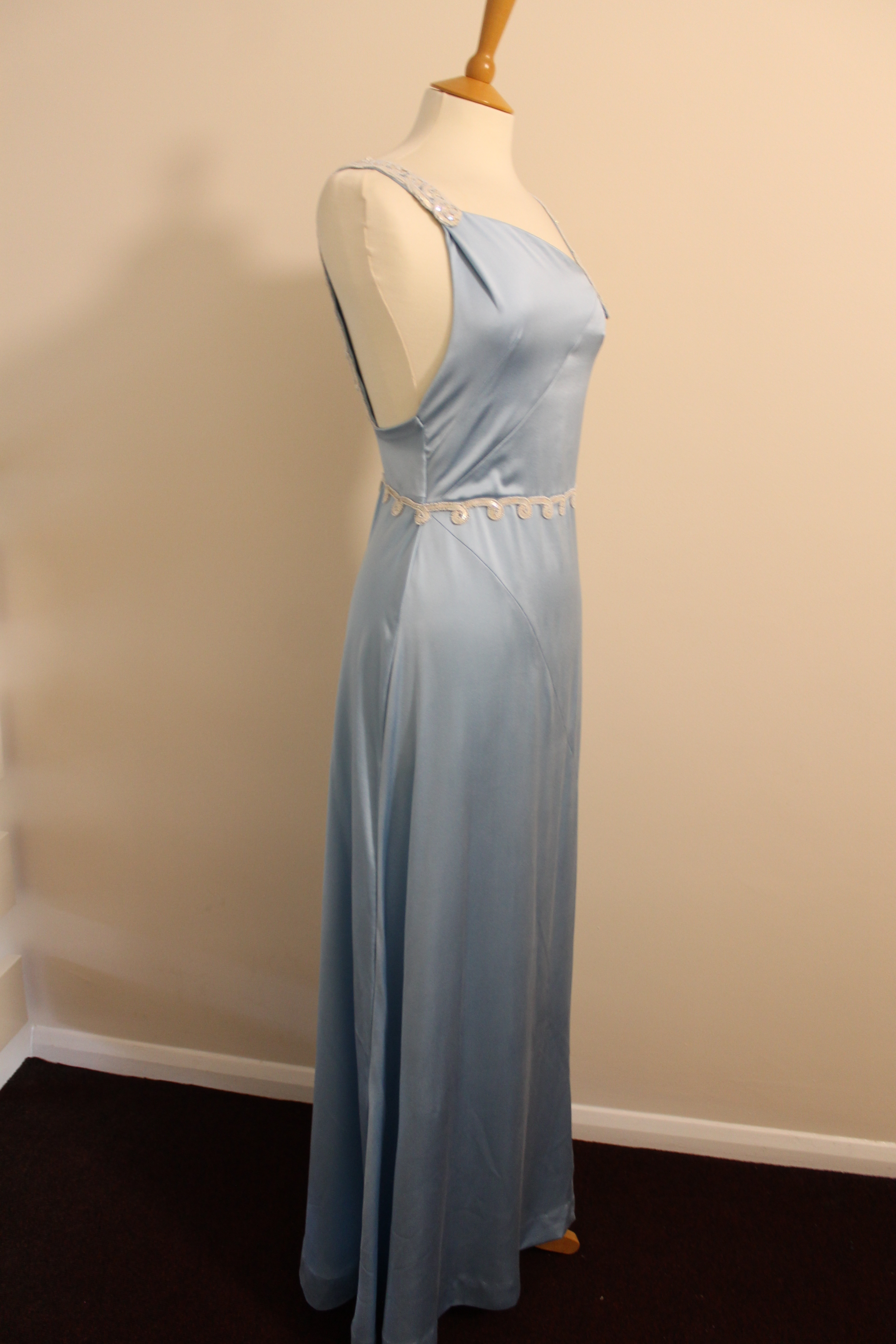
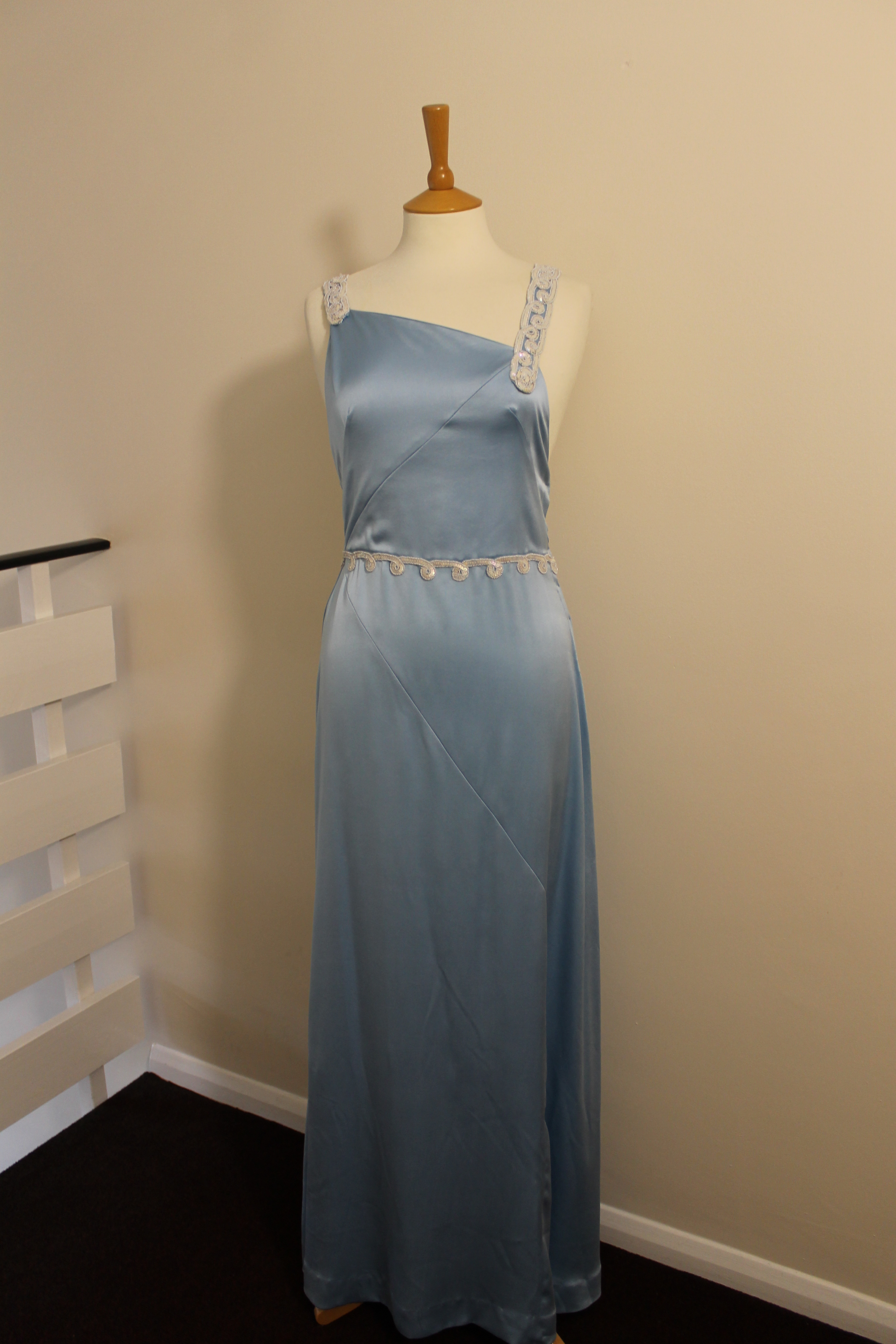
Here I present a beautiful early 1930s inspired evening dress in powder blue silk crepe back satin, that I originally designed and made for the lovely and talented Rosamund Pike.

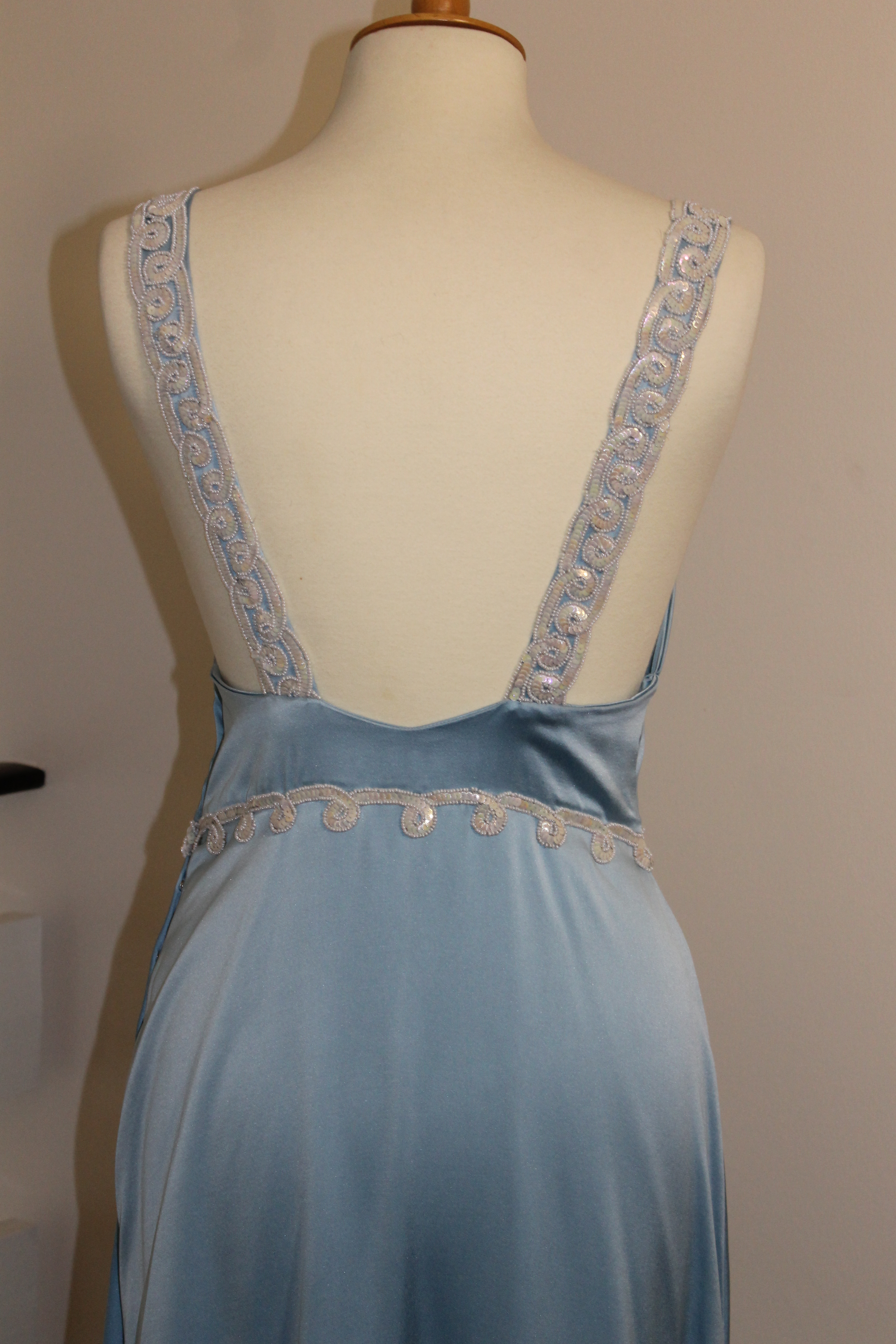
There is a slight Ancient Grecian feel to it, favoured by the designers in the 1930s, combined with the art deco style of the period, here the bias cut gown with the asymmetric diagonally cut neckline and the diagonally cut panels in bodice and skirt forming a peak at the left side of the waistline, a feature very typical of the era. With two deep long darts along the sides of the bodice and low cut back.
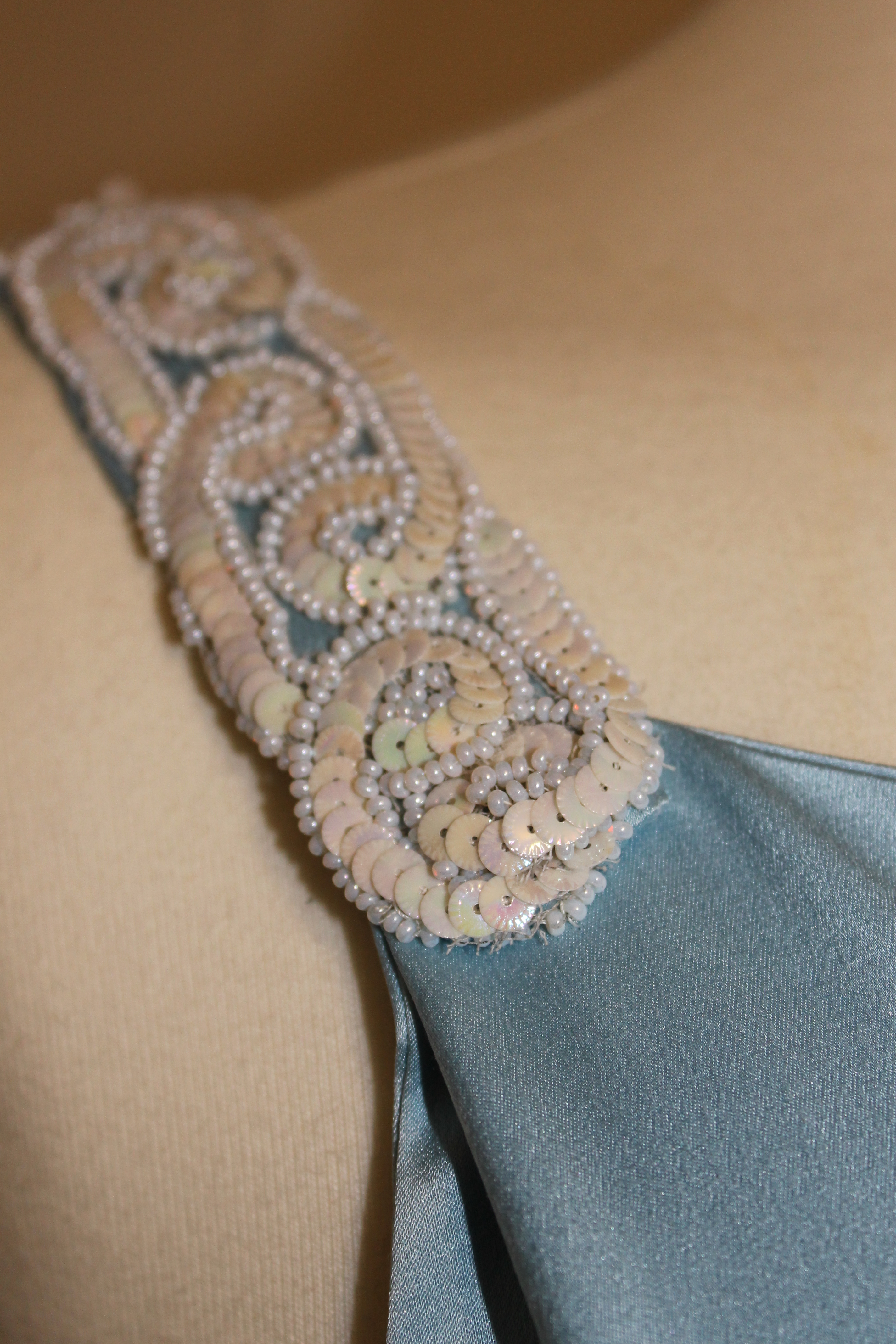
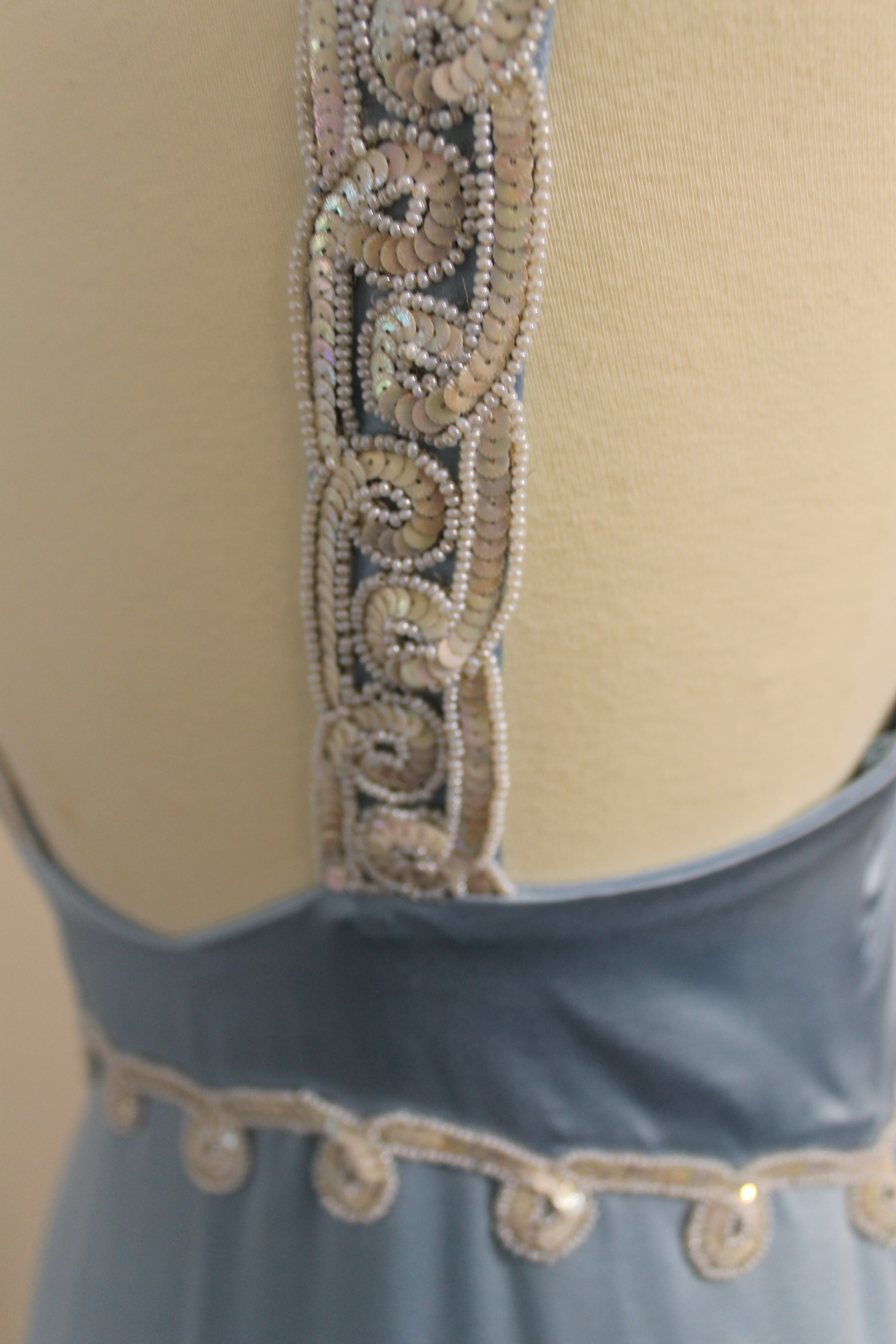
The straps feature lovely sewn on original vintage sequin trimming, as well as on the waist.
Closure with snap fasteners at the side seam.
Mid-1930s style wool crepe darling

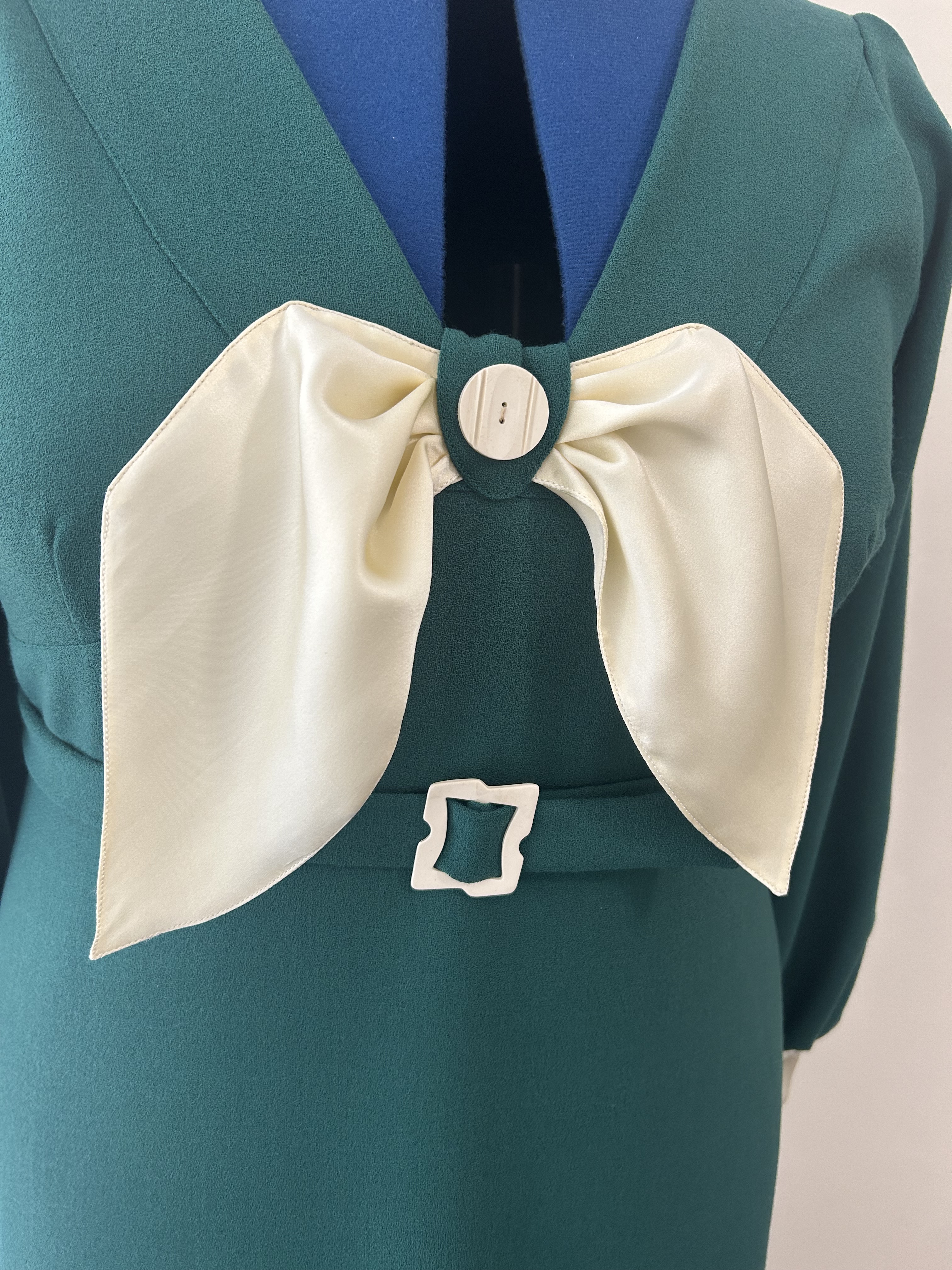
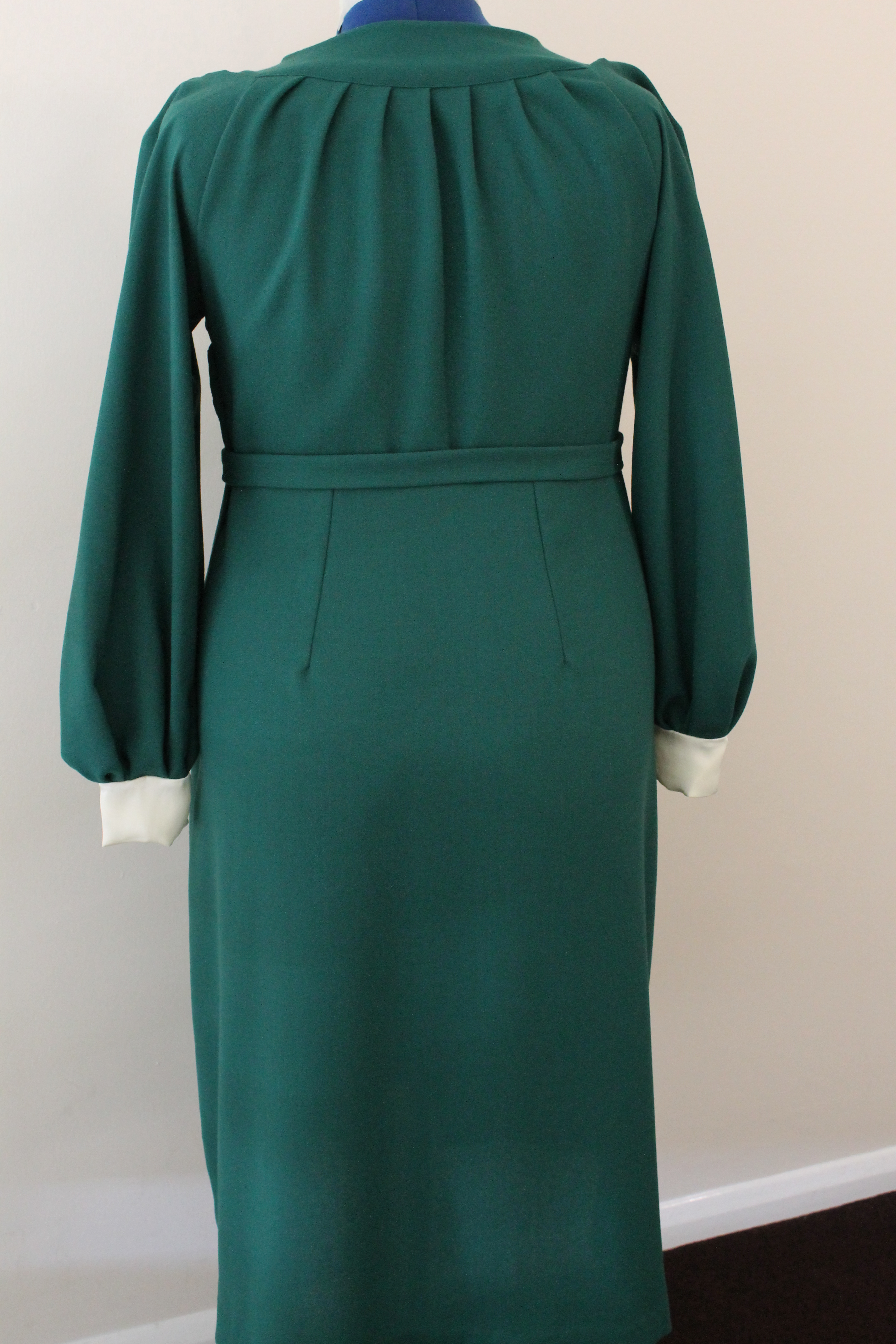
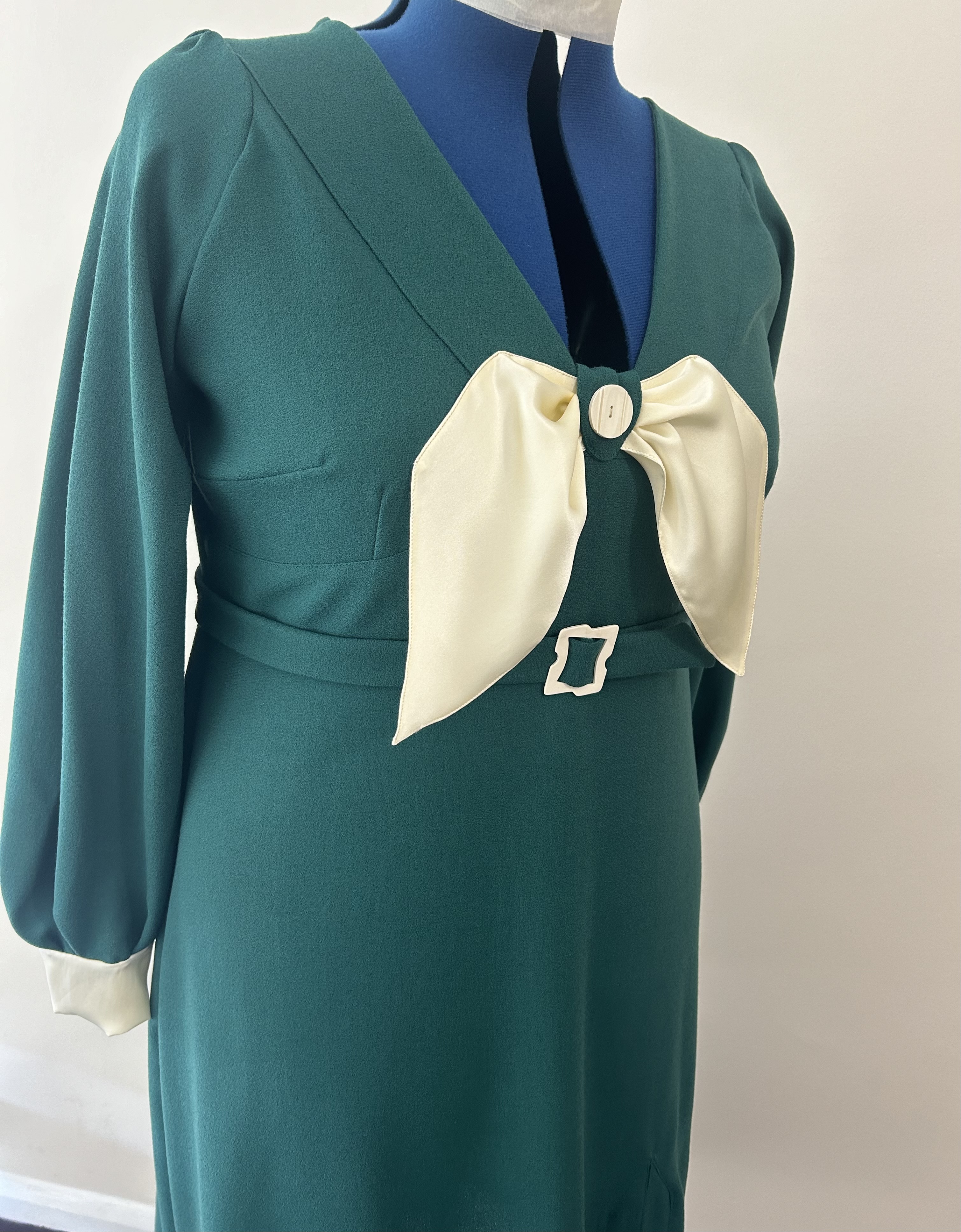
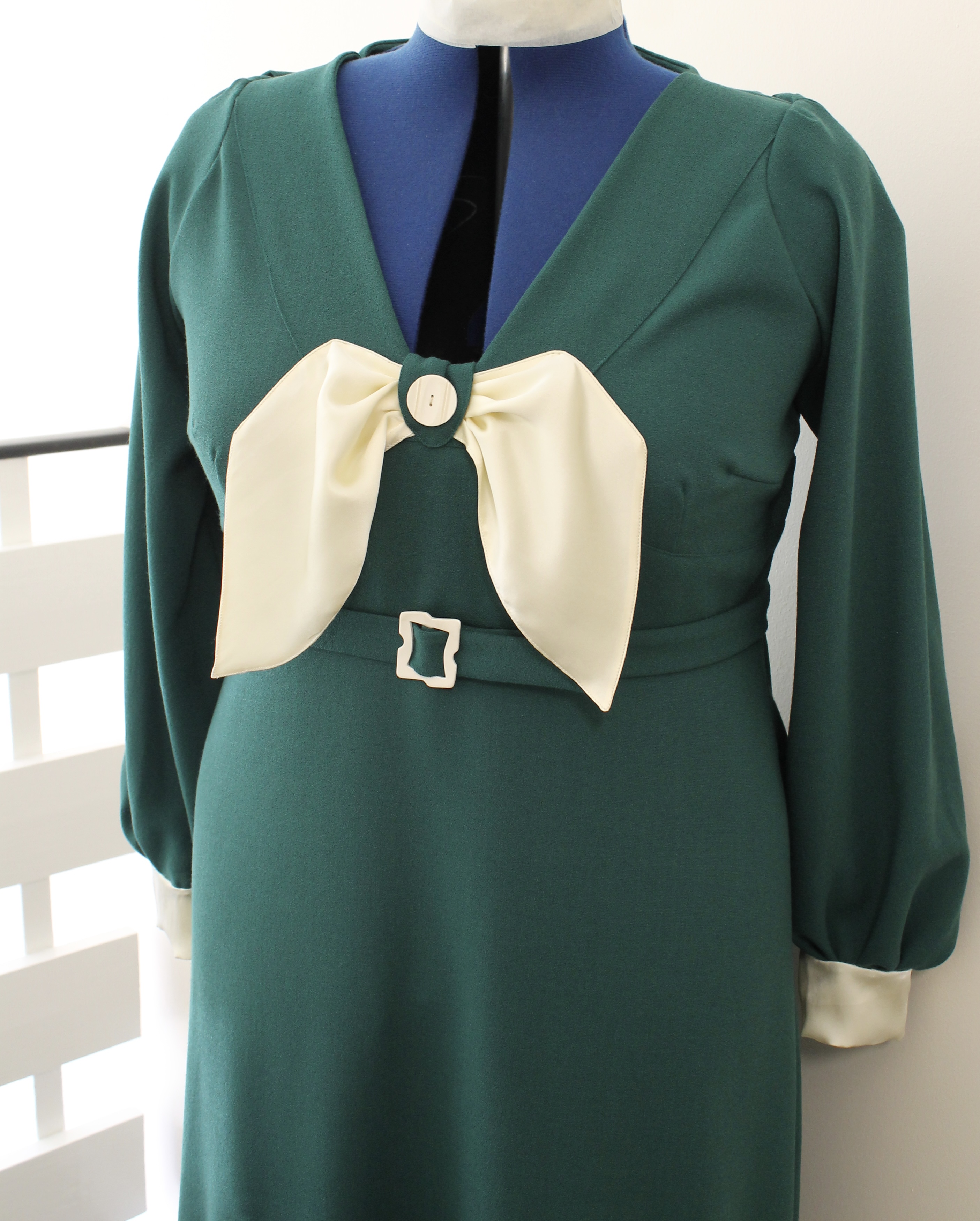
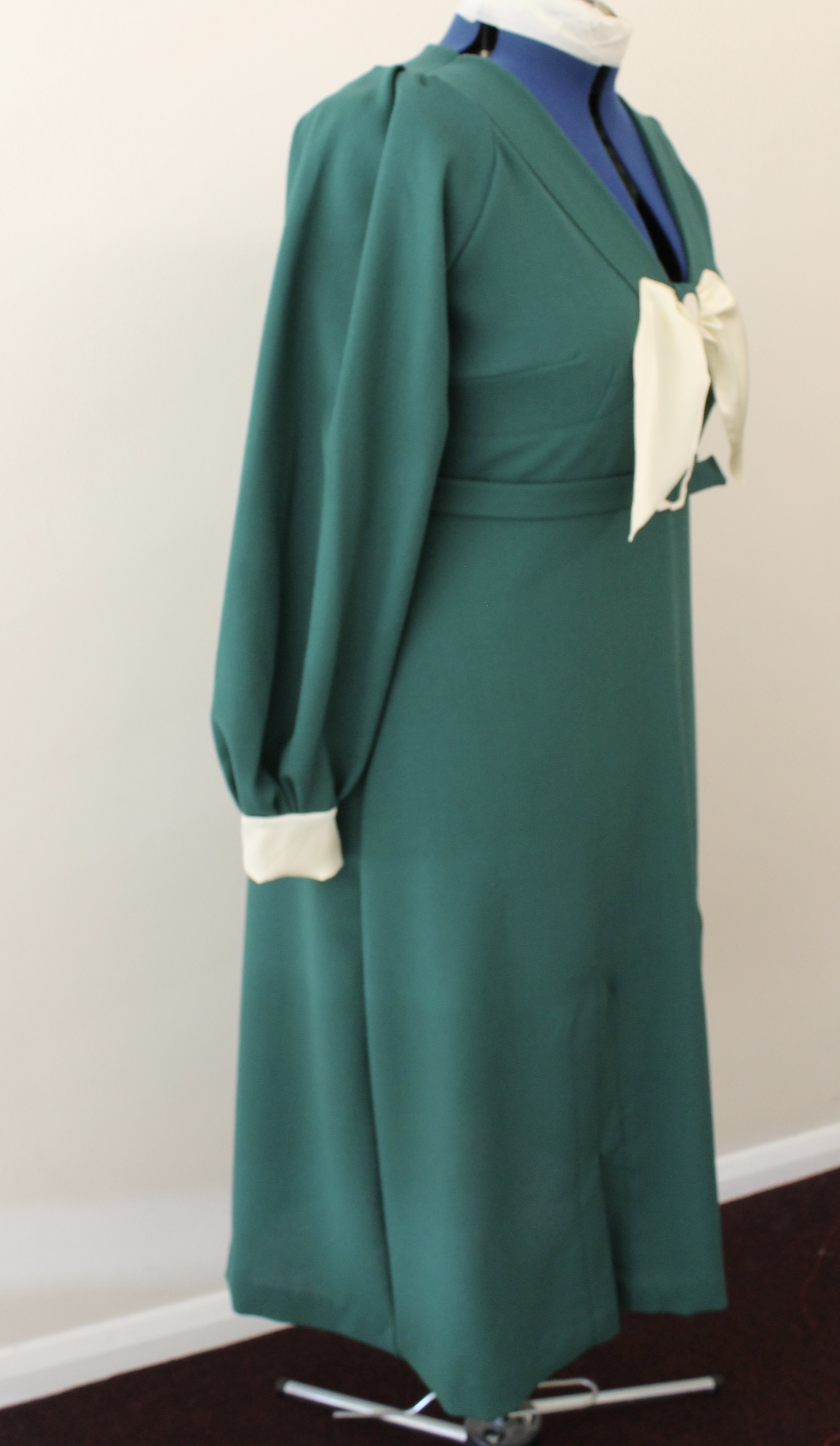
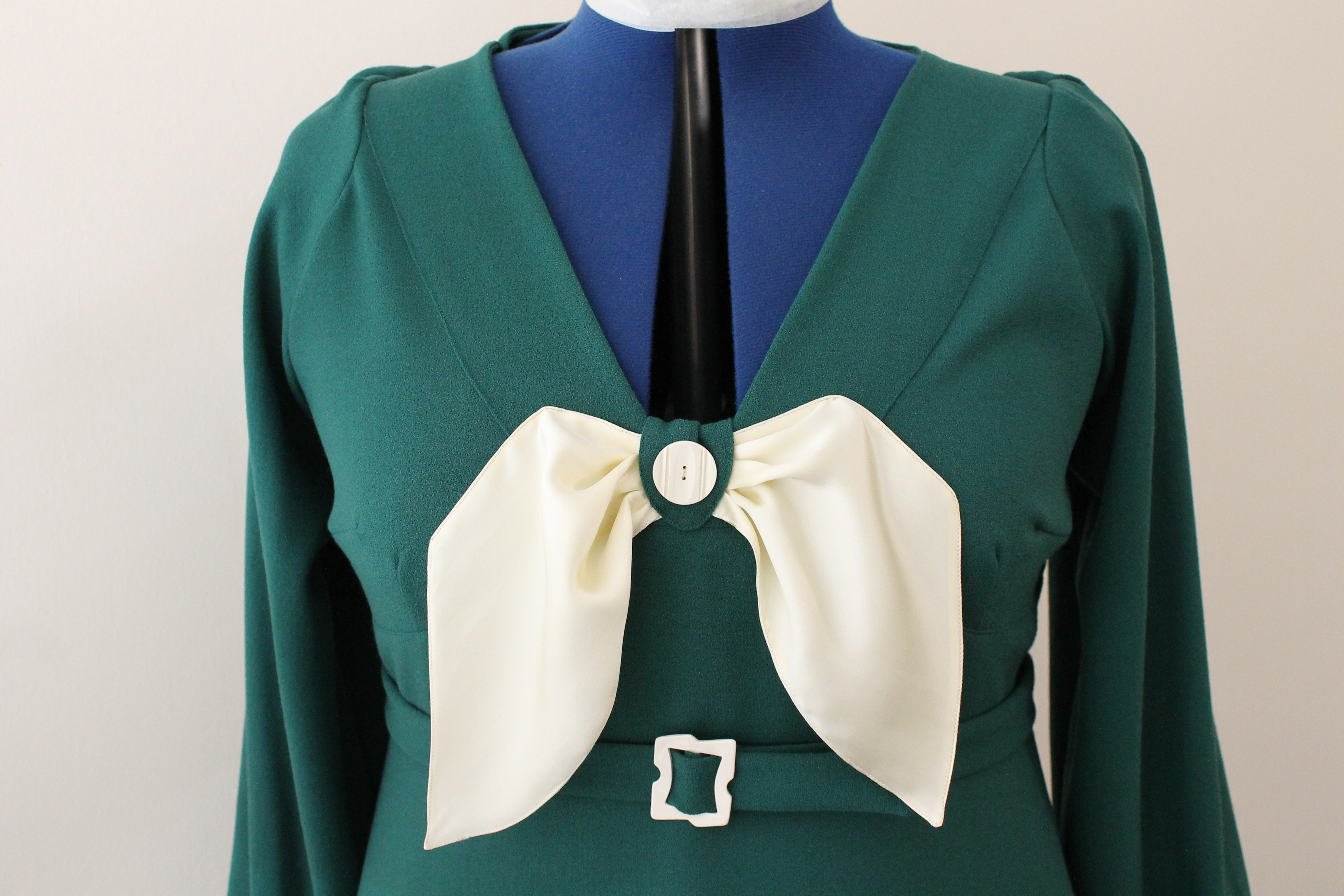
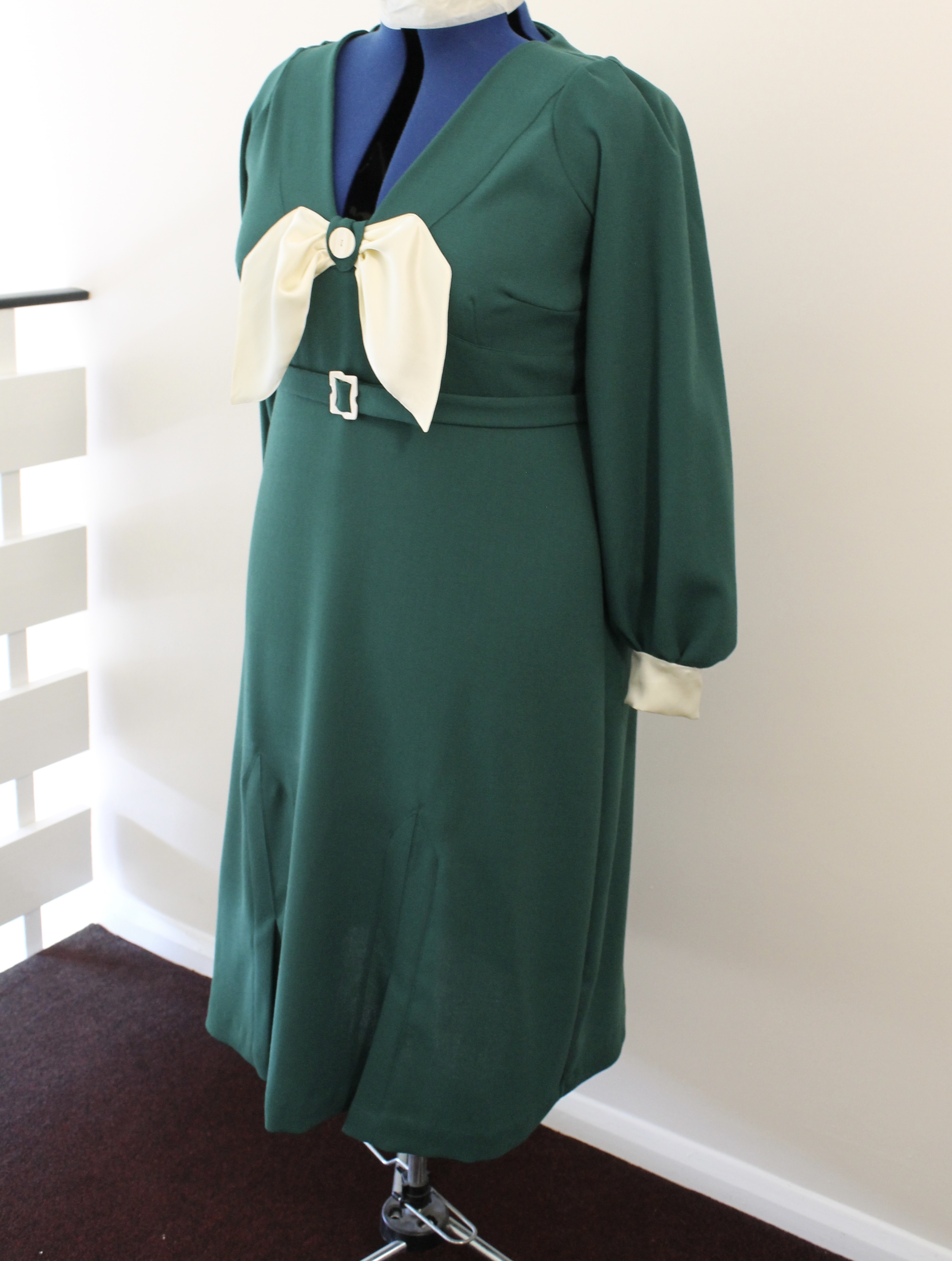
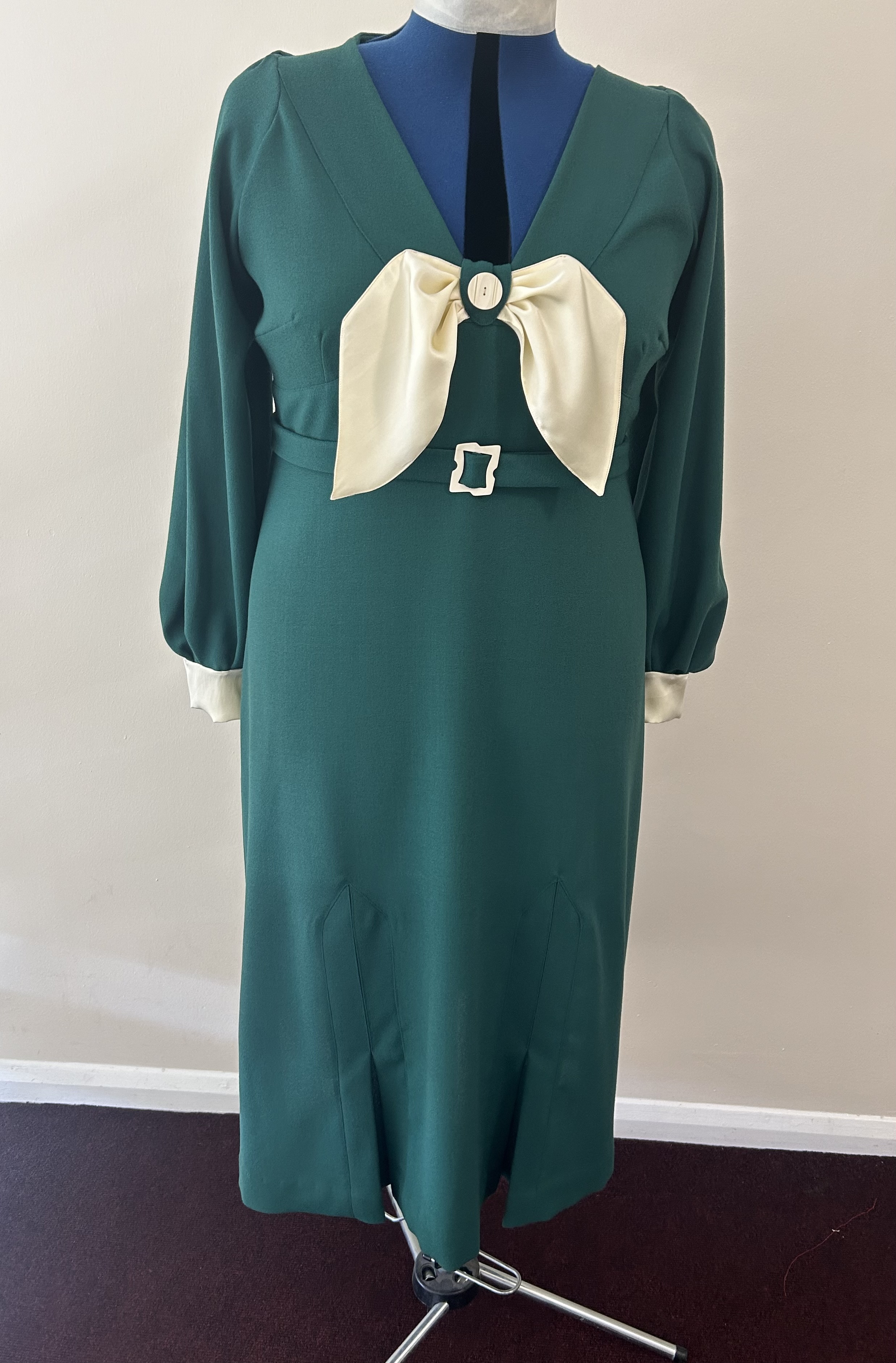
This lovely bottle green wool crepe mid- 1930s inspired dress is an adaptation from an earlier design of mine from 2009, here presented with long raglan cut bishop sleeves and contrasting cream silk cuffs.
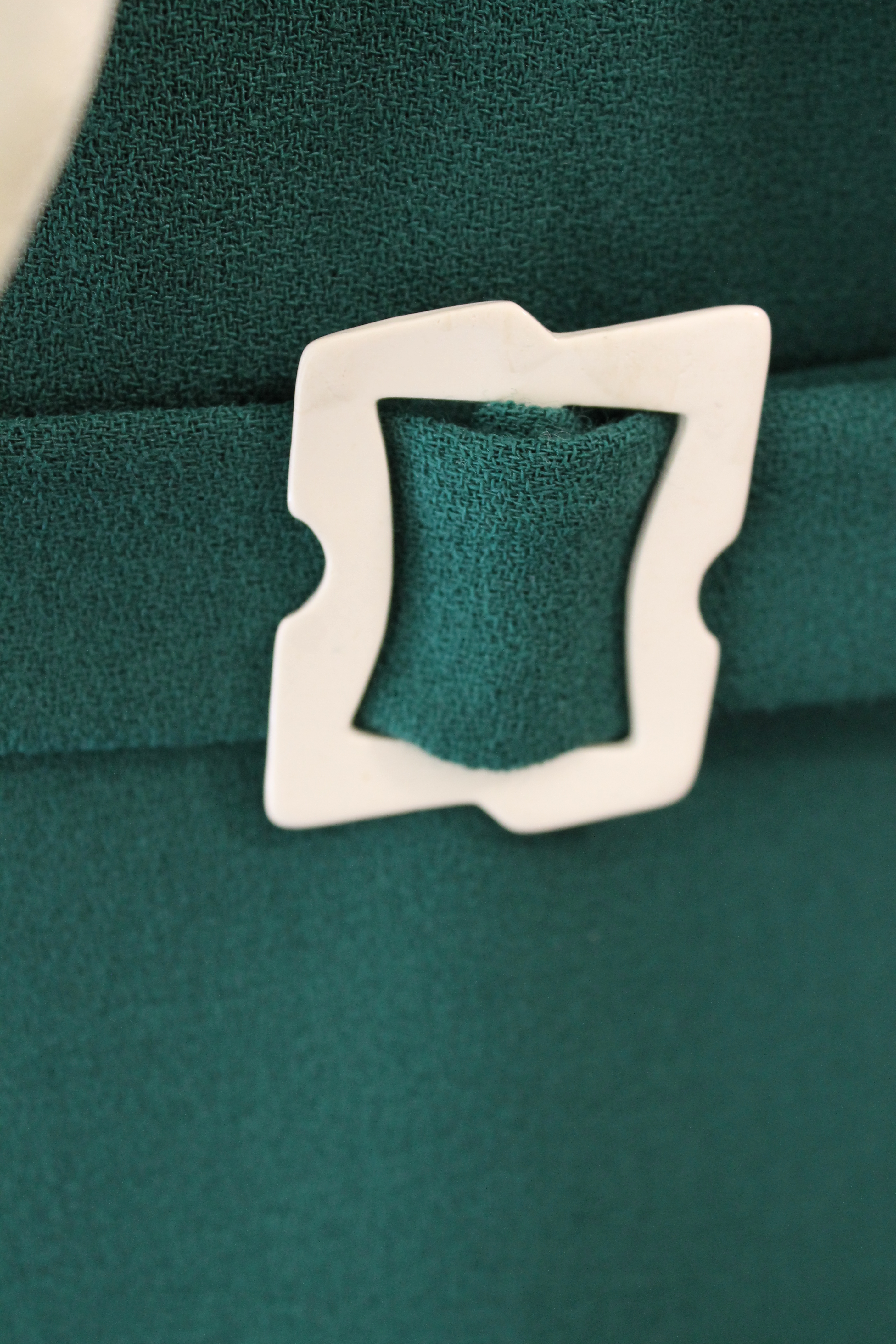
The striking large cream silk bow down the front of the bodice with a deep v neckline is typical of the 1930s style and a fantastic contrast to the deep green of the mid- calf length dress. The vintage cream button attached to the little flap on the bodice with an art deco style cut panelling also adds to the eye-catching front. It also features two kick pleats down the front of the skirt. The bodice is gathered at the back. The belt has an original vintage buckle. Two darts at the back of the skirt. Snap fasteners at the side seam.
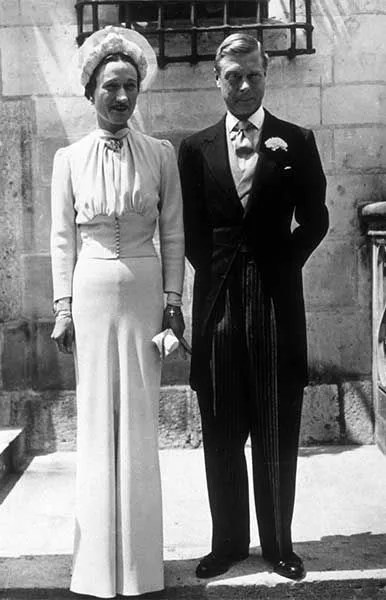
My homage to the Wallis Simpson wedding dress


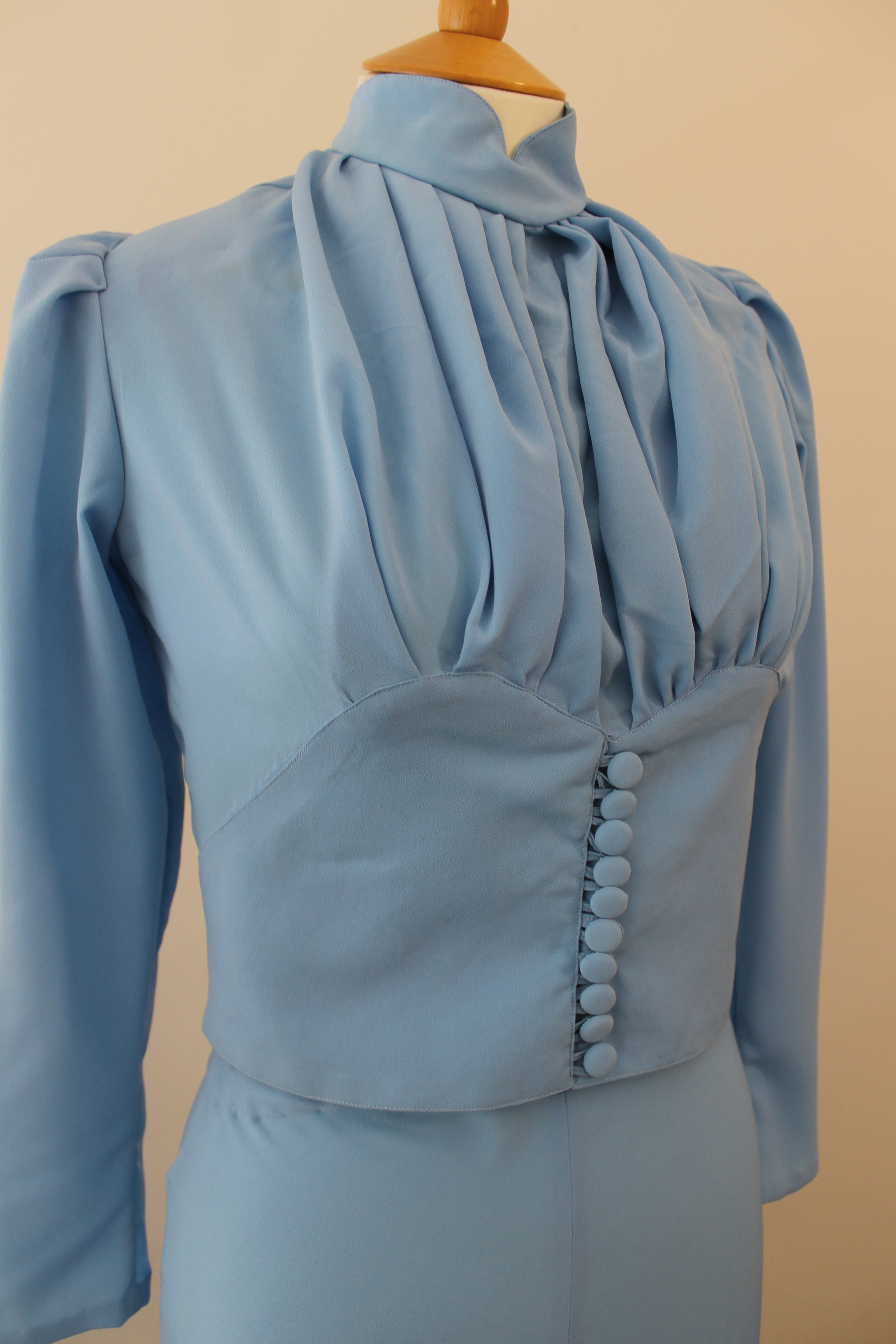
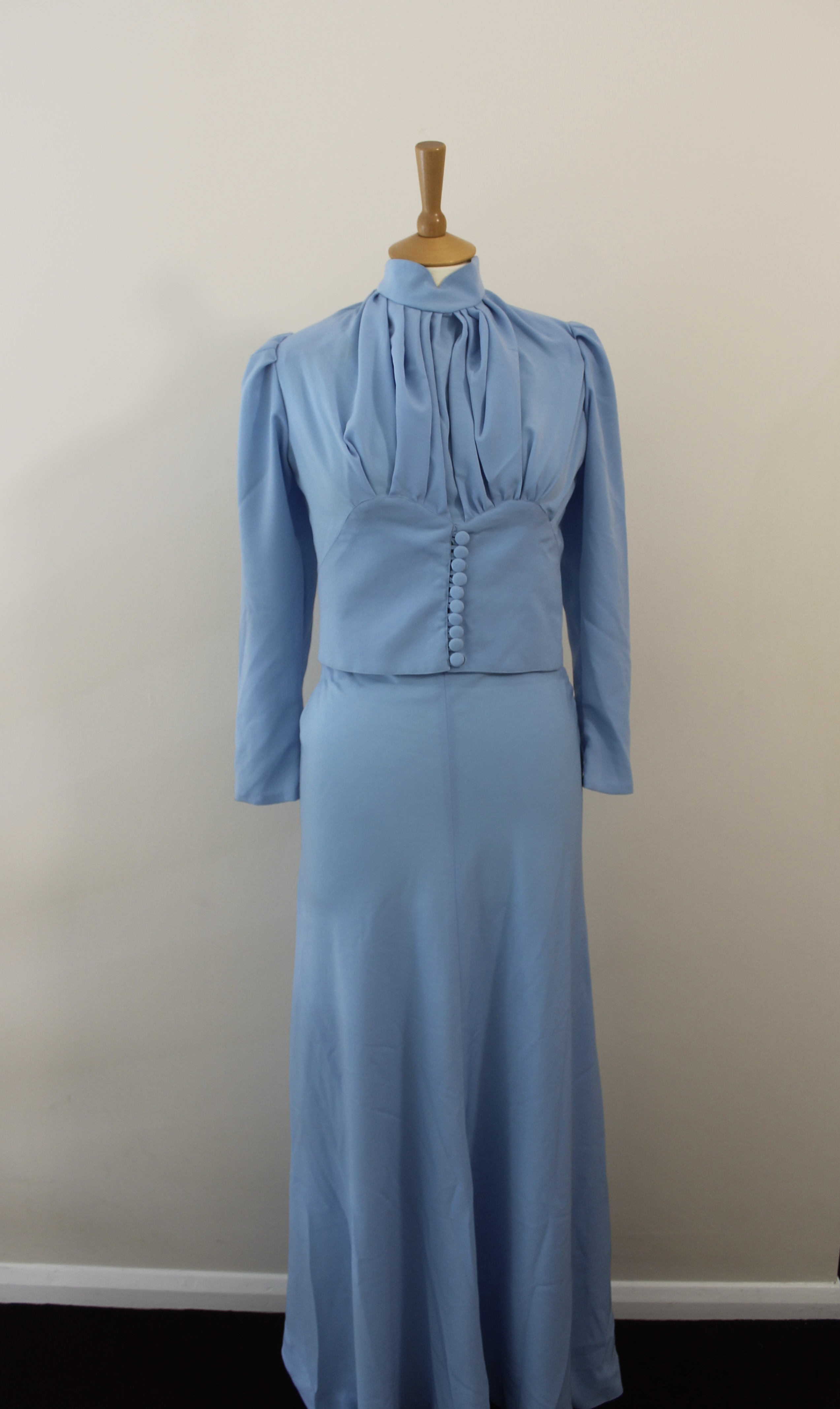
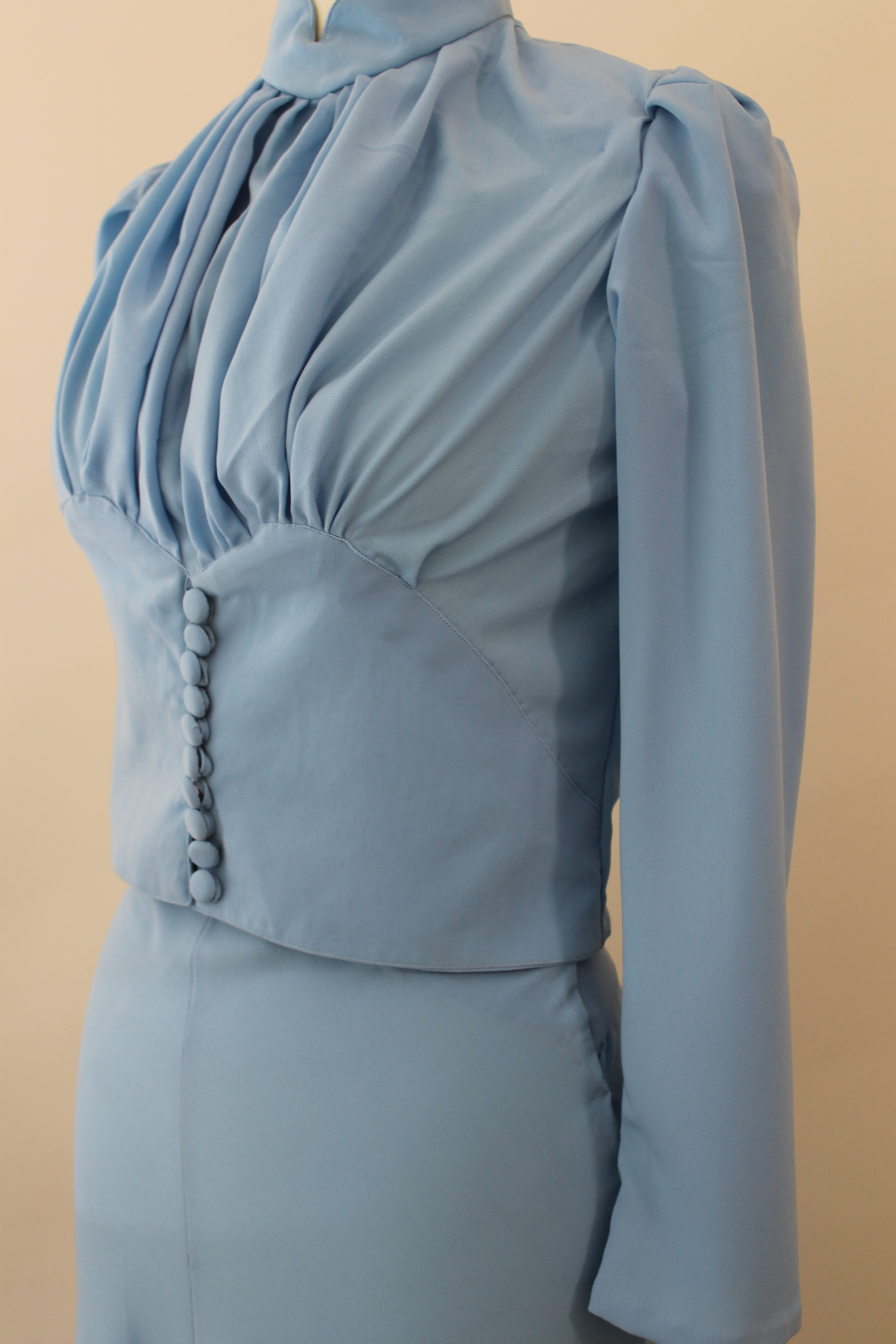
This iconic dress designed by Mainbocher was worn by Wallis Simpson on her nuptials to Edward, Duke of Windsor (former King Edward VIII) at Chateau de Cande, Monts, France on June 3rd, 1937. The original dress was made in silk crepe and the colour shade got the name “Wallis blue”, to “ match the blue of her eyes”.
Today, to coincide with the 87th anniversary of the wedding, here I present my version of the famous dress that was featured at the “Guts for Garters- the Royal We” exhibition in 2011 at the Cob Gallery in London. Made in light coloured cornflower blue viscose rayon crepe, it features a gathered and tailored bodice with a high neckline, long sleeves and fabric covered buttons closure down the front. The floor length skirt with a centre seam is fashionably cut on the bias. Side snap closure on the side.

Now available for sale. Please message me for details.

The mid-1930s style darlings

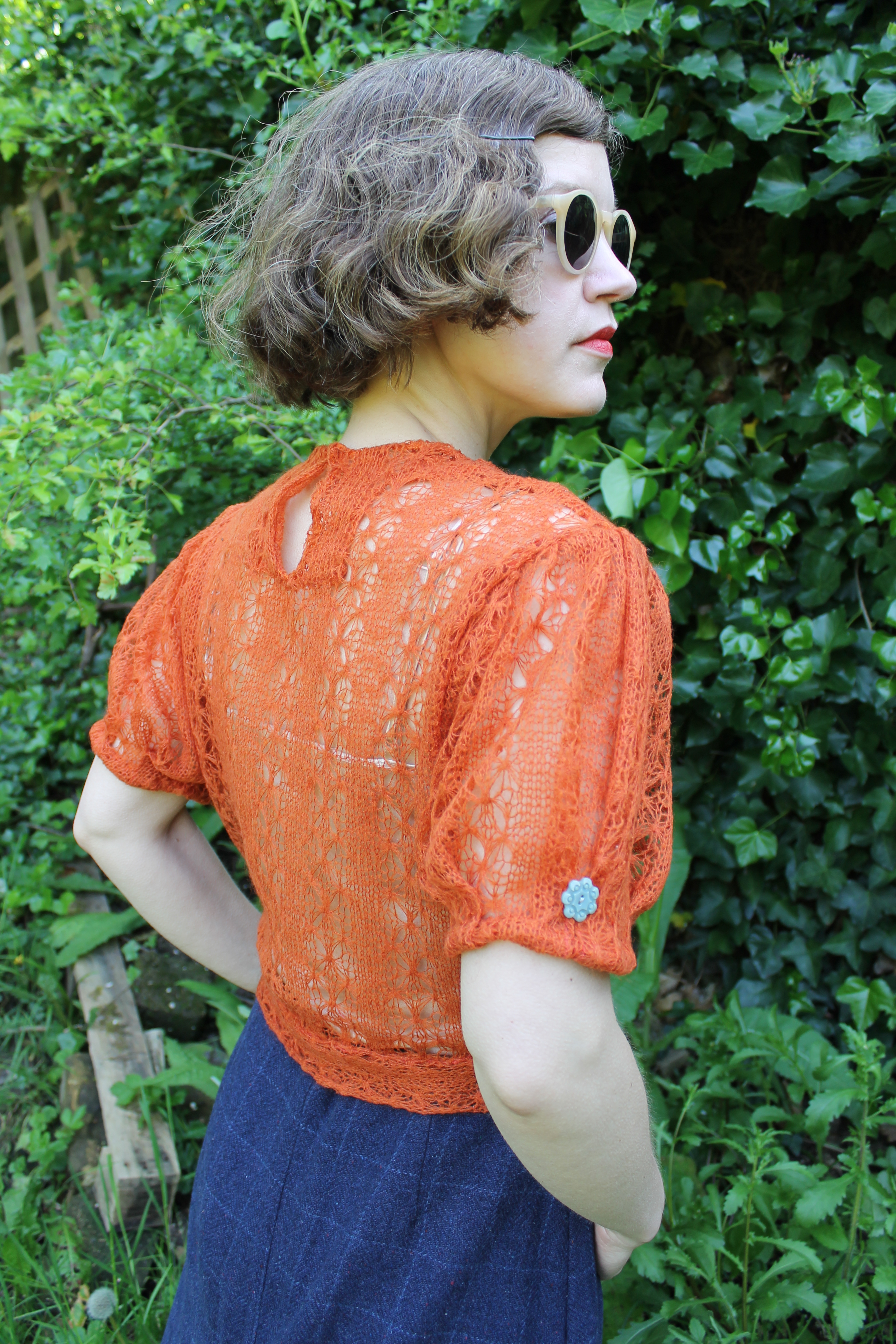
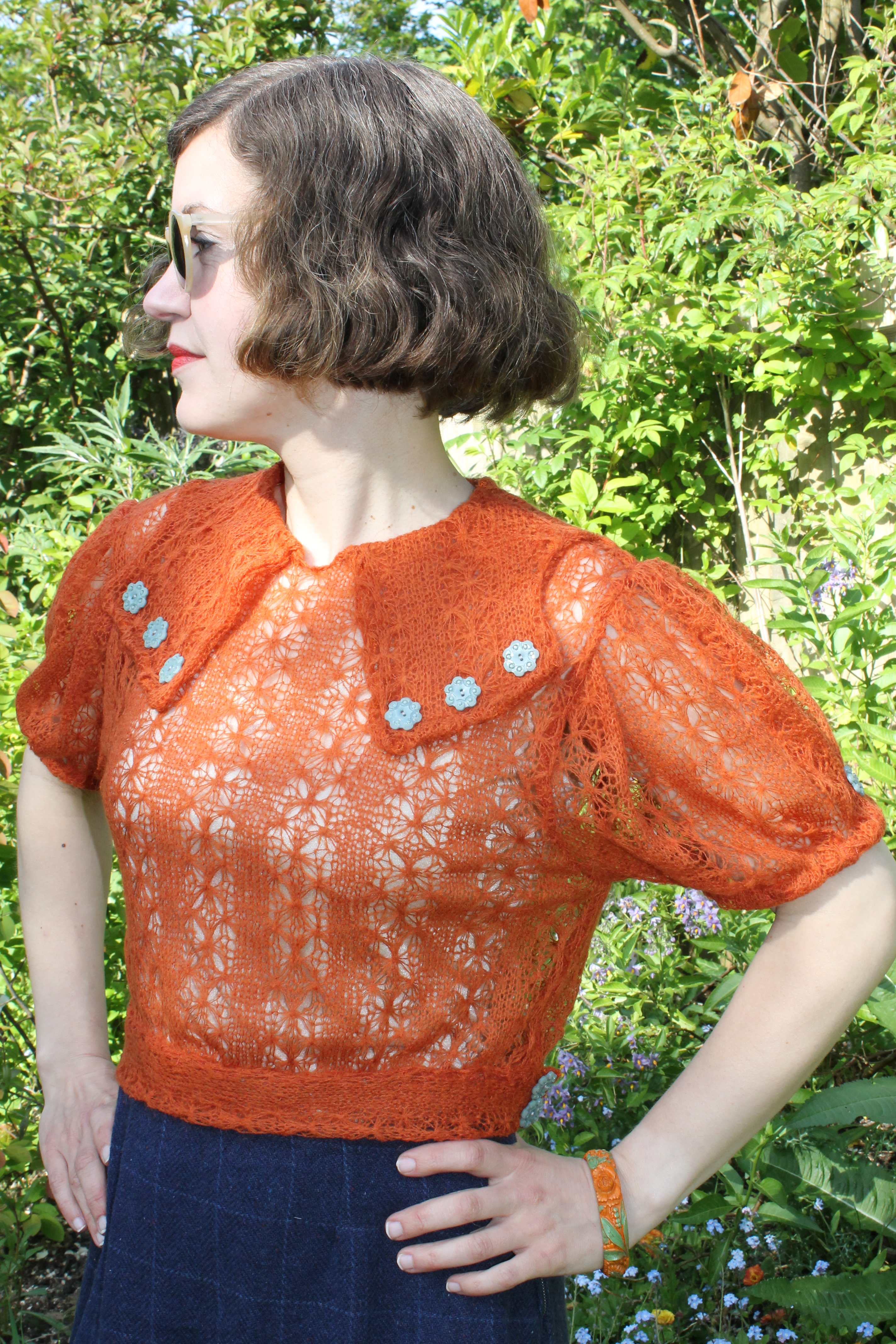
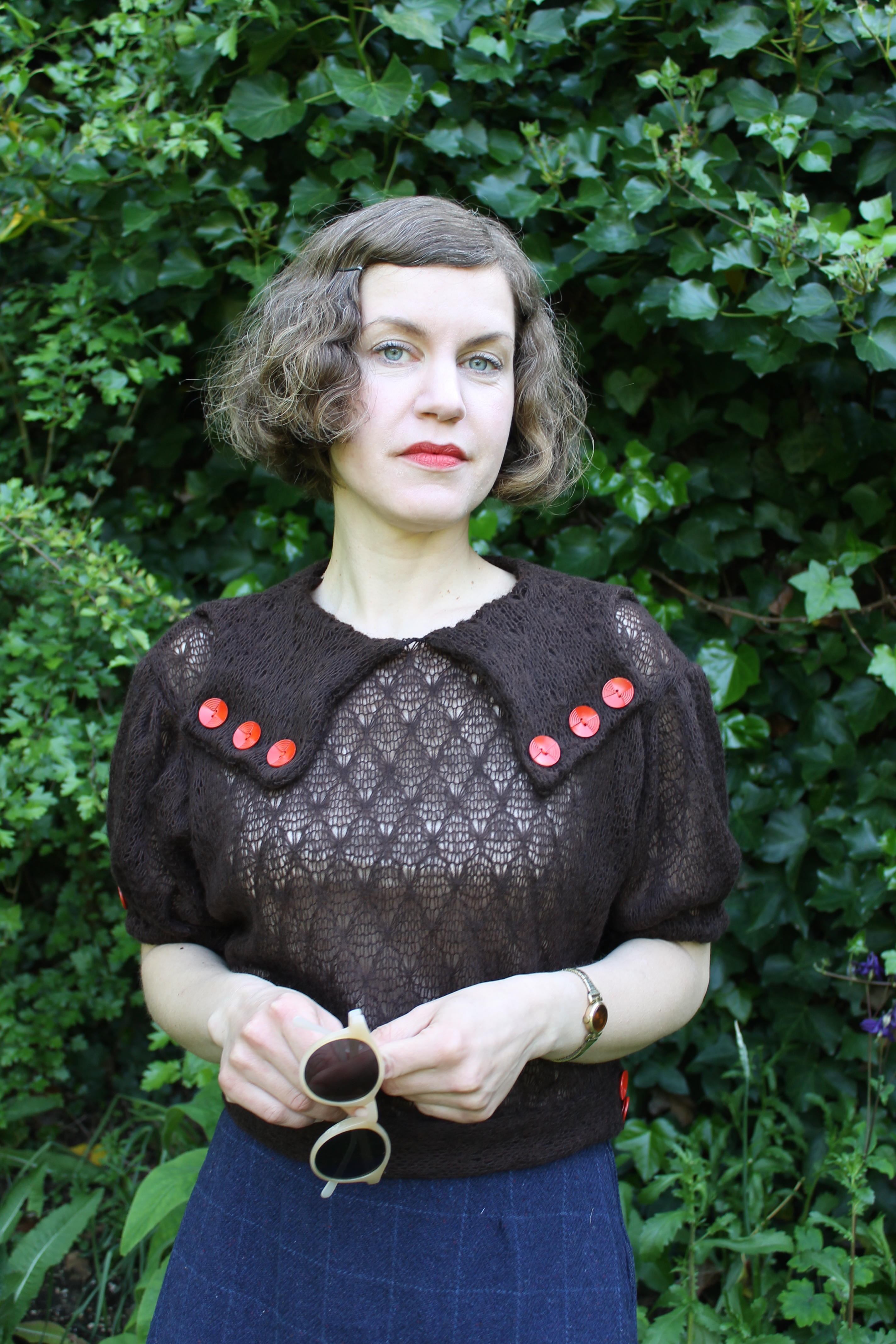
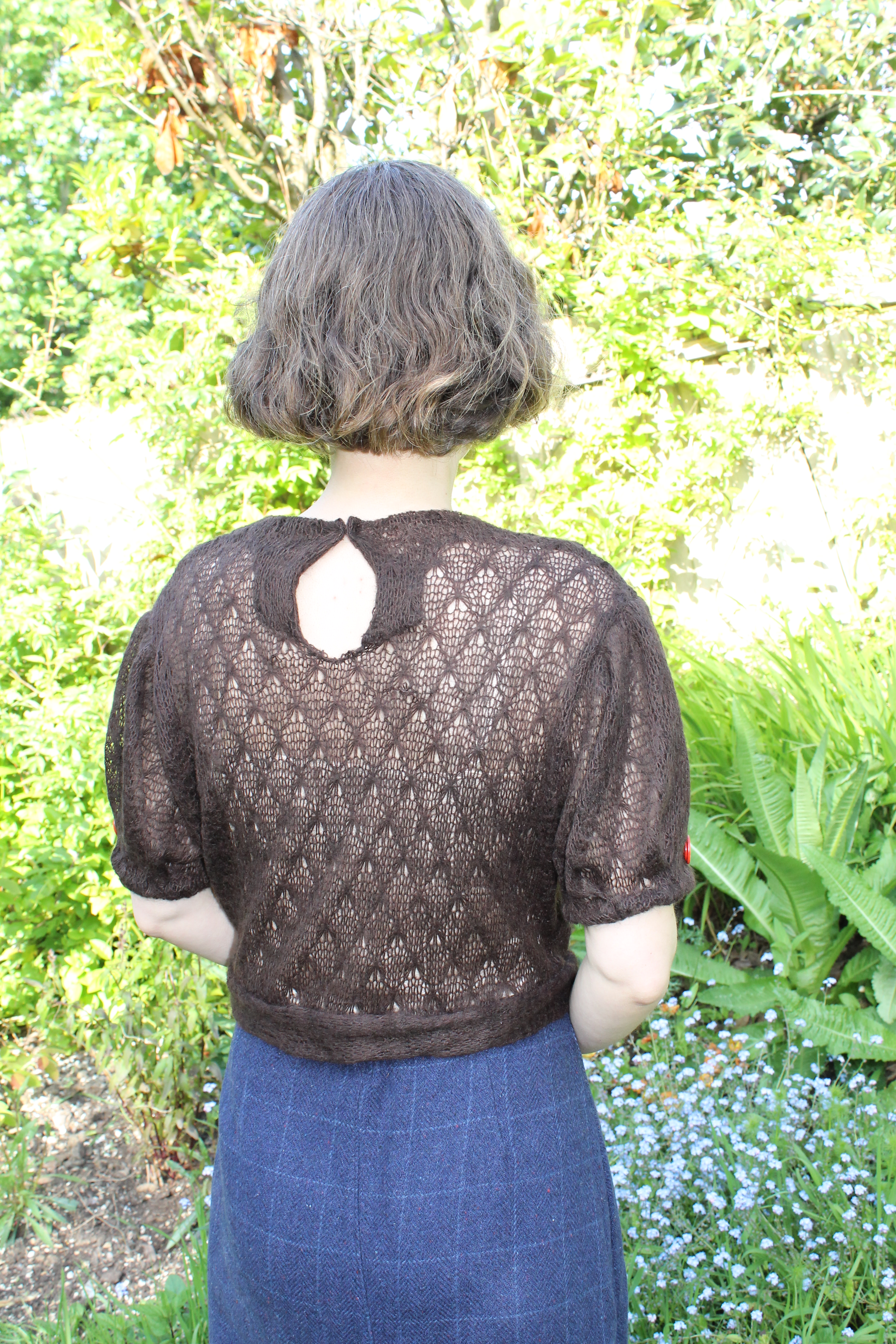
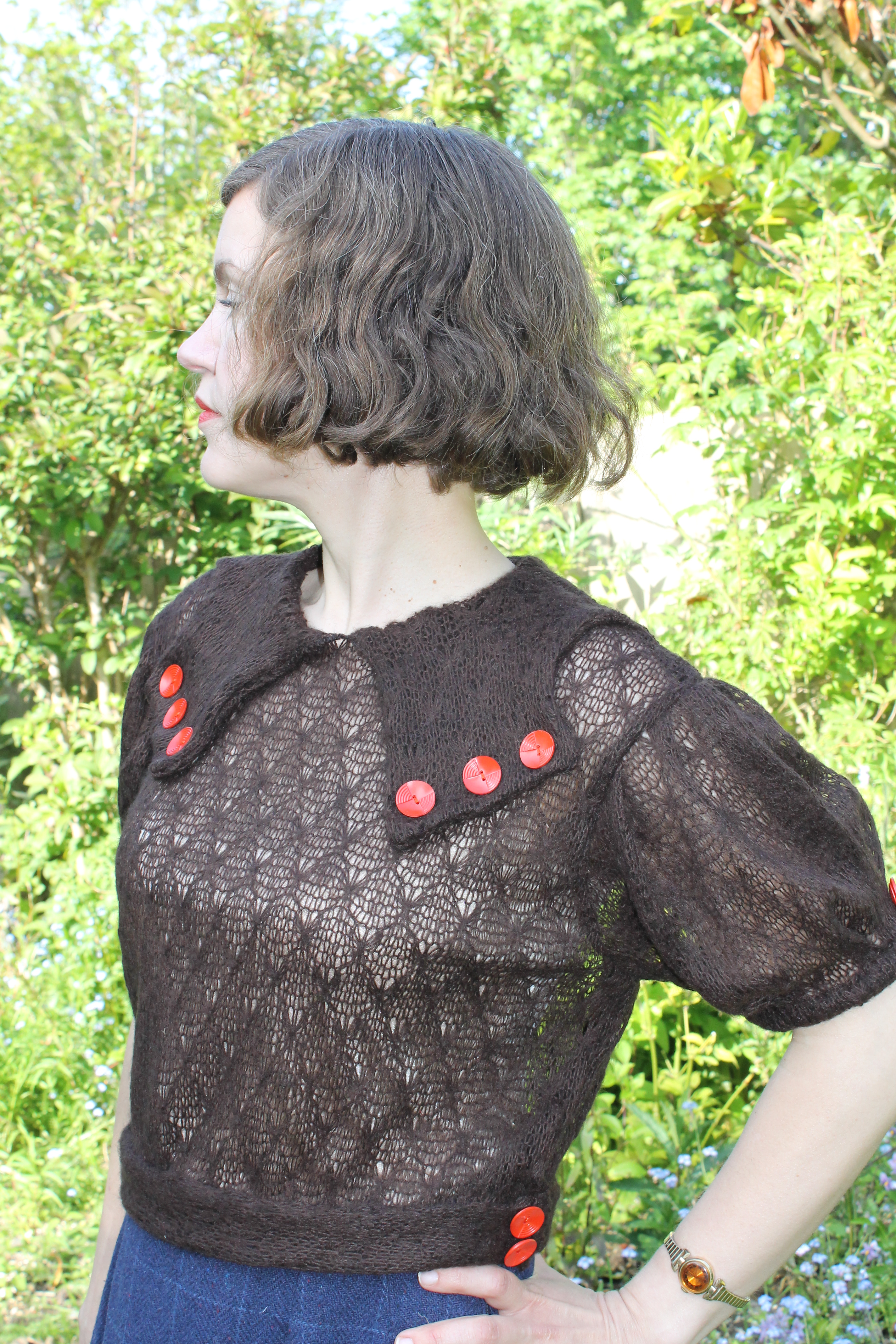
Here I present a couple of designs with variations from a previous one I made a couple of years ago. “Ruth” and “Eleanor” are made in wool knit lace fabric with unusual large collar and triple decorative vintage buttons. The puff sleeves also feature buttons as do the waistband of the blouse. Hook and eye closure at the back.

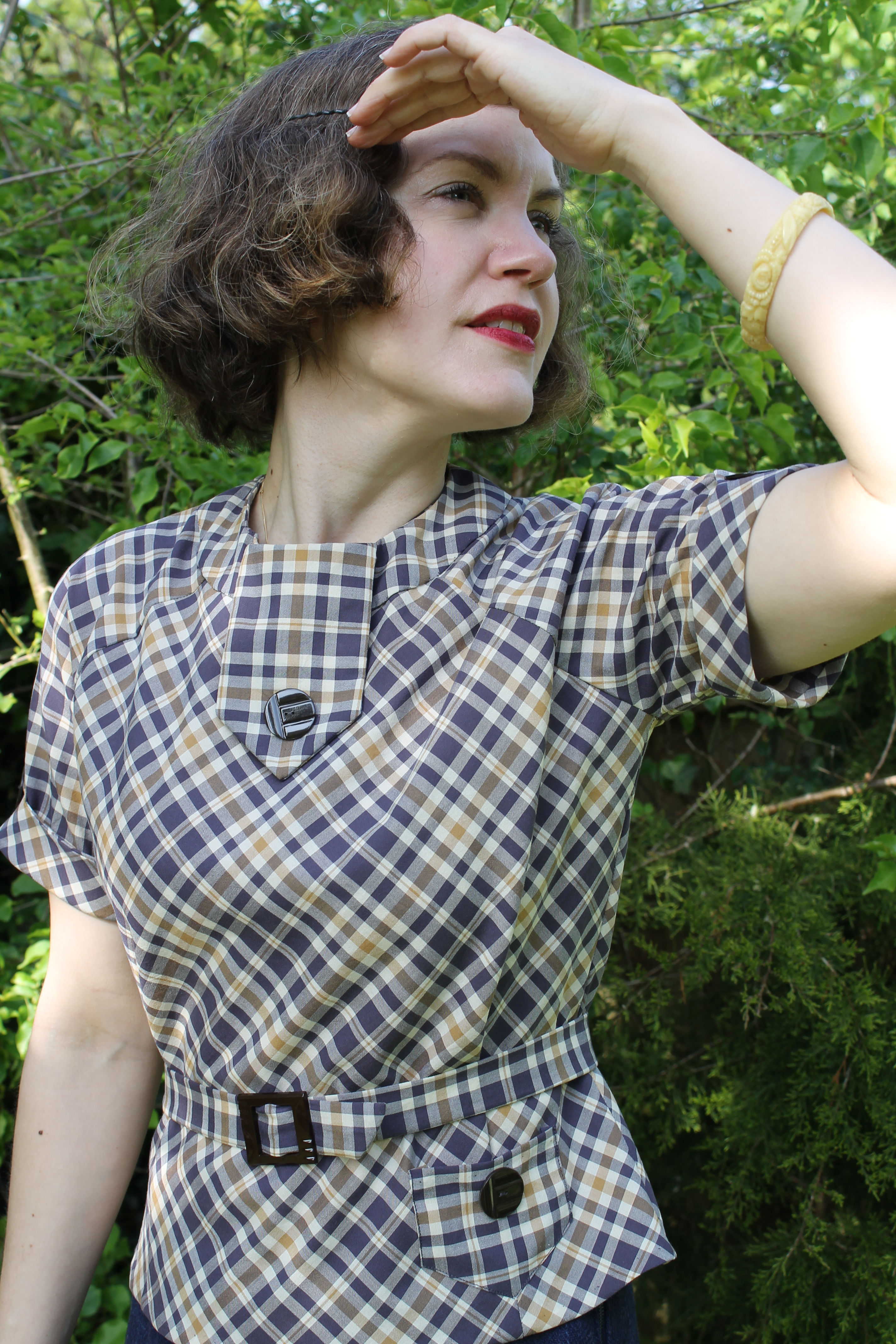
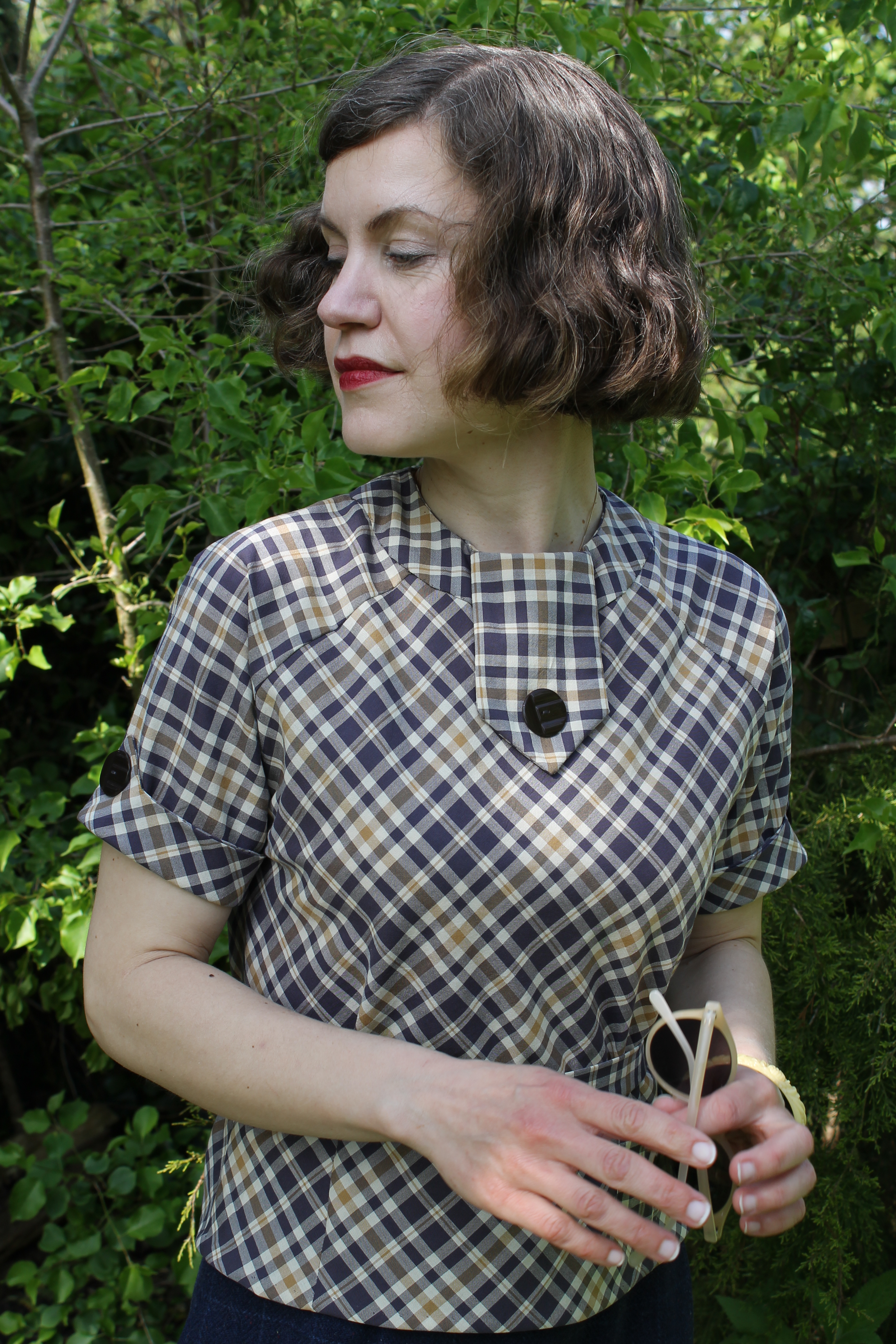
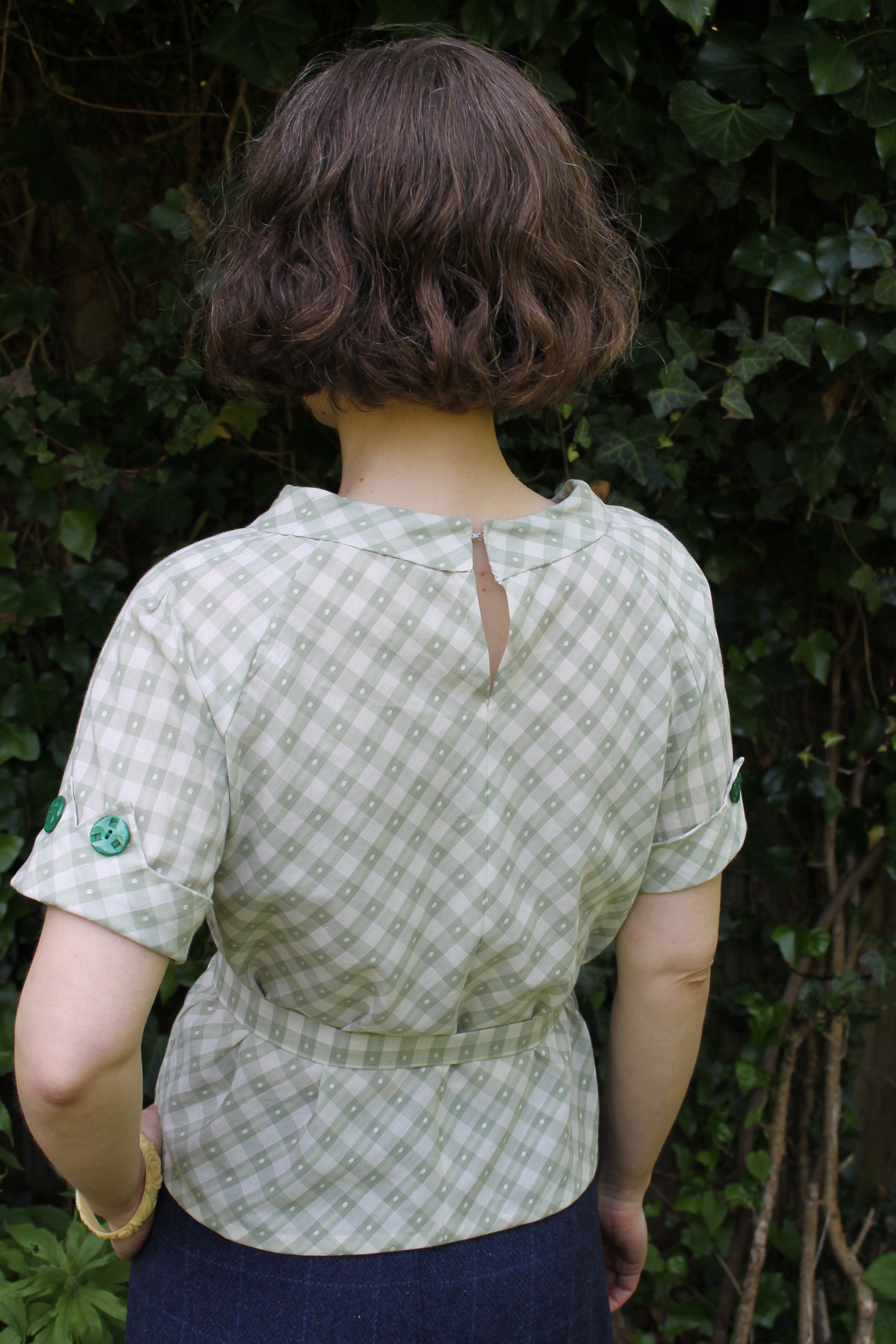
“Alma” and “Edna” are bias cut cotton blouses, very popular in the 1930s, with short sleeves featuring geometric cuffs and a pair of vintage buttons. The collar has a central flap, secured by a vintage button, and the belt has a vintage bakelite buckle. Hook and eye closure at the back of the round collar. They also have a little side pocket with a button and darts down the front of the blouse.

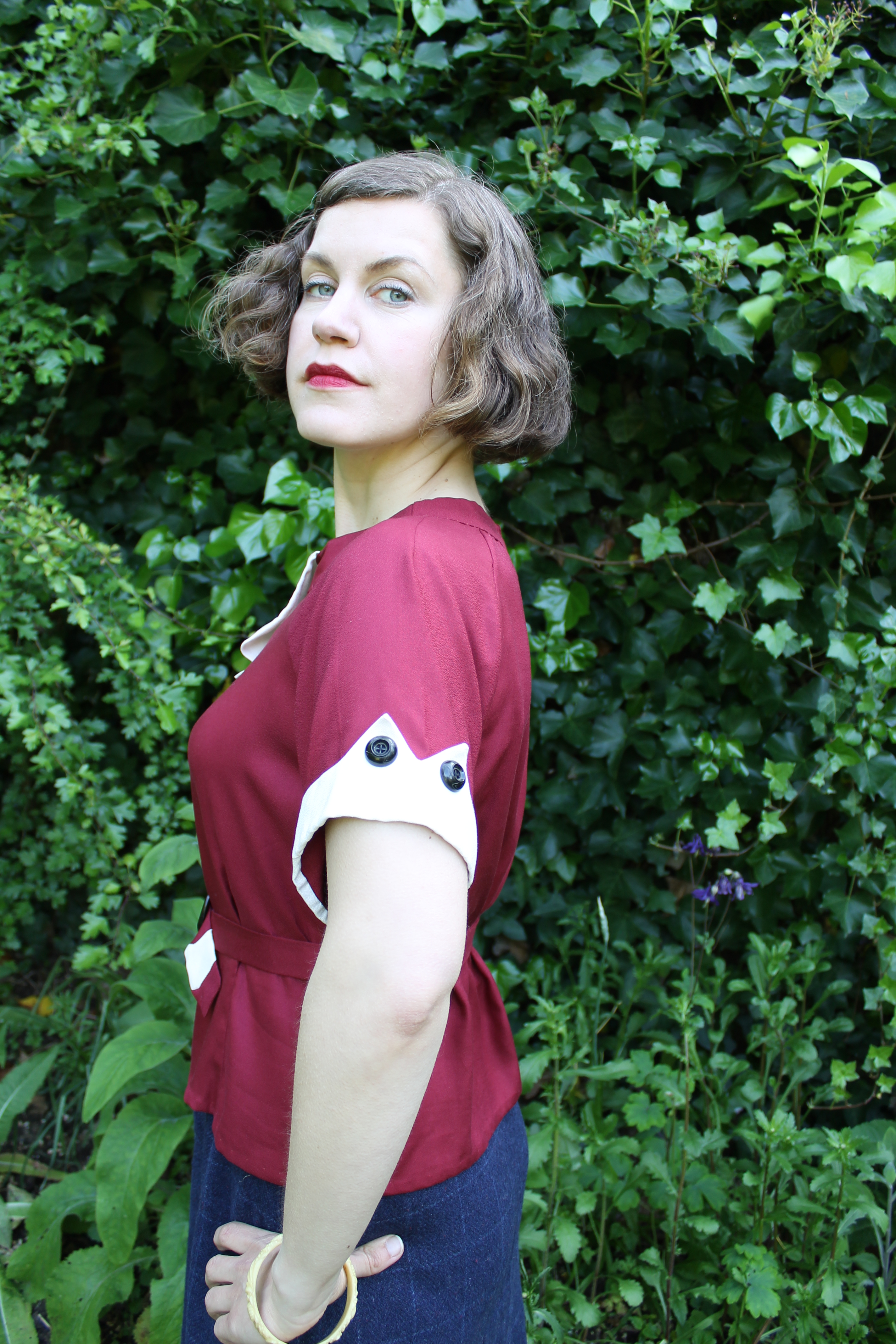
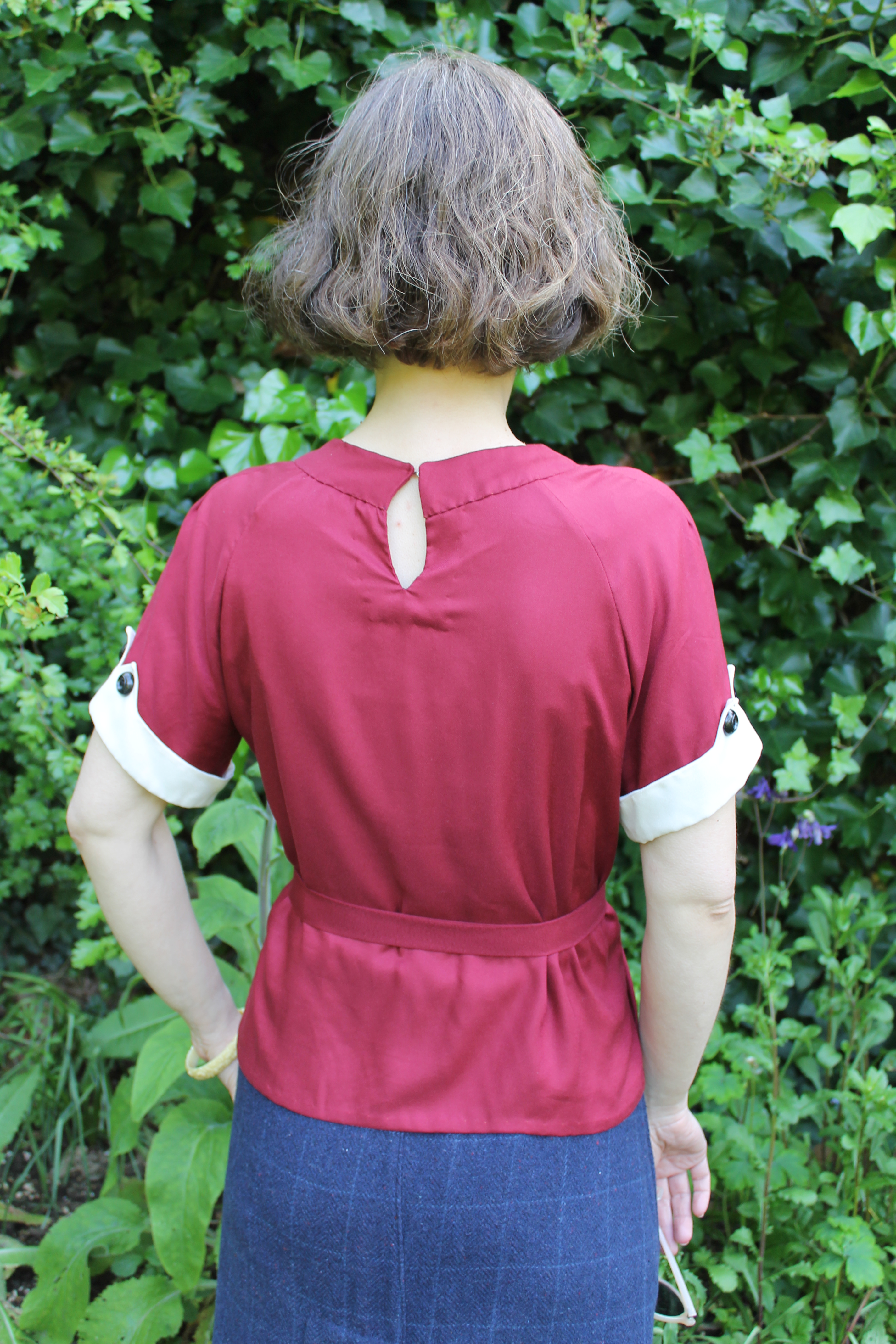
“Violet” is a mid- 1930s style blouse in viscose rayon, in the same style as “Alma” and “Edna” but without the side pocket. The cuffs, collar flap and the little detail in the belt in light cream viscose create an interesting contrast to the burgundy of the blouse. Vintage buttons adorn the cuffs and collar flap. The belt also features a vintage buckle.

All available here.

Ruth

Eleanor

Alma

Edna

Violet

Vivian revamped

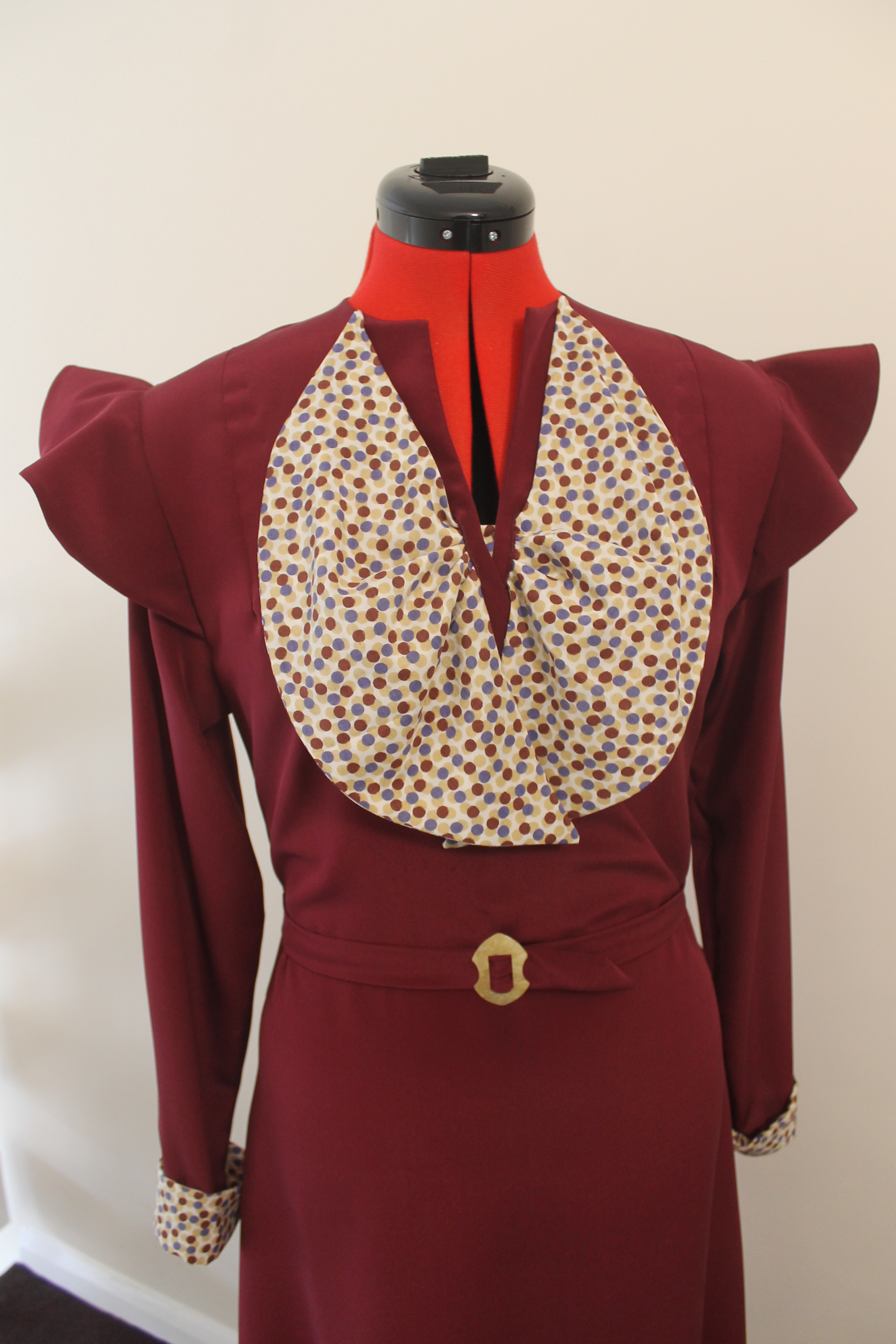
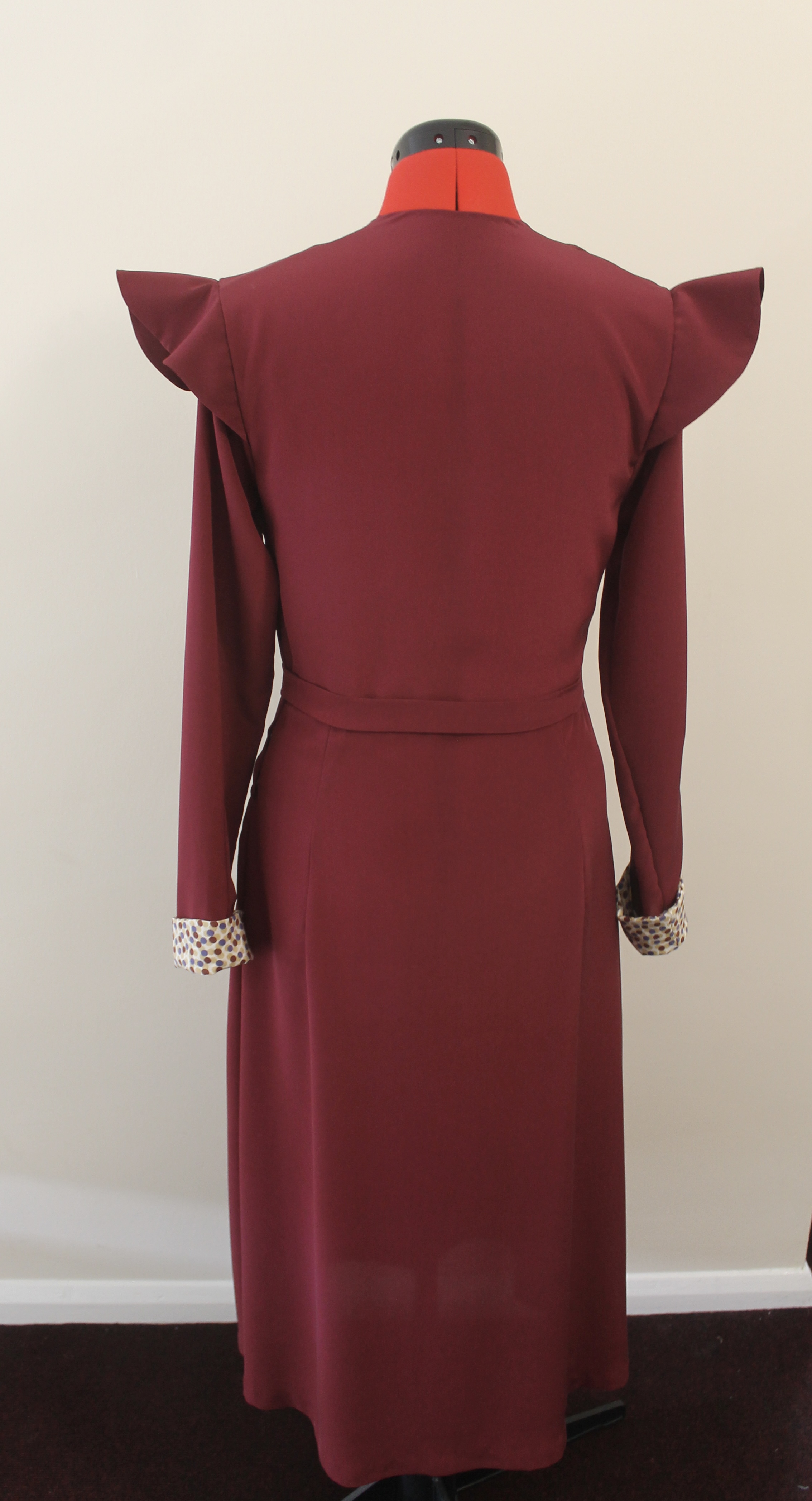
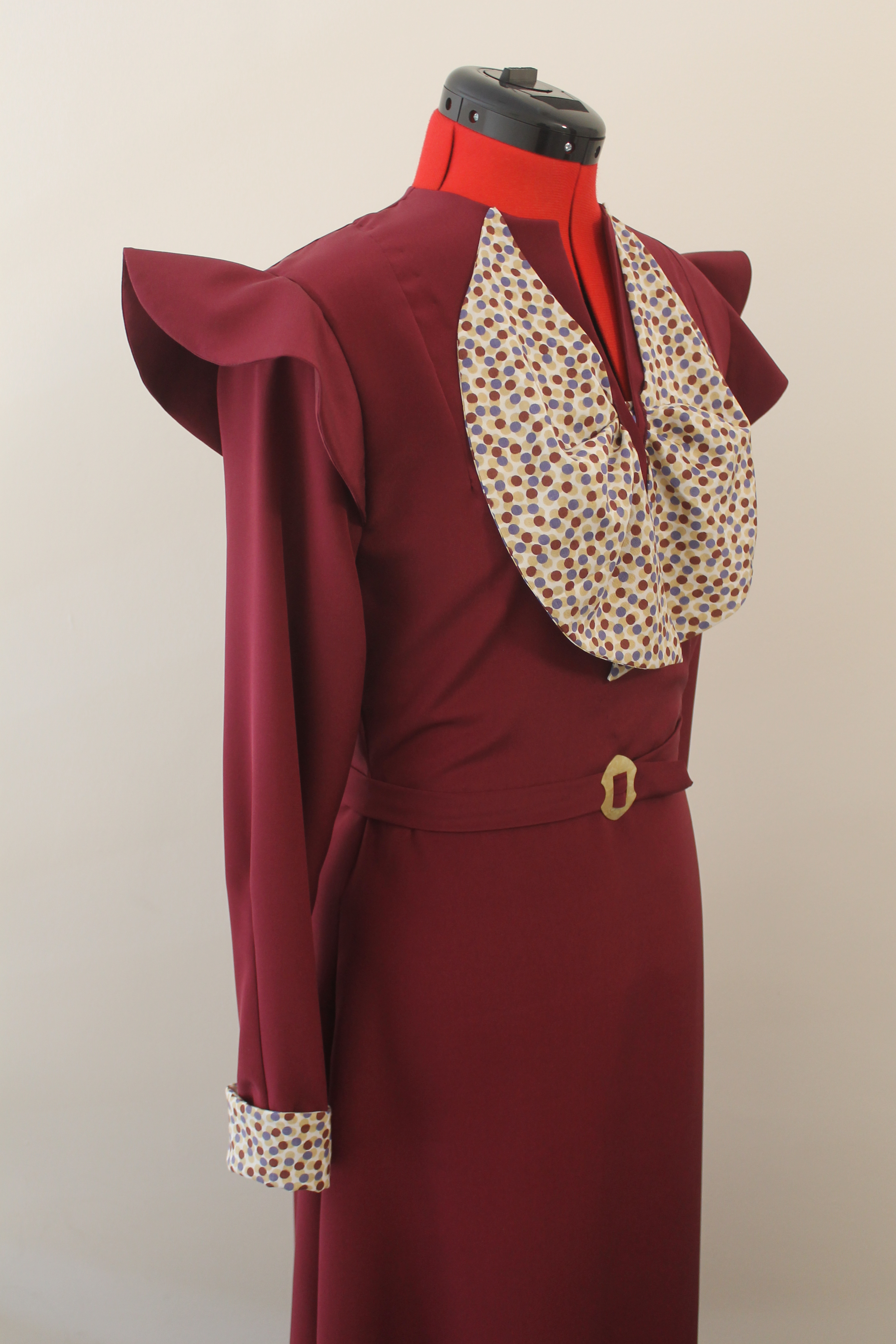
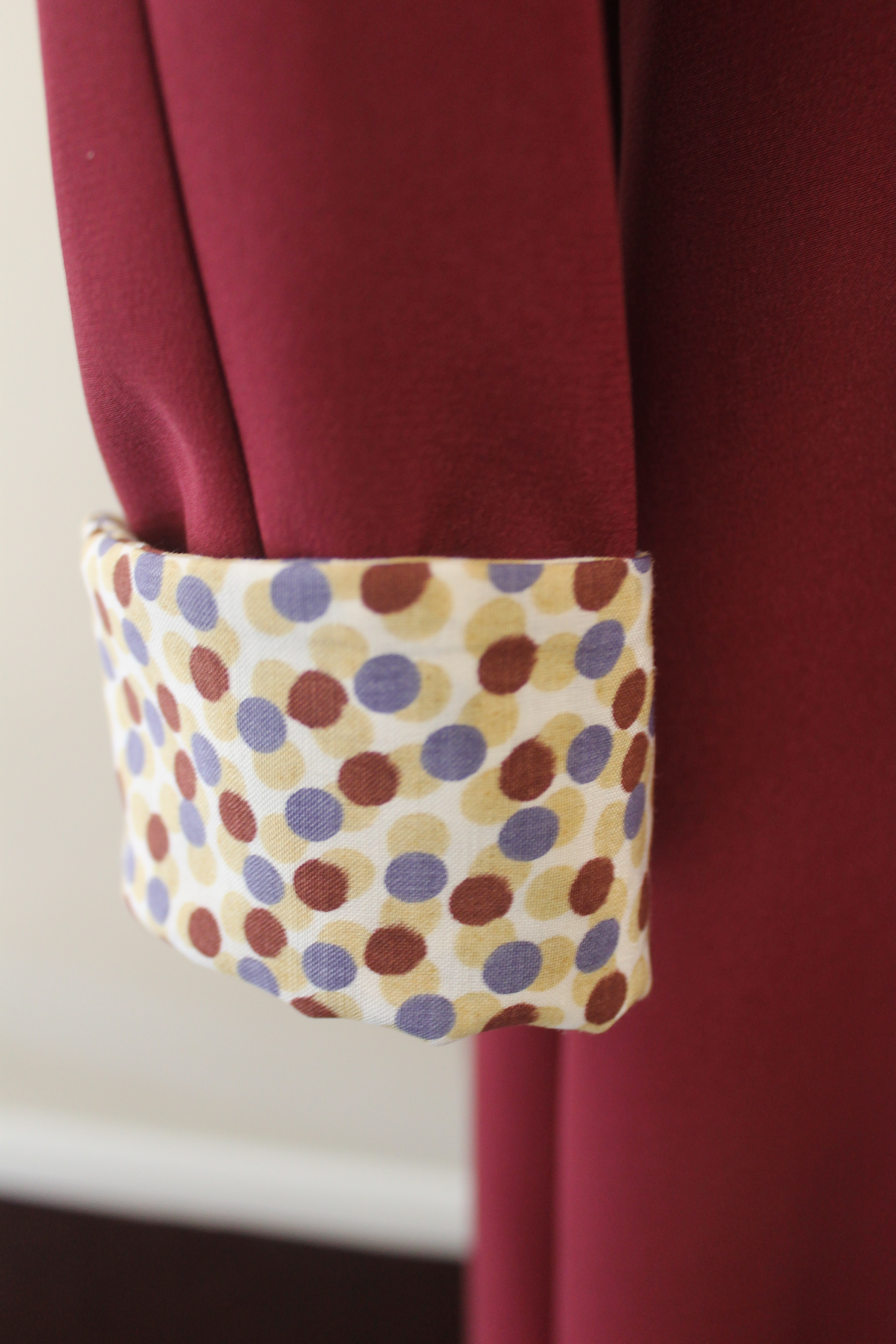
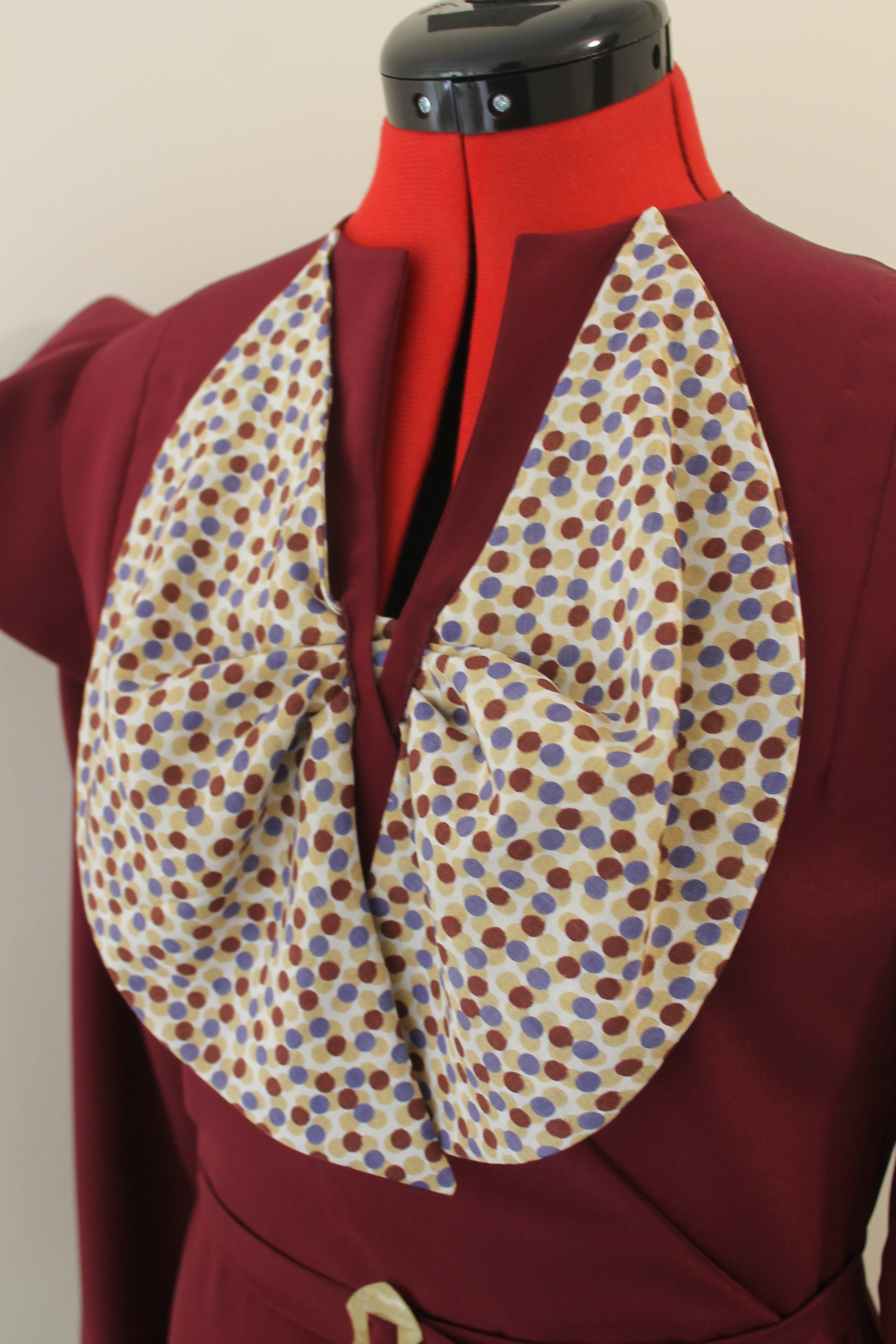
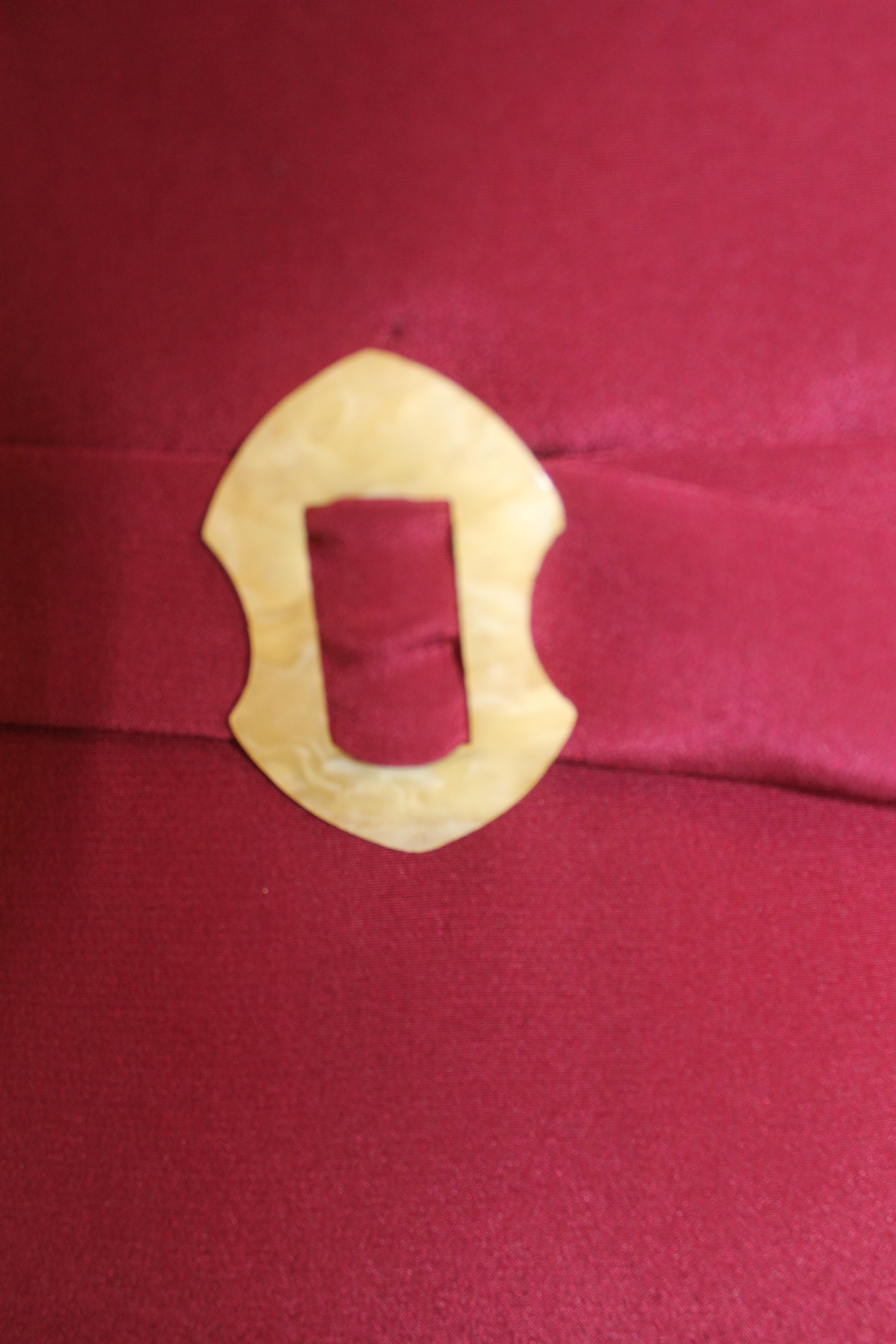
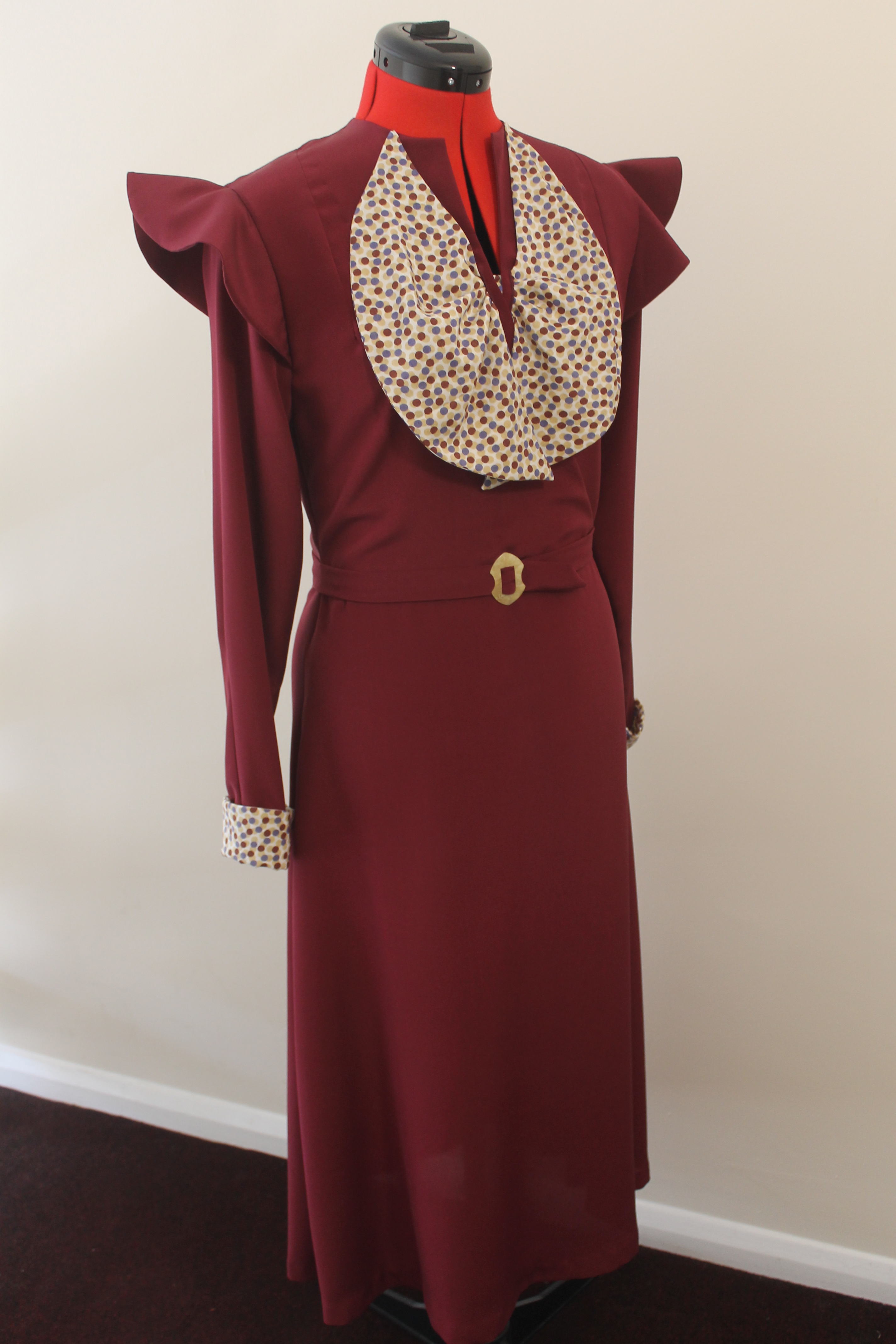
Here’s a golden oldie from my 1930s bow dress collection from a few years back, the “Vivian”, an early 1930s style dress in burgundy silk crepe de chine with its dramatic large bow in original vintage rayon bringing interesting contrast to it, typical to the era. It also features the unusual detail in the shoulders of the half moon shaped “wings”, that were also a popular style detail in the 1930s. The long sleeves have small cuffs in the same fabric as the bow. The belt features an early vintage plastic buckle. Closure at the side with snap fasteners.

Early 1930s style red printed cotton dress

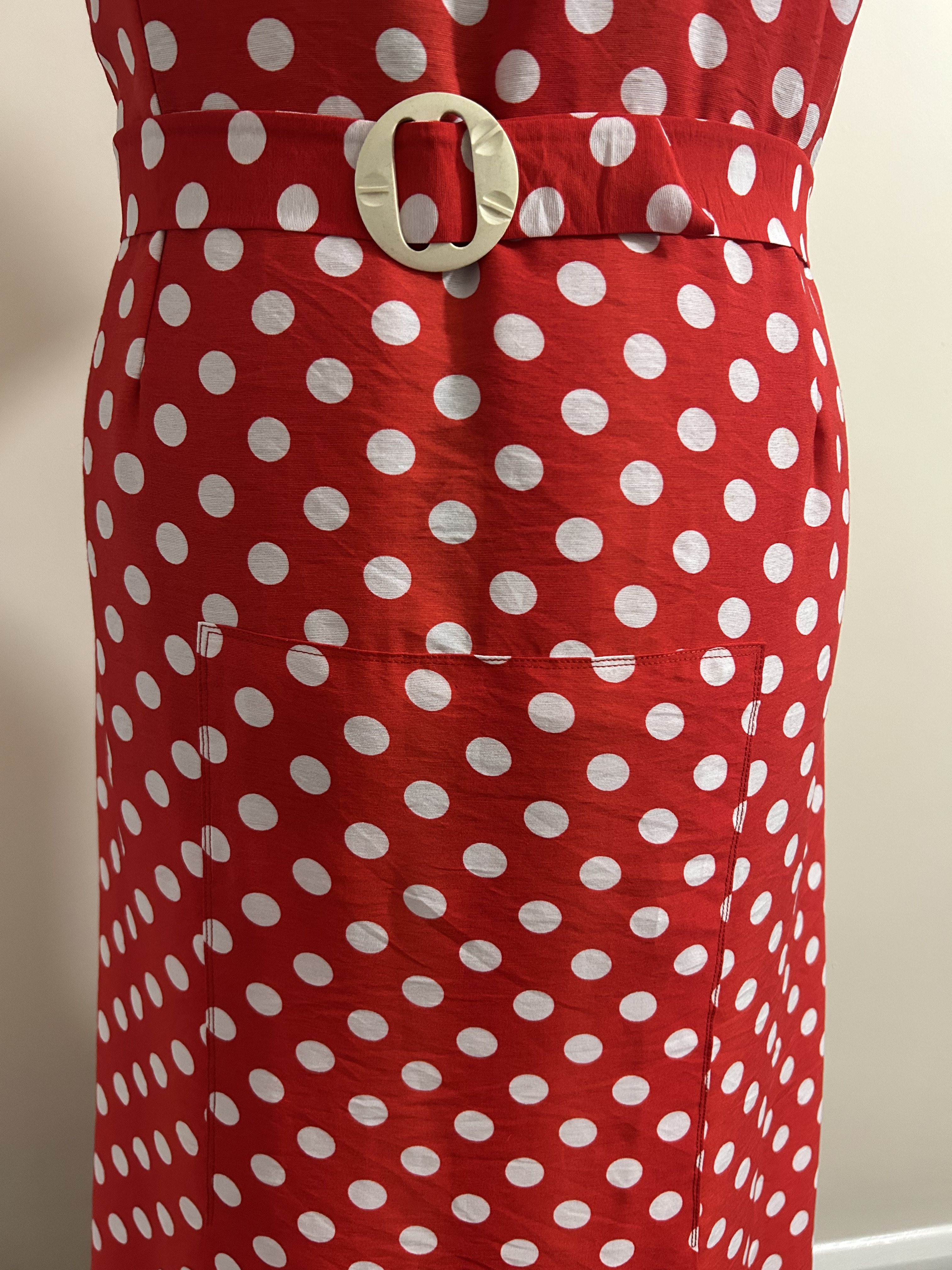
Here I present a darling early 1930s inspired cotton dress in a lovely art deco style print. It has a sweetheart neckline with the front yoke forming a very deco geometric double peak. The yoke at the back is cut in a horizontal line. The skirt features two kick pleats down the front and back, divided by triple panelling. The short puffed sleeves also add a lovely summery touch to the dress. The three large original cream bakelite buttons running across the side of the neckline and above one of the pleats creates an interesting asymmetrical effect. The belt features a cream vintage buckle. Closure by snap fasteners at the side.

Review in Helsingin Sanomat of the “ Schjerfbeck and Fashion” exhibition by Pirkko Kotirinta

Here’s the wonderful review by Pirkko Kotirinta in Helsingin Sanomat on the “Schjerfbeck and Fashion”exhibition at Villa Gyllenberg, including my outfit.

Excerpt from the article:

“Eräs maalaukseen ikuistettu vaate astuu näyttelyssä kehyksistään kolmiulotteiseen maailmaan: ompelija-suunnittelija Irma Romeron varta vasten tähän näyttelyyn luoma kimonotyylinen takkiasu. Se on vintagemuotiin erikoistuneen Romeron tulkinta Helene Schjerfbeckin maalauksen Tumma nainen (1929) mallista.

Romero pitää teosta kunnianosoituksena Coco Chanelille (1883–1971) ”uuden modernin naisen vaatettajalle”.

Kimonotyylisiä takkeja ja vekkihameita näkyi muotikuvissa 1920-luvulla, ja myös japonismi kiinnosti. Oliivinvihreäksi värjätylle kreppisilkille Romero onkin maalannut koristekuvion, jossa näkyy japanilainen henkäys. Hän kertoo tarkemmin työn vaiheista kotisivuillaan


”One piece of clothing immortalised in a painting, steps out of its frame into a three-dimensional world at the exhibition: a kimono-style jacket created for this exhibition by Designer and Dressmaker Irma Romero. It is Romero’s interpretation of Helene Schjerfbeck’s painting The Dark Woman (1929), who specialises in vintage fashion.

Romero considers the piece a tribute to Coco Chanel (1883–1971), “the dresser of the new modern woman”.

Kimono-style jackets and pleated skirts were seen in fashion pictures in the 1920s, and Japonism was also of interest. On the crepe silk dyed olive green, Romero has hand painted a decorative pattern with a Japanese touch. She tells more about the stages of the work on her website”